U.S. and Israeli strikes sank ships, but Iran still threatens Strait of Hormuz
Satellite imagery shows at least seven moored ships destroyed and an underground facility entrance hit, yet Iran’s IRGC navy and missile threats keep tanker routes at risk.

Satellite imagery and video analysis shows that in the first week of recent strikes, Iran lost at least seven moored ships at two naval bases and sustained damage to critical infrastructure, including the entrance to an underground naval facility in the Strait of Hormuz. The damage has materially degraded the regular fleet, but commanders and analysts warn the pathway for global oil shipments remains far from secure.
The analysis found, "At two bases, Iran lost at least seven moored ships," and concluded, "So far, the strikes have heavily targeted Iran’s regular navy, known as The Islamic Republic of Iran Navy, which operates conventional warships." That conventional fleet is the visible, heavy component of Tehran’s sea power and bore the brunt of the strikes, reducing Iran’s capacity for traditional surface-to-surface operations in the Persian Gulf and Gulf of Oman.
Yet Iran operates a second, distinct maritime force that has long shaped the tactical reality of the strait. The Revolutionary Guard navy specializes in asymmetric warfare, and the analysis notes, "The country also has a second navy, run by the Islamic Revolutionary Guard Corps, that specializes in asymmetric warfare." In addition to heavier ships, "the Guard’s fleet includes lighter assets, such as large numbers of speedboats and uncrewed vessels that can be harder to target." The analysis adds, "The Revolutionary Guard navy is primarily responsible for securing the Strait of Hormuz and the Persian Gulf."
That division of labor matters for commercial shipping and for coalition navies seeking to reassure Gulf partners. Daniel Byman of the Center for Strategic and International Studies put the operational risk plainly: "the threat from Iran to fire upon oil tankers passing through the Strait of Hormuz is a genuine one, despite Iran's weakened military." He cautioned that calculations of escalation hinge on what he termed "missile math," where outcomes turn on "how long Iran's low-cost missiles can last against the U.S. and its allies."
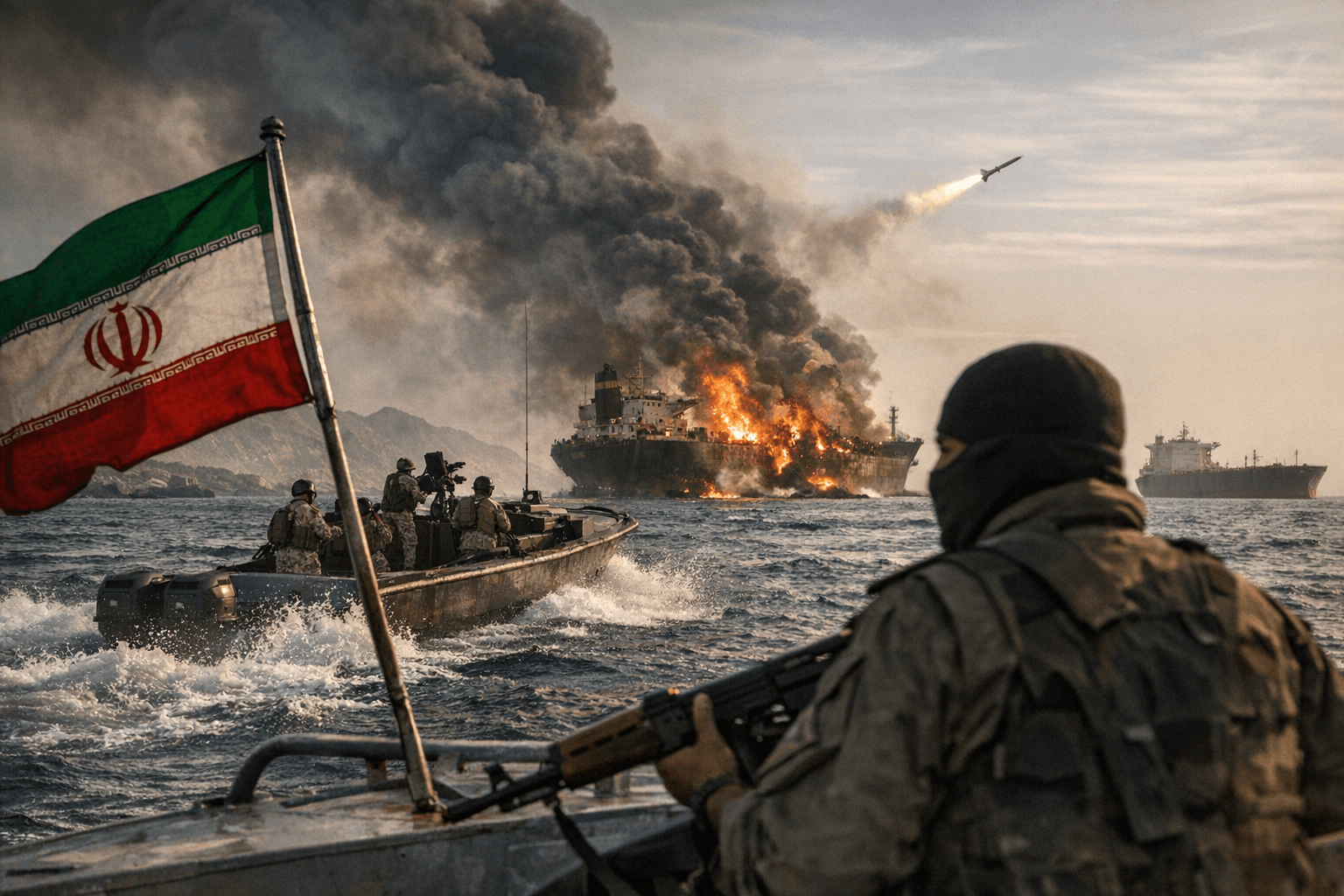
The pattern of risky encounters is well established. U.S. Naval Forces Central Command reported that on 20 June 2022, "three vessels from Iran’s Islamic Revolutionary Guard Corps Navy (IRGCN) interacted in an unsafe and unprofessional manner as U.S. Navy ships transited the Strait of Hormuz," behavior that officials said "did not meet international standards of professional or safe maritime behaviour, increasing the risk of miscalculation and collision." In other incidents U.S. forces have reiterated vigilance; the U.S. 5th Fleet said it "remains vigilant and is bolstering defence around the key strait with partners to enhance regional maritime security and stability."
Strategists outside government are warning about second-order effects. The Stimson Center cautioned that "a weakening Tehran might lose control of missile stockpiles or sensitive nuclear materials, raising fears of proliferation to rogue commanders or militias," and added that "maritime stability in the Strait of Hormuz and Gulf of Oman could be jeopardized." Stimson also warned of the risk that "embattled Iranian factions could resort to escalatory actions, including proxy attacks on Gulf energy infrastructure, to force external powers into imposing a ceasefire or negotiating a settlement."
The immediate result of the strikes is clear: Tehran’s conventional surface fleet has been set back. The strategic result is less decisive. Commanders who hope to return the Strait of Hormuz to routine navigation would face a threefold task: further degrade IRGCN asymmetric capabilities, blunt missile salvos and hoarding, and reduce incentives for proxy escalation. The military strikes achieved measurable effects; they did not erase the asymmetric tools that have, for years, posed the greatest threat to commercial transit.
This article was produced by Prism’s automated news system from verified source data, official records, and press releases, then run through automated quality and moderation checks before publishing. The system is built and supervised by the people who set the standards it runs under. Read our full AI policy.
Did this article answer your question?