U.S. and Israeli Strikes Target Iran's Naval and Anti-Ship Missile Infrastructure
Strikes on Iran's anti-ship missile sites and naval bases have disrupted the Strait of Hormuz, driving war-risk insurance premiums up fourfold and cutting shipping traffic by 85%.
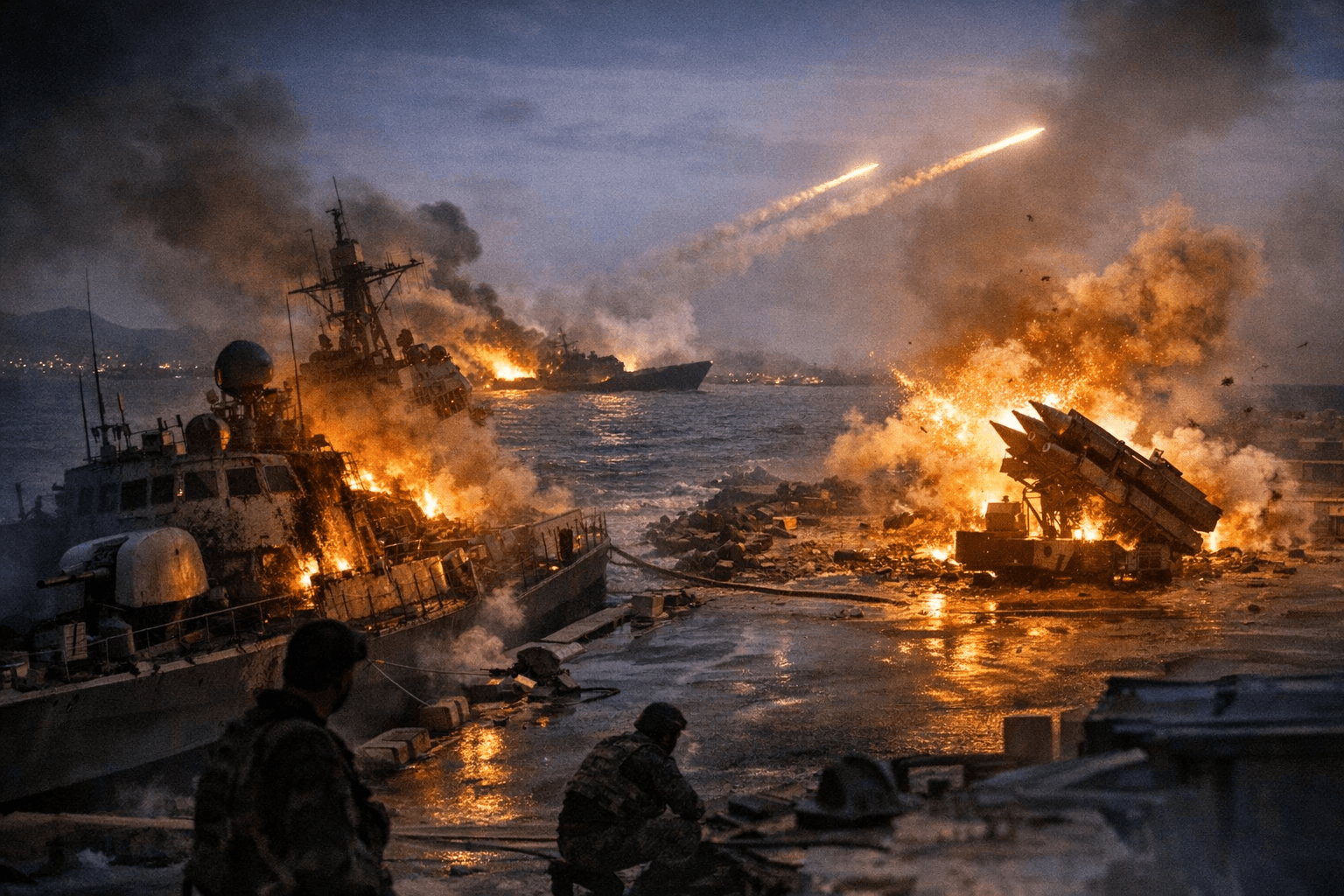
A month into Operation Epic Fury, U.S. and Israeli forces continued targeting the sinews of Iran's maritime threat machine: the anti-ship missile production facilities, coastal radar arrays, repair yards, and naval bases that give Tehran its asymmetric leverage over one of the world's most critical energy corridors.
The latest wave of strikes, assessed in maritime and defense reporting compiled March 29 and 30, focused on facilities tied to anti-ship missile production and launch capabilities, as well as the targeting and surveillance infrastructure Iran relies on to track and threaten vessels transiting the Strait of Hormuz and the northern Arabian Sea. Earlier in the campaign, satellite imagery confirmed hits on the Khorgu Missile Base north of Bandar Abbas and multiple sites at Bandar Abbas Military Port, home to both the Islamic Revolutionary Guard Corps Navy Headquarters and the IRGC's 1st Naval District. The IRIS Kurdistan, an Artesh Navy warship berthed at Bandar Abbas, was also struck, with commercial satellite imagery showing three impact points consistent with bunker-buster munitions.
The intent, analysts cited in the maritime assessments said, is to dismantle the layered toolkit Iran uses to harass and interdict shipping: mines, swarming drone attacks, and the missile salvoes that have sent war-risk insurance premiums surging from roughly 0.125 percent to between 0.2 and 0.4 percent of a vessel's insured value per transit. For a very large crude carrier, that translates to an increase of a quarter-million dollars per passage. Shipping traffic through the strait had already dropped 85 percent from baseline levels as tanker operators weighed rerouting costs against an active combat zone.
Verification of precise battlefield effects remains difficult. Maritime analysts cautioned that assessments draw on a combination of official statements, commercial satellite imagery, and observations from shipping intelligence units, none of which can immediately confirm the full degradation of Iran's missile production and logistics chains. What open-source analysis has confirmed is structural damage at specific coastal facilities; the longer-term question is how quickly Iran can reconstitute production and whether dispersed or hardened backup sites have survived.
By March 9, President Trump had stated that U.S. forces had sunk 51 Iranian naval vessels, and CENTCOM confirmed that none of the 11 Iranian warships stationed east of the Strait of Hormuz before the conflict began remained in the area within the first 48 hours of the operation. Yet Iran responded with its own asymmetric campaign: as of mid-March, Iranian forces had carried out at least 21 confirmed attacks on merchant vessels, killing sailors and striking shipping infrastructure across the Gulf.
The strikes on missile and naval infrastructure carry a dual purpose, analysts noted. Tactically, they aim to reduce the immediate threat to commercial tankers and U.S. Navy task groups. Strategically, they signal to regional actors and proxy forces that maritime escalation carries a verifiable cost. But analysts warned that without a diplomatic backchannel running in parallel, degrading Iranian assets risks triggering exactly the asymmetric retaliation it seeks to deter. Regional stability, the assessments concluded, will hinge less on what has been destroyed than on whether back-channel diplomacy can gain traction before the next exchange.
This article was produced by Prism’s automated news system from verified source data, official records, and press releases, then run through automated quality and moderation checks before publishing. The system is built and supervised by the people who set the standards it runs under. Read our full AI policy.
Did this article answer your question?


