U.S. and South Korea launch Freedom Shield drills amid diplomatic strain
The allies began Freedom Shield March 9-19 to test joint defenses and deterrence; about 18,000 South Korean troops will participate while U.S. force levels were not disclosed.
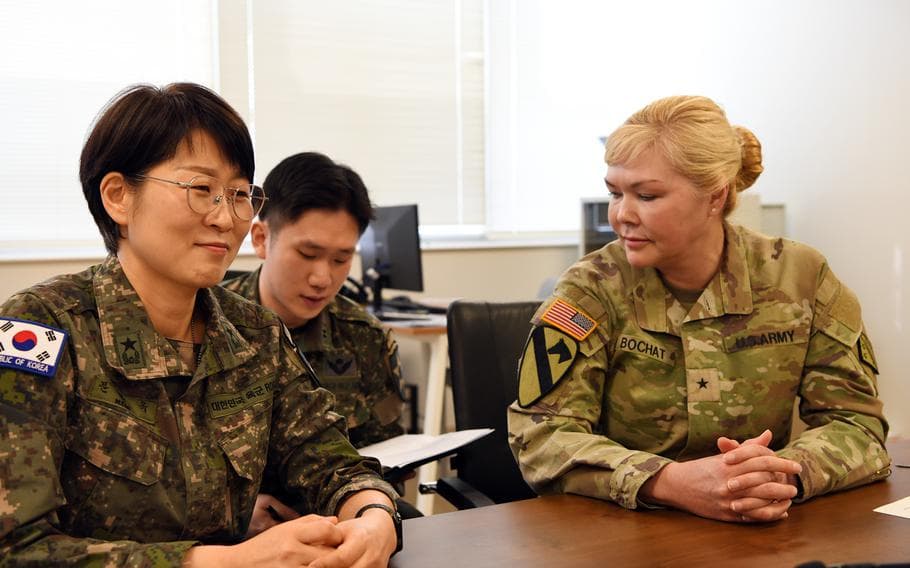
The United States and South Korea began their annual Freedom Shield exercises on March 9, a roughly 11-day series of command-post simulations and field training scheduled through March 19 that senior officials say is designed to sharpen deterrence and alliance readiness. The Joint Chiefs of Staff said about 18,000 South Korean troops will take part; the U.S. military declined to disclose how many American forces will be involved.
Freedom Shield is a combined, joint, multi-domain exercise that pairs largely computer-simulated command-post drills with a field program called Warrior Shield to inject realism into training. The exercises will use live, virtual, constructive and field-based modalities to test coordination among the Combined Forces Command, United States Forces Korea, the United Nations Command and the ROK Joint Chiefs of Staff, officials said. The aim is to strengthen interoperability across services and agencies and to rehearse responses to a spectrum of security threats, including deterrence scenarios tied to North Korea's nuclear arsenal.
Col. Ryan Donald, public affairs director of the United Nations Command, Combined Forces Command and United States Forces Korea, described the field element of the March drills as intended to enhance "training realism and combat readiness." He spoke at a Feb. 25 briefing in Seoul that outlined the scope and intent of the exercise.
The drills open against a fraught diplomatic backdrop. Seoul has pursued outreach to Pyongyang, and officials have set a political objective of completing the handover of wartime operational control from U.S. forces before President Lee Jae Myung's term ends in 2030. South Korean authorities proposed scaling back some field components in support of that outreach; U.S. officials resisted, and negotiations over adjustments to the field training continued up to the last minute, officials said. Those tensions underscore the dual role of Freedom Shield as both a military readiness measure and a lever in Seoul-Washington coordination over North Korea policy.
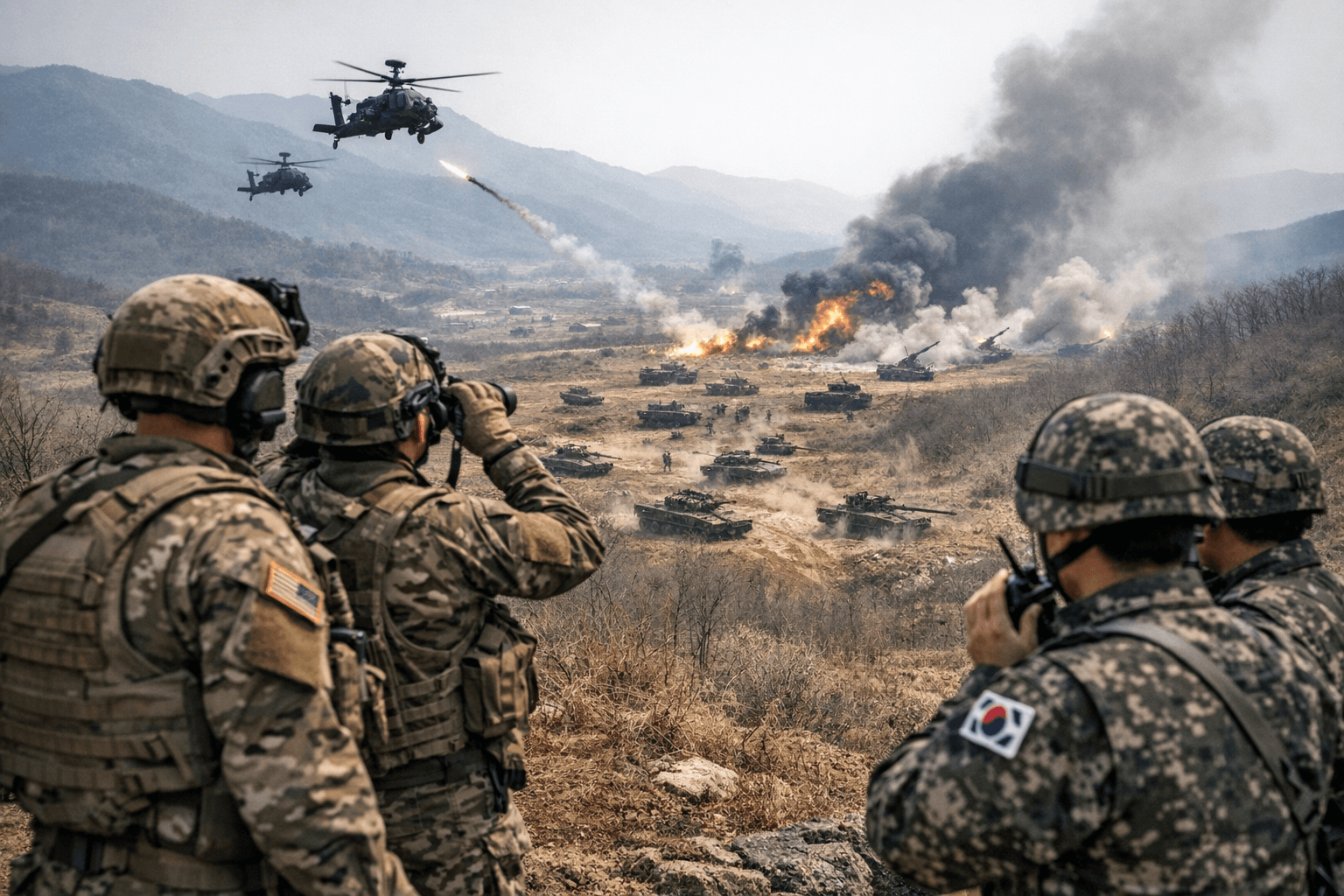
Past Eighth Army participation provides a window into the exercise footprint. In 2025, Eighth Army documents and public materials listed subordinate units that commonly take part in combined training, including the 2nd Infantry Division, the 19th Expeditionary Sustainment Command, the 501st Military Intelligence Brigade and other specialized brigades. A 2024 wet gap crossing near the Imjin River in Paju-si, Gyeonggi-do, illustrates the kind of interoperability work the allies rehearse: ROK engineers and U.S. engineer battalions constructed a joint pontoon bridge while aviation, armor, air defense and chemical defense assets secured the site.
Officials frame Freedom Shield as rooted in the Oct. 1, 1953 ROK-U.S. Mutual Defense Treaty and supportive of the Armistice Agreement, messaging meant to signal resolve to potential adversaries and reassurance to partners across Northeast Asia and the Indo-Pacific. For policymakers in Seoul and Washington, the exercise serves a concrete operational purpose and a strategic one: it reaffirms defense commitments even as it complicates diplomatic maneuvers aimed at reducing tensions with Pyongyang.
In economic terms, recurring large-scale drills sustain demand for logistics, maintenance and specialized equipment across the defense industrial base and raise short-term geopolitical risk premiums for regional markets. The immediate political effect of Freedom Shield will be to reinforce alliance readiness and interoperability while pressing allied leaders to reconcile defense posture with diplomatic openings to North Korea as they pursue the planned wartime command transition by 2030.
This article was produced by Prism’s automated news system from verified source data, official records, and press releases, then run through automated quality and moderation checks before publishing. The system is built and supervised by the people who set the standards it runs under. Read our full AI policy.
Did this article answer your question?