U.S. asks Ukraine to share tactics and personnel to counter Shahed drones
Zelenskyy says Washington requested Kyiv’s help against Iranian Shahed drones; Ukraine will provide specialists and resources, raising regional security and legal questions.
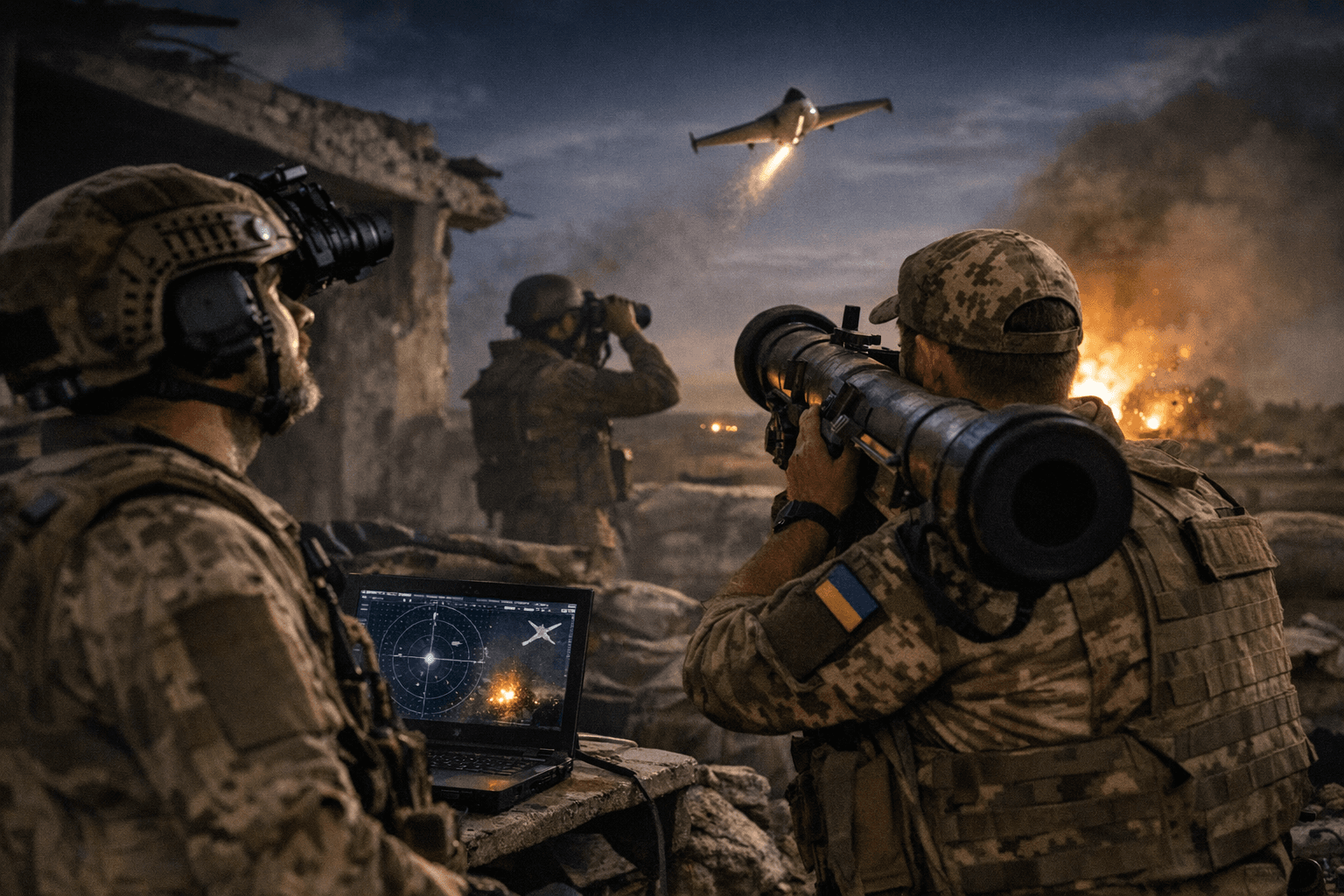
President Volodymyr Zelenskyy said the United States had asked Ukraine for help defending against Iranian-made Shahed kamikaze drones in the Middle East, and that he had ordered Kyiv to provide specialists and equipment. "We received a request from the United States for specific support in protection against 'shaheds' in the Middle East region," Zelenskyy wrote, and he added, "I gave instructions to provide the necessary means and ensure the presence of Ukrainian specialists who can guarantee the required security."
Shahed-class loitering munitions pose a particular challenge for nations reliant on legacy air defenses. A Defence Express-Getty Images graphic outlines the Shahed-136 as a triangular delta‑wing "kamikaze" drone with a wingspan of about 2.5 metres, an estimated range of roughly 1,550 miles (2,500 km) and a manufacturing cost of about $20,000–$30,000. "Anyone who has faced Iranian strikes encounters a serious challenge - Shaheds, which are difficult to intercept without the proper expertise and adequate weapons," Zelenskyy warned in his March 5 statement.
Kyiv's battlefield experience against Russian-launched Shahed variants has produced low-cost, mass-produced countermeasures that Western militaries now find attractive. Ukrainian industry figures say the Pentagon and at least one Gulf state are holding talks to acquire Ukrainian-made interceptors. Those industry sources describe Kyiv's interceptors as costing "a few thousand dollars" apiece, a fraction of the price of Patriot missiles that Gulf partners have used to blunt recent drone salvos and whose stockpiles officials say are being drawn down.
The request marks an awkward diplomatic moment. Under President Donald Trump, U.S. policy toward Ukraine has been described as punctuated by a cessation of direct military support while intelligence cooperation continued. The apparent appeal to Kyiv for technical and operational know‑how signals a pragmatic recognition of Ukraine's recent innovations in countering massed, low-cost unmanned strikes even as political relations have been strained.
The United States has not publicly confirmed a formal Pentagon request in the material released so far, and Kyiv did not specify the scale or legal basis for deploying Ukrainian specialists to the Middle East. Zelenskyy said only that he had instructed officials "to provide the necessary means and ensure the presence of Ukrainian specialists who can guarantee the necessary security," without detailing personnel numbers, rules of engagement or logistical arrangements.
The episode also underscores the long, layered intelligence relationship between the two countries. "The U.S.-Ukraine intel liaison began in 1991 and evolved as Ukraine decided to give up its nuclear weapons," Calder Walton of the Belfer Center observed, noting that cooperation deepened in the early 2000s and after Russia's 2014 incursions. Ukrainian services, including the SBU and military HUR, have been tested by espionage and corruption scandals but are now described as frontline defenders since the full-scale invasion.
For Gulf capitals confronting stepped-up Iranian drone use, Kyiv's tactics could offer an affordable hedge against further strikes and a way to conserve high-end interceptors. For Washington and Kyiv, the arrangement presents legal, diplomatic and operational choices: whether to formalize transfer of systems and personnel, how to shield advisers under international law, and how to balance immediate regional defense needs against the political costs of closer operational cooperation.
This article was produced by Prism’s automated news system from verified source data, official records, and press releases, then run through automated quality and moderation checks before publishing. The system is built and supervised by the people who set the standards it runs under. Read our full AI policy.
Did this article answer your question?

