U.S. blockade of Iran's ports drives oil surge, talk of new talks
Military pressure escalated over Iranian ports as oil topped $100, even as Pakistan pushed to reopen U.S.-Iran talks. The fight over Hormuz now carries shipping and war risks.
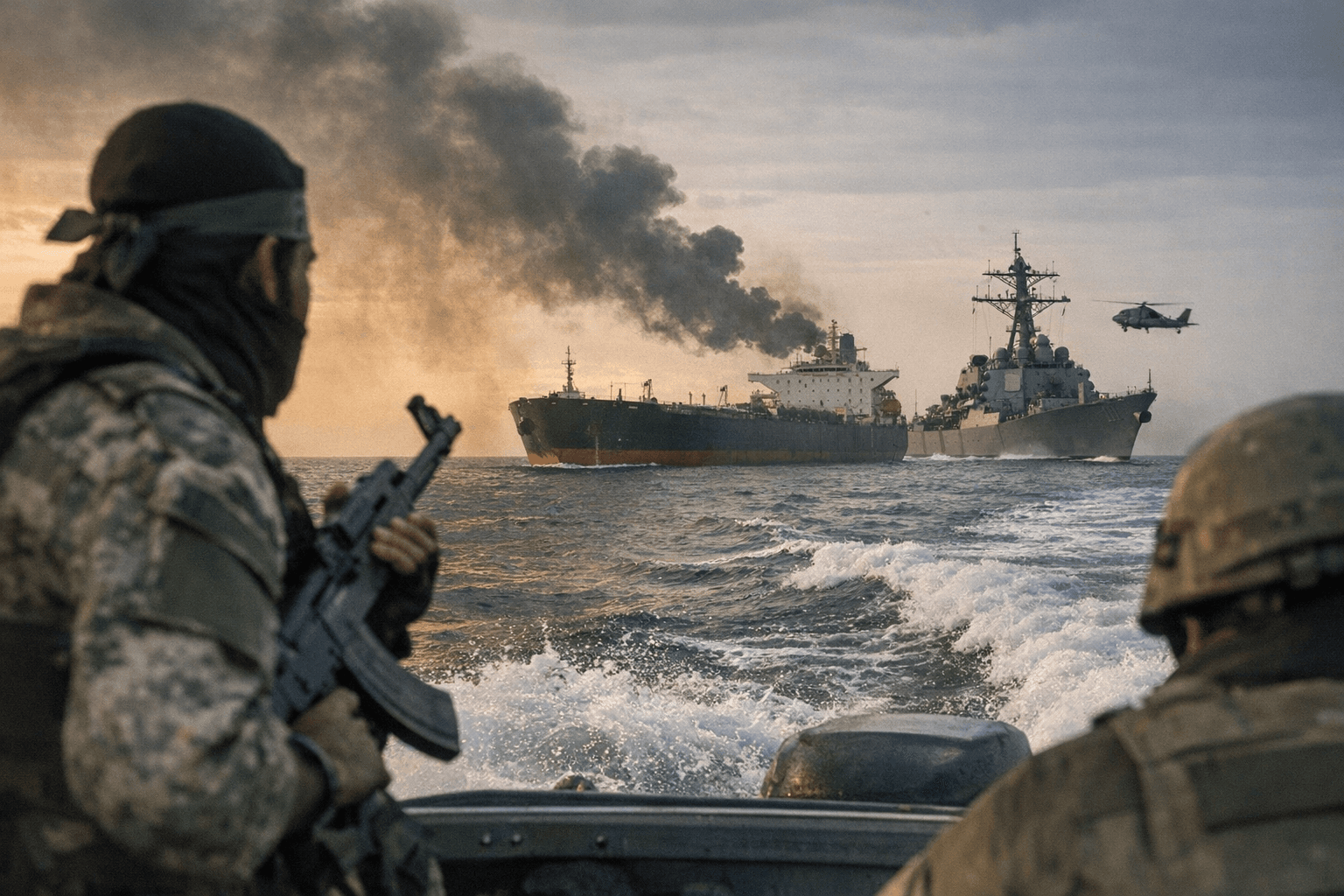
The U.S. blockade of Iranian ports sharpened the collision between escalation and diplomacy on Monday, pushing crude above $100 a barrel even as Pakistan rushed to line up a new round of talks between Washington and Tehran. The move hit the world’s most sensitive oil route first, and it may now determine whether pressure becomes leverage or a wider regional war.
U.S. Central Command said the blockade began April 13 at 10 a.m. ET and would be enforced against vessels of all nations entering or departing Iranian ports and coastal areas. CENTCOM also said the order would not impede ships transiting the Strait of Hormuz to and from non-Iranian ports, a distinction that keeps the waterway open in theory while testing it in real time.
Markets reacted immediately. CBS News reported U.S. crude rose to $104.24 a barrel and Brent climbed to $102.29 after the announcement. The spike reflected how much global energy still moves through the narrow stretch of water between Iran and Oman, where the Strait of Hormuz acts as a choke point for oil and liquefied natural gas bound for Asia and beyond.
The U.S. Energy Information Administration says about 20 million barrels per day flowed through the strait in 2024, roughly one-fifth of global petroleum liquids consumption and more than one-quarter of world seaborne oil trade. The International Energy Agency says about 80% of the oil passing through Hormuz is destined for Asia, while about 93% of Qatar’s LNG exports and 96% of the United Arab Emirates’ LNG exports also move through the strait. Any sustained interruption would ripple quickly through shipping, insurance costs and fuel prices far beyond the Gulf.
At the same time, diplomatic channels were trying to catch up with the military order. The Associated Press reported that Pakistani officials were proposing a second round of U.S.-Iran talks, and an Iranian embassy official in Pakistan said the next round could take place this week or early next week. Reuters, in reporting carried by AP, said U.S. Vice President JD Vance said negotiations with Iran had made some progress. That creates a stark contrast: a blockade meant to increase leverage is arriving just as mediators are trying to pull both sides back from the brink.
The stakes are sharpened by history. The 1980s Iran-Iraq Tanker War showed how quickly attacks on merchant shipping in the Persian Gulf and Strait of Hormuz can endanger global oil flows. The New York Times reported that two Iran-linked ships passed through the strait ahead of the blockade, a sign that traffic has not stopped and that the policy is already being probed in practice. In a crisis built around one waterway, that is exactly where the danger lies.
This article was produced by Prism’s automated news system from verified source data, official records, and press releases, then run through automated quality and moderation checks before publishing. The system is built and supervised by the people who set the standards it runs under. Read our full AI policy.
Know something we missed? Have a correction or additional information?
Submit a Tip