U.S. blockade shuts Iran ports, threatens vital Strait of Hormuz trade
U.S. warships have squeezed Iran’s ports and the Strait of Hormuz, where 20 million barrels a day normally move. Markets now face a chokepoint that can rattle oil, LNG and inflation worldwide.
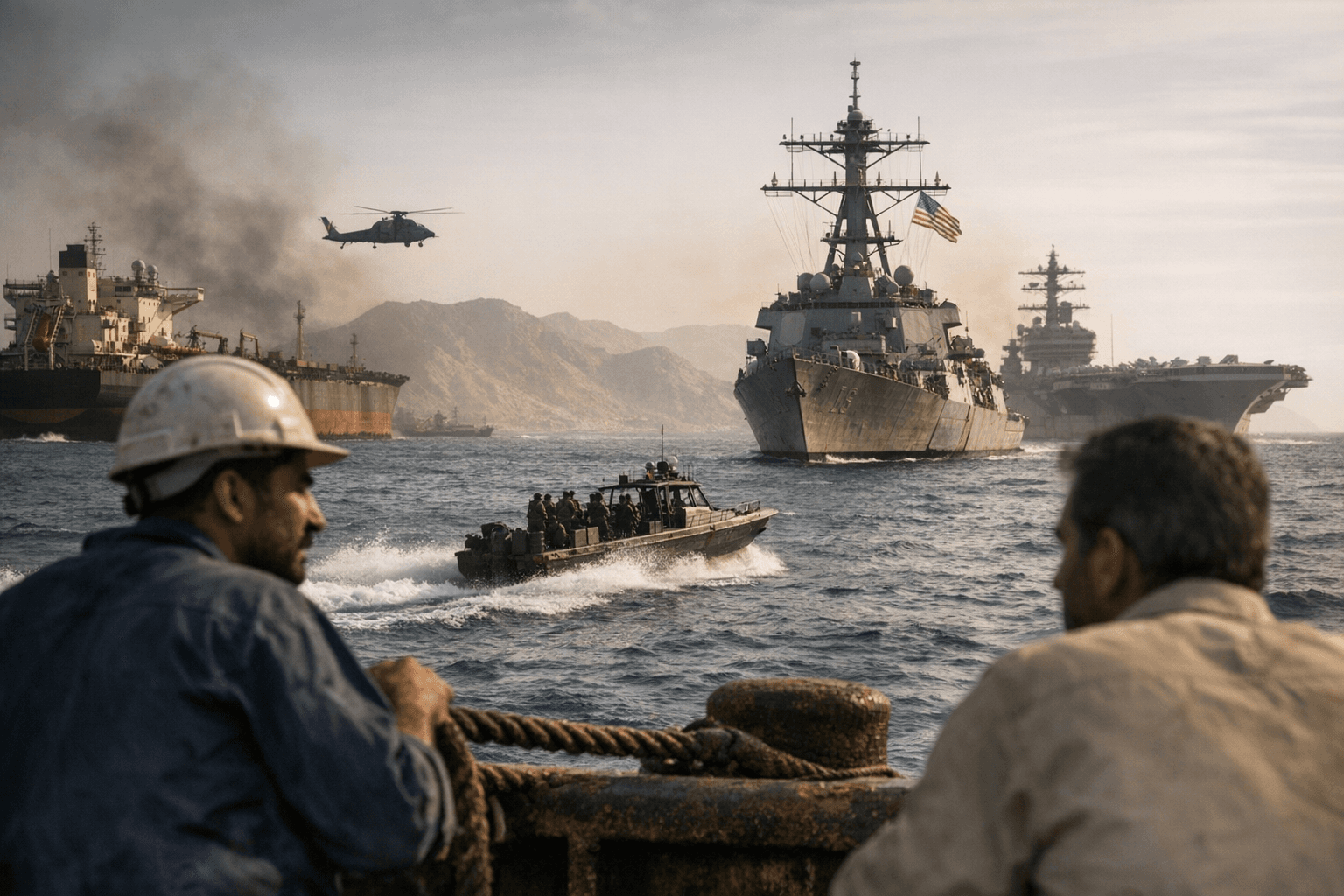
The U.S. blockade of Iranian ports has turned the Strait of Hormuz into the war’s most dangerous pressure point, a narrow passage just 29 nautical miles wide where two 2-mile shipping lanes and a 2-mile buffer zone carry the lifeblood of global energy trade. The International Energy Agency said an average of 20 million barrels a day of crude oil and oil products moved through the strait in 2025. The U.S. Energy Information Administration said flows through Hormuz in 2024 and the first quarter of 2025 amounted to more than one-quarter of global seaborne oil trade and about one-fifth of global oil and petroleum-product consumption.
President Donald Trump announced the blockade as the U.S. Navy and U.S. Central Command moved to enforce the cordon near Iran, Oman and the United Arab Emirates. Reuters reported on April 12 that experts viewed the naval blockade as a major, open-ended military undertaking that could prompt retaliation from Tehran and put strain on an already fragile ceasefire. Reuters also reported on April 16 that Iran proposed allowing ships to sail through the Omani side of the strait without risk of attack in talks with U.S. officials, a sign that Tehran was looking for a limited off-ramp while trying to keep pressure on maritime traffic. CBS News reported that U.S. crude rose to $104.24 a barrel and Brent to $102.29 after the blockade announcement.
The strategic fear is not a clean shutdown, but effective closure through mine threats, inspections, missile risk or harassment that make insurers, shipowners and tanker captains stay away. CBS News also reported that Iran’s state media claimed a bulk carrier carrying food supplies and an Iranian crude tanker entered Iranian waters after transiting the strait, hours after the U.S. action, showing that some traffic still moved even as wartime restrictions tightened. Around one-fifth of global liquefied natural gas trade also passed through Hormuz in 2024, mostly from Qatar, and the EIA has said few alternative routes exist if the waterway is closed.
The historical precedent is the Tanker War of 1981 to 1988, when Iran-Iraq fighting spilled into attacks on merchant vessels in the Persian Gulf and the Strait of Hormuz. The U.S. response culminated in Operation Praying Mantis on April 18, 1988, four days after the USS Samuel B. Roberts struck a mine. The Naval History and Heritage Command says it was the largest U.S. Navy surface action since World War II. That history explains why analysts see Hormuz as easy to disrupt and costly to police, and why UNCTAD has warned that any prolonged disruption would raise risks for energy, fertilizers and vulnerable economies. The Dallas Federal Reserve has already described the closure of the strait after the outbreak of conflict with Iran on February 28, 2026, as a geopolitically driven oil supply shock, one with consequences far beyond the Gulf.
Know something we missed? Have a correction or additional information?
Submit a Tip