U.S. carrier strike group enters Middle East, raising Iran tensions
A U.S. carrier strike group led by USS Abraham Lincoln has entered the Middle East, expanding American military options and heightening regional risks.
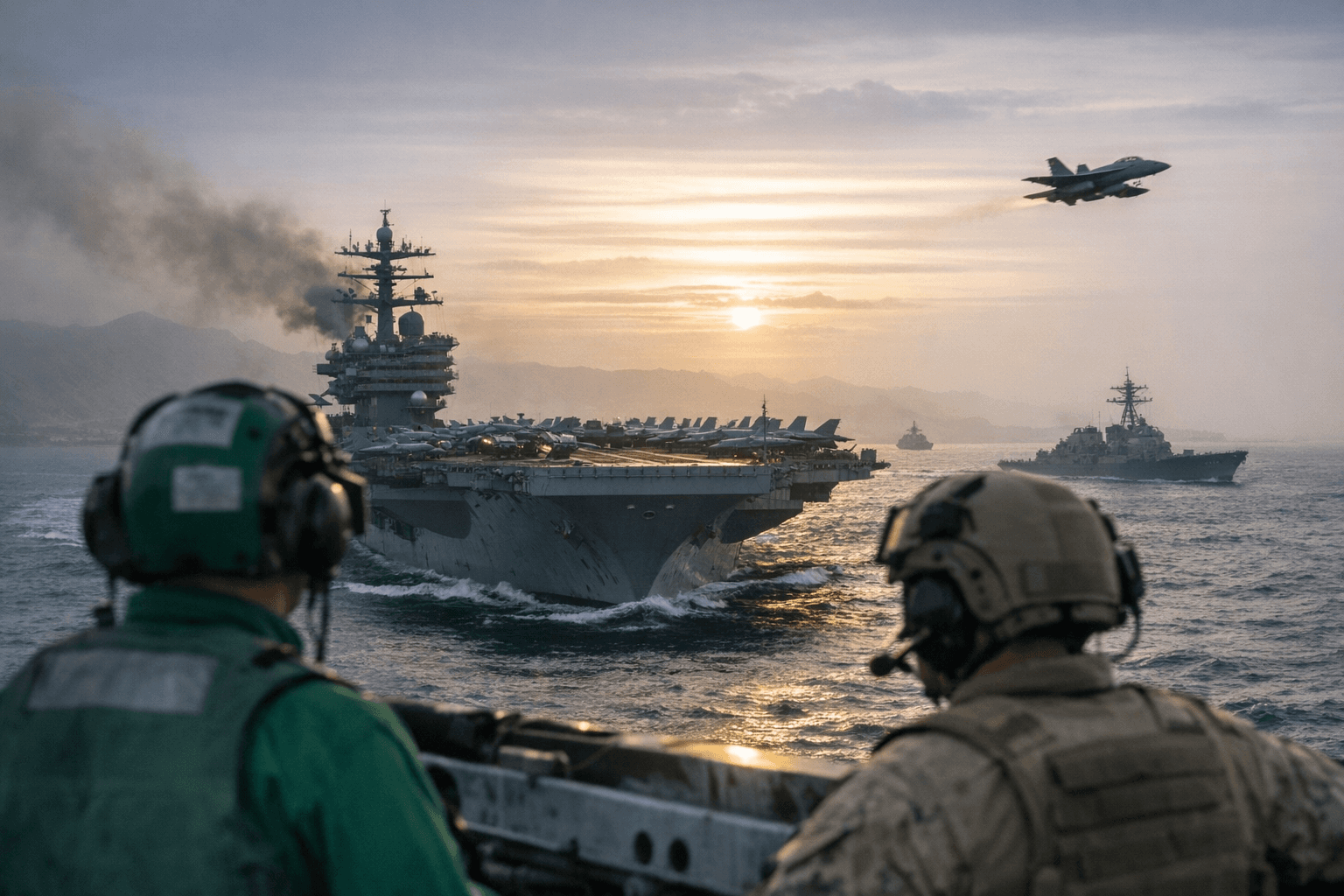
The aircraft carrier USS Abraham Lincoln and its escorting warships have entered the Middle East region, U.S. officials said, a deployment that expands Washington's ability to defend its forces and to consider military options against Iran. The movement places a carrier strike group's air power and command capabilities within reach of multiple theatres across the Gulf and eastern Mediterranean.
The presence of a carrier strike group serves several immediate purposes for U.S. policymakers. It provides commanders on the ground with rapid air support, bolsters maritime security for shipping lanes, and signals to regional governments that Washington is prepared to protect its assets and partners. At the strategic level, the deployment also increases the president's toolkit should policymakers choose to escalate or respond to hostile acts attributed to Iran or Iran-linked proxies.
The arrival comes amid a period of sustained friction between Iran and U.S. forces and partners in the region. While carrier strike groups are a familiar element of U.S. power projection, their deployment to the Gulf has become politically charged because of the risk that conventional force posture can be misread as preparation for offensive operations. Military planners must balance demonstrable deterrence with steps to avoid miscalculation that could lead to rapid escalation.
A carrier strike group brings advantages but also vulnerabilities. Its air wing, electronic warfare assets, and sea control capabilities increase force options. At the same time, the concentrated value of a carrier makes it a potential target for asymmetric tactics, including missile salvos, drone swarms, sea mines, and cyber operations. Those threats complicate operational planning and place a premium on intelligence sharing with regional partners and strong defensive measures.
For Gulf states and other regional actors, the Lincoln's arrival will be read as both reassurance and a potential provocation. Some governments will welcome enhanced U.S. presence as a stabilizing bridge against maritime disruption and cross-border strikes that could imperil commercial traffic and critical infrastructure. Others will view the deployment as elevating the risk of direct confrontation between Washington and Tehran, increasing pressure on diplomats to calm tensions before incidents spiral.
International law frames any use of force in self-defense or collective defense, but legal claims alone are unlikely to resolve the political and diplomatic dilemmas posed by an increased U.S. presence. The carrier's deployment may create space for deterrence and negotiation, but it also narrows the margin for error in a region populated by multiple state and non-state actors with competing priorities.
Diplomacy now faces a high-stakes test. Regional and global actors that prefer de-escalation will push for back-channel communications and crisis management mechanisms to prevent inadvertent clashes. The carrier group provides the United States with tangible leverage, yet it also raises the political costs of subsequent military choices. How Tehran and the broader international community respond in the coming days will determine whether the deployment calms a fraught standoff or accelerates a slide toward broader conflict.
This article was produced by Prism’s automated news system from verified source data, official records, and press releases, then run through automated quality and moderation checks before publishing. The system is built and supervised by the people who set the standards it runs under. Read our full AI policy.
Did this article answer your question?