U.S. consumer sentiment hits record low as gas prices weigh heavily
Gasoline at $4.55 a gallon pushed U.S. consumer sentiment to a record low, even as inflation expectations eased slightly.

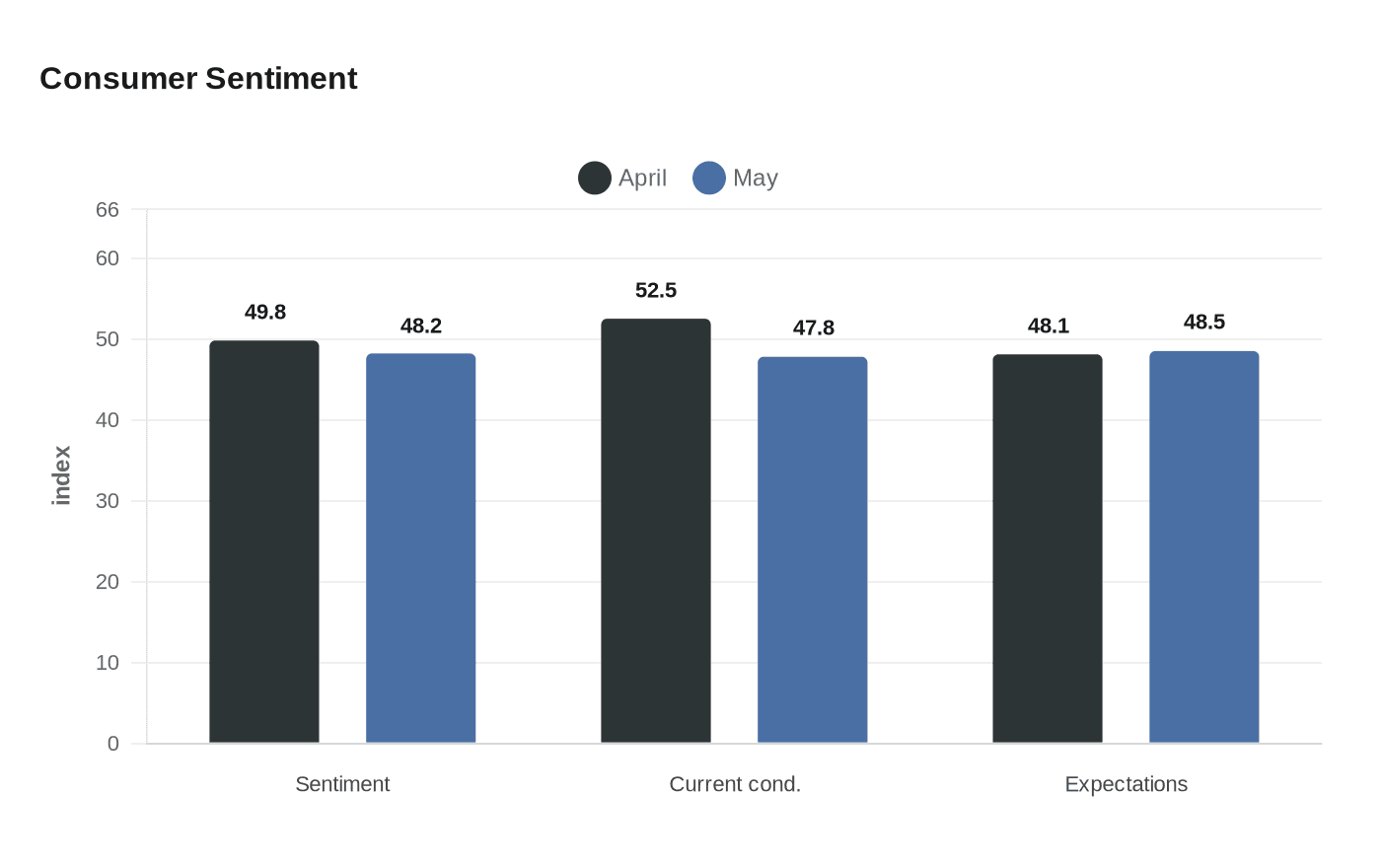
Americans are still facing a labor market that has held up, but their view of the economy sank to a new low as gasoline prices and tariff worries overwhelmed any reassurance from resilient hiring. The University of Michigan’s preliminary May consumer sentiment index fell to 48.2 from 49.8 in April, the weakest reading in the survey’s history and a level the university said was comparable to the trough reached in June 2022.
The drop was driven by a sharp deterioration in how households judged current conditions. That index fell to 47.8 from 52.5 in April, even as the expectations gauge inched up to 48.5 from 48.1. The survey was taken from April 21 through May 4, capturing a period when fuel costs were climbing and geopolitical tension in the Middle East was still unsettling consumers. By May 7, AAA said the national average price for regular gasoline had reached $4.55 a gallon after a second straight weekly increase of 25 cents.
That surge at the pump is showing up directly in household psychology. About one-third of respondents spontaneously mentioned gasoline prices, while about 30% brought up tariffs, underscoring how trade policy and energy costs are now shaping the public mood alongside inflation. Joanne Hsu, director of the University of Michigan Surveys of Consumers, said consumers were still feeling pressure from high prices, and the survey said real income expectations continued a decline that began in March.
Inflation expectations eased, but only slightly. Year-ahead price expectations fell to 4.5% in May from 4.7% in April, still well above the 2.3% to 3.0% range that prevailed in the two years before the pandemic and above the 3.4% reading seen before the Iran war. Long-run inflation expectations edged down to 3.4% from 3.5%. The university said Middle East developments were unlikely to lift sentiment meaningfully until supply disruptions were resolved and energy prices fell.
For policymakers and companies, the message is that a solid labor market is no longer enough to stabilize confidence if households keep seeing their budgets squeezed by fuel, housing and other necessities. For retailers, automakers and other consumer-facing businesses, the risk is that sentiment can turn into a spending problem if energy costs remain elevated and families continue to feel poorer even when headline economic data looks firm.
This article was produced by Prism’s automated news system from verified source data, official records, and press releases, then run through automated quality and moderation checks before publishing. The system is built and supervised by the people who set the standards it runs under. Read our full AI policy.
Did this article answer your question?