U.S. consumer sentiment sinks to record low as gas prices surge
Consumer sentiment fell to 44.8 in May, a record low, as gas prices and tariff-driven price pressure pushed inflation fears higher.
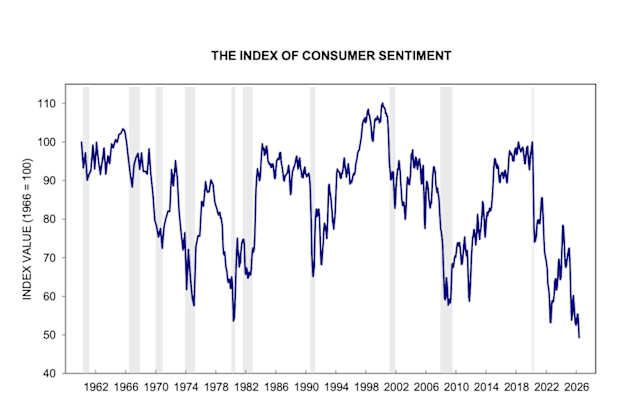
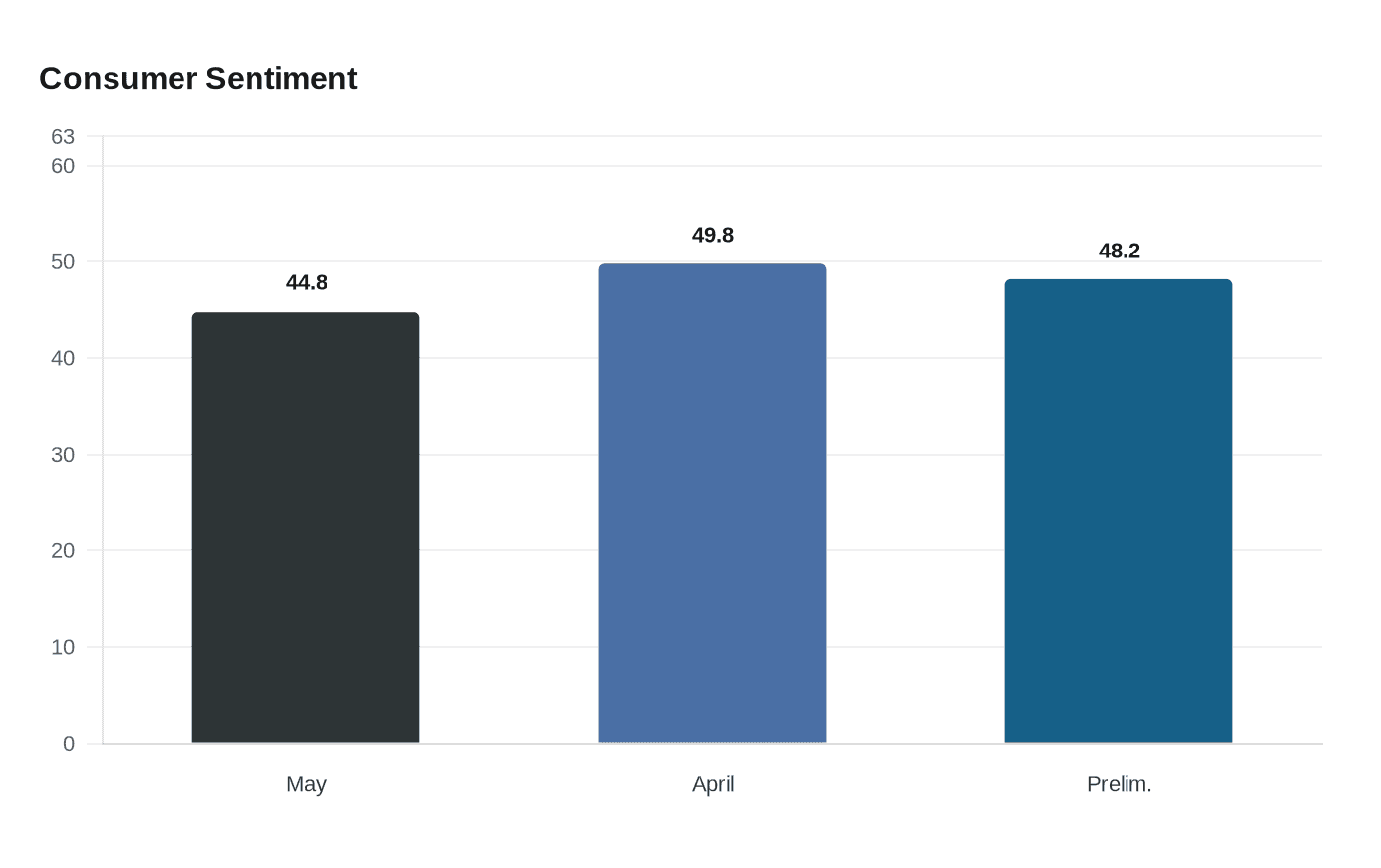
Americans are feeling worse about the economy even as policymakers keep pointing to resilience, and the latest University of Michigan survey showed that disconnect widening sharply in May. Consumer sentiment fell to 44.8, down from 49.8 in April and below the preliminary 48.2 reading, a drop that left the index at its lowest level since the survey began in 1952.
The deterioration was broad, but it was most severe among Republicans and independents, who posted their weakest readings of the current presidential administration. Democrats were little changed from April, underscoring how sharply views of the economy are now splitting along political lines. The current economic conditions gauge slipped to 45.8 and the expectations component fell to 44.1, both record lows, as households turned more pessimistic about the months ahead.

A surge in gasoline prices helped drive the decline. Higher fuel costs, linked to the Iran war, are filtering through household budgets at the pump and beyond, raising transportation costs and feeding anxiety about food and everyday goods. The survey showed that 57% of consumers spontaneously said high prices were eroding their personal finances, up from 50% in April, a sign that inflation remains the most immediate economic stress for many households.
That fear is starting to show up in expectations as well as current sentiment. Year-ahead inflation expectations edged up to 4.8% in May from 4.7% in April, while long-run expectations climbed to 3.9% from 3.5%. The University of Michigan said the long-run reading was well above the 3.4% level seen in February 2026 before the Iran conflict and far above the 2.8% to 3.2% range that prevailed in 2024.
The political stakes are rising with the prices. President Donald Trump campaigned on bringing inflation down, but the latest reading suggests many Americans are seeing the opposite: higher gasoline prices, lingering tariff effects and little relief in sight. Sentiment has now fallen for three straight months, and with long-run inflation expectations moving higher, the damage can last beyond any single price shock. Once households begin to expect inflation to stay elevated, those expectations can shape spending, wage demands and support for the White House, the Federal Reserve and Congress alike.
Know something we missed? Have a correction or additional information?
Submit a Tip