U.S. delegation presses Cuba for reforms, warns of narrow window
Washington told Havana it has only a narrow window to accept reforms, while floating Starlink and raising the pressure as Cuba’s oil supply thins.
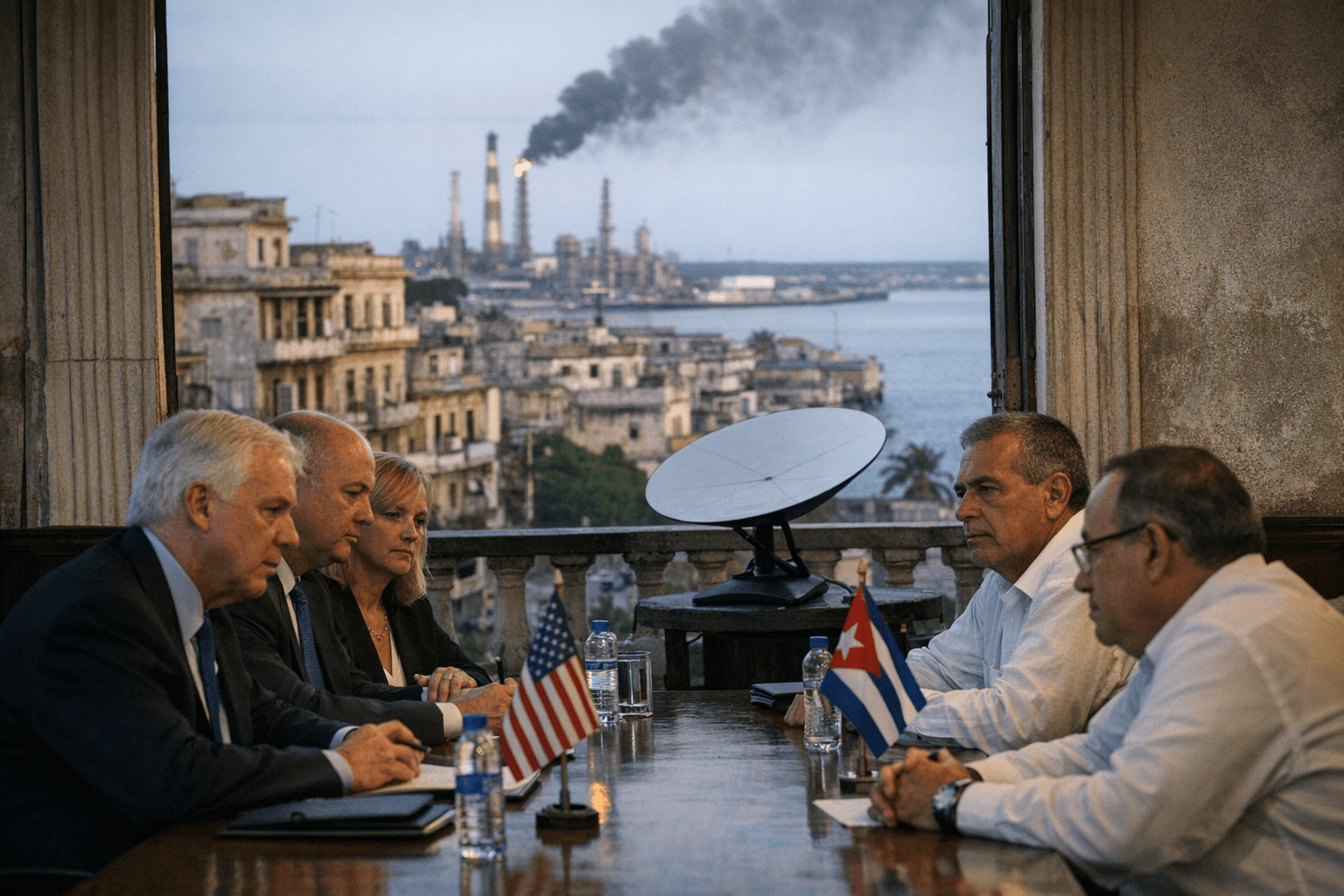
A U.S. delegation delivered Washington’s bluntest message in years to Cuba’s leaders: the window for economic and political change is narrow, and it is closing fast. In Havana last week, American officials pressed for an end to political repression, the release of political prisoners and a broader liberalization of Cuba’s battered economy, while also discussing a possible Starlink satellite internet arrangement that could help restore connectivity on the island.
The meeting carried unusual weight. It was the first landing of a U.S. government plane in Cuba since Barack Obama’s 2016 visit, a rare direct channel at a moment when Donald Trump’s administration is escalating pressure rather than easing it. Marco Rubio was not part of the delegation, but U.S. officials said he had previously met Raúl Guillermo Rodríguez Castro, the grandson of Raúl Castro, in St. Kitts and Nevis in February. Rodríguez Castro, though he holds no formal government post, is widely viewed as influential inside Cuba’s ruling structure.
The talks landed against a worsening backdrop for Havana. CBS News reported that oil shipments to Cuba had effectively stopped after Trump threatened heavy tariffs on countries exporting oil to Cuba, adding strain to an energy system already under severe stress. Trump has called Cuba a failing nation and publicly threatened possible intervention, language that raises the stakes well beyond routine diplomatic pressure. For Cuban officials, the message from Washington was not just about reform but about timing: act now, or face conditions that could deteriorate further.
That combination of demands and deadlines makes this latest approach look like a stress test of U.S. leverage. Washington is asking for politically sensitive concessions, including the release of prisoners and loosening state control over the economy, while dangling a technology offer that could improve daily life for ordinary Cubans. Yet it is doing so under open threat, with tariffs, energy disruption and regime-change rhetoric all in the background.
The question is whether this is a genuine opening or a more polished ultimatum. U.S.-Cuba relations have long swung between coercion and engagement, but Cuba’s leadership has usually viewed American pressure campaigns as an effort to force political surrender rather than negotiate gradual change. This time, the Trump administration is betting that Cuba’s deepening crisis will make the island more vulnerable to outside leverage. Whether Havana sees an opportunity or another trap will determine if the narrow window leads to talks or shuts before it fully opens.
This article was produced by Prism’s automated news system from verified source data, official records, and press releases, then run through automated quality and moderation checks before publishing. The system is built and supervised by the people who set the standards it runs under. Read our full AI policy.
Did this article answer your question?


