U.S. Deploys Thousands More 82nd Airborne Troops to Middle East Amid Iran Tensions
Major General Brandon Tegtmeier and his command staff were ordered to the Middle East as the Pentagon weighs ground operations, with roughly 3,000 82nd Airborne troops on standby.

Maj. Gen. Brandon Tegtmeier, the chief of the 82nd Airborne Division, and his headquarters staff were ordered to the Middle East as the Pentagon awaited a White House decision on possible ground operations in Iran. The orders to Tegtmeier's command element preceded a broader deployment that, according to multiple reports, could send roughly 3,000 soldiers to the region within days.
The Trump administration ordered the 82nd Airborne Division to deploy about 2,000 soldiers to the Middle East, according to a person familiar with the matter, as the White House weighed options to ease Iran's chokehold on the Strait of Hormuz. The Wall Street Journal cited two officials who put the figure at "some 3,000," while the New York Times reported that "prudent planning" was underway and that no final order had been issued for the Immediate Response Force.
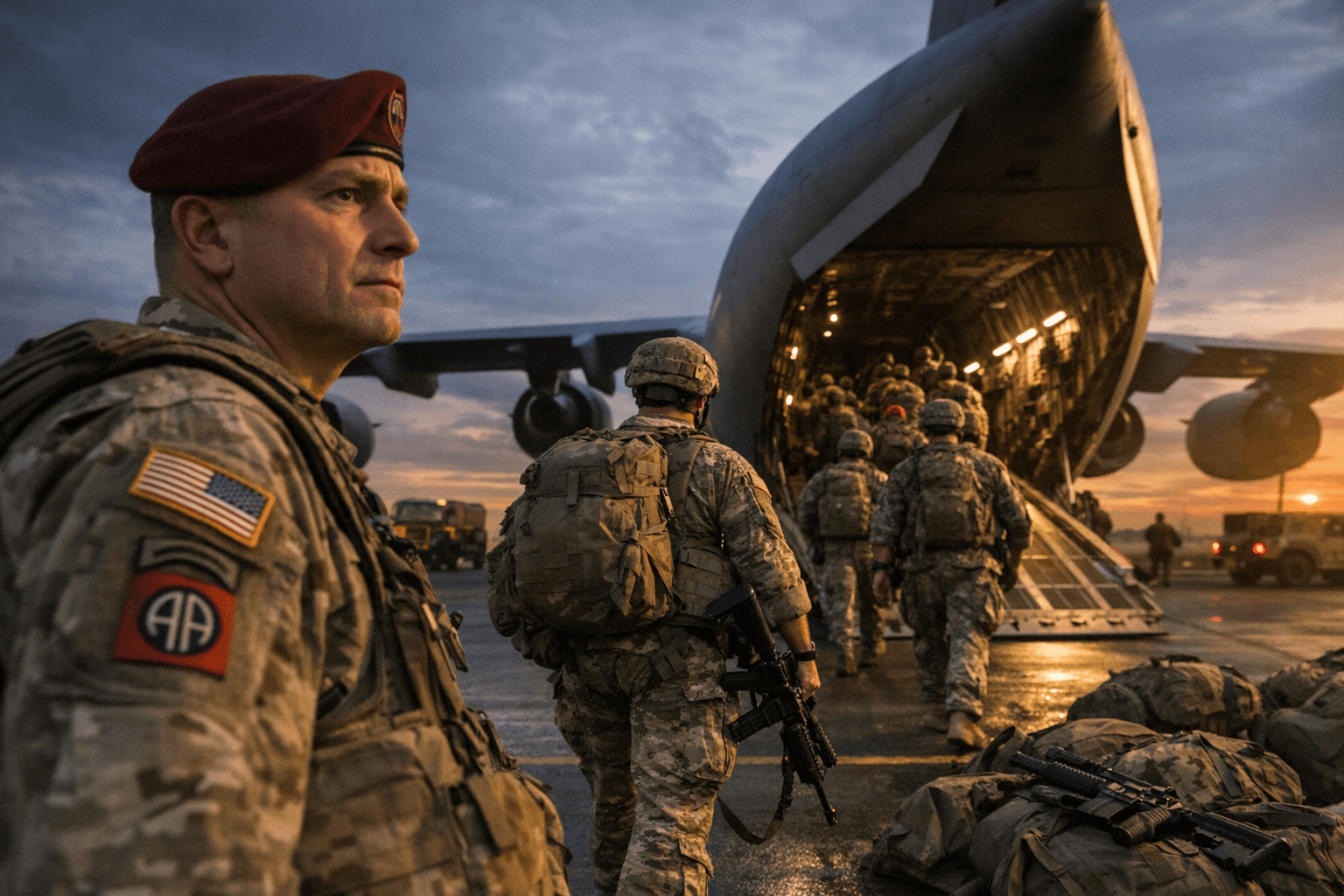
The deployment included the division's "headquarters element," support staff, and personnel who manage logistics, planning, and command operations. A brigade of about 3,000 soldiers of the 82nd is constantly on standby as the Immediate Response Force, tasked to deploy anywhere in the world within 18 hours. The division specializes in seizing contested territory by parachuting out of airplanes, though it does not deploy with tanks or other large vehicles.
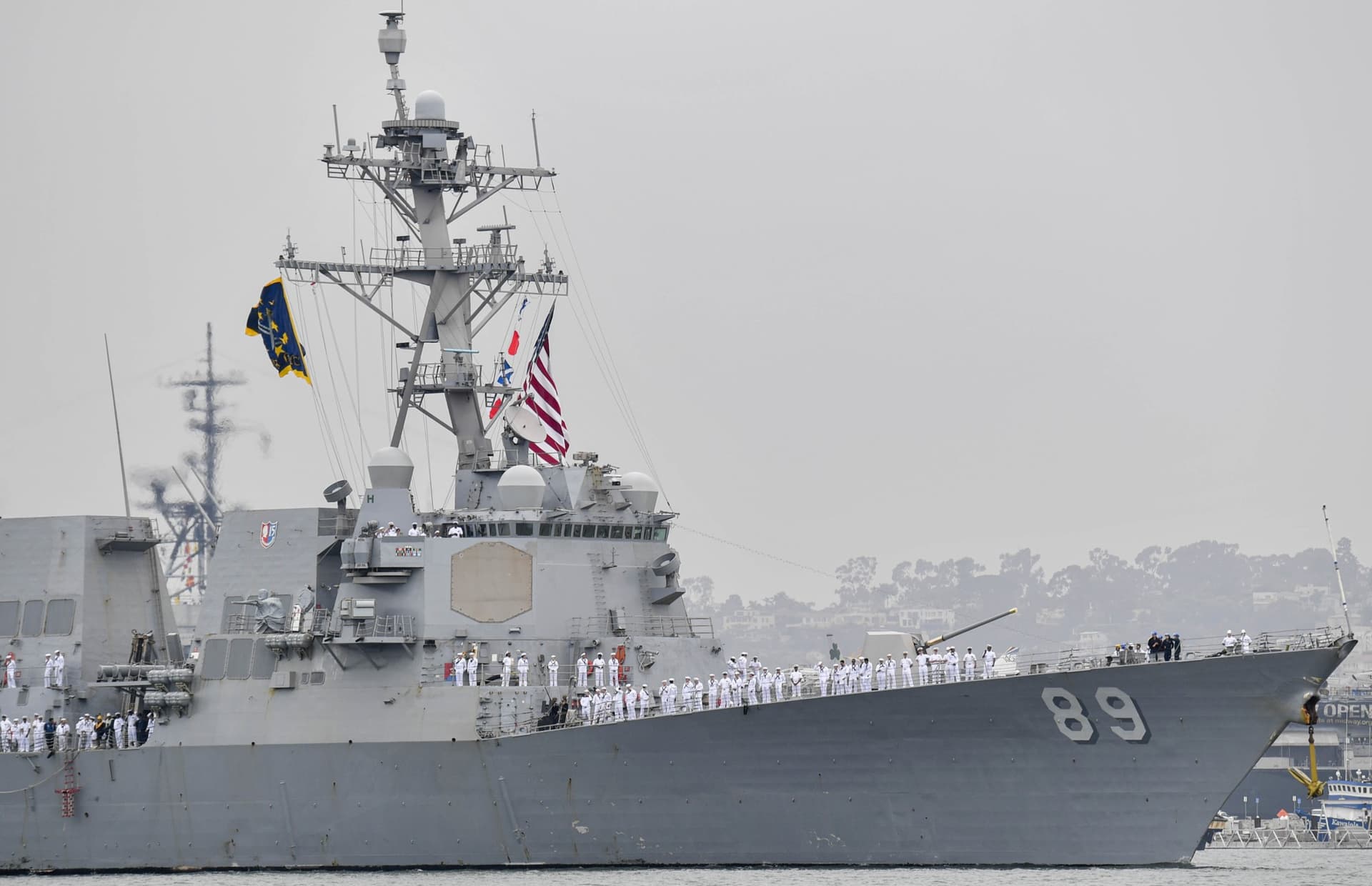
The scale of the potential ground commitment became clearer in the context of an already-expanding naval buildup. Thousands of Marines were already being moved to the Middle East, with three warships and about 2,200 Marines from an expeditionary unit having departed California, marking the second such Marine unit sent since the war began. The 31st Marine Expeditionary Unit, comprising about 2,200 troops, departed Japan on March 13 aboard the amphibious assault ship USS Tripoli, which also carries F-35 fighter jets and helicopters, along with two additional amphibious ships, and was expected to arrive by the end of the month.
The strategic logic behind the airborne deployment centered on a specific piece of Iranian territory. If President Donald Trump decided to send in ground forces, a possible mission could revolve around Iran's Kharg Island, a small five-mile landmass that handles 90% of Iran's oil exports. Trump, who ordered a large bombing raid on the island earlier this month, has described the location as Iran's "crown jewel," but had not indicated whether using ground forces to seize the territory was in the works. The Wall Street Journal also reported the buildup could give Trump the option of reopening the Strait of Hormuz by force.
Retired U.S. Marine Col. Mark Cancian, a senior adviser with the CSIS International Security Program, noted that "the paratroopers have the ability to threaten targets in the Gulf, without having to transit the Strait" and "can also arrive relatively quickly." Cancian cautioned, however, that the 82nd is light infantry and would be "vulnerable while landing and if attacked by armor," and that any mission to seize Kharg Island would be risky because "there's not a lot of support nearby."
No final order had been issued to dispatch the full 3,000-soldier Immediate Response Force, but "prudent planning" was underway, senior defense officials said. The Pentagon and U.S. Central Command declined to comment. Officials cited by the Wall Street Journal and Reuters also confirmed that a decision to put boots on the ground inside Iran had not been made.
The 82nd has mobilized on similarly short timelines before. The brigade deployed to the Middle East in January 2020 after the Baghdad Embassy attack, to Afghanistan in August 2021 to assist evacuations at Hamid Karzai International Airport, and to Eastern Europe in early 2022 following Russia's invasion of Ukraine. Speculation about the division's deployment had been building since the Washington Post reported earlier this month that the Army had canceled a major training exercise.
Iran's response to the mounting pressure remained defiant. Iran declared it would fight "until complete victory," while Turkish President Recep Tayyip Erdogan said Ankara would "continue to work with all its might" to establish peace, with plans for a multinational force including France, the U.S., and other countries to address the mine threat in the Strait of Hormuz. With roughly 50,000 American troops already stationed in the region, the potential addition of the 82nd's Immediate Response Force would represent the sharpest escalation toward ground combat since the conflict began.
Know something we missed? Have a correction or additional information?
Submit a Tip