Iran Launches Massive Ballistic Missile Barrage at Israel Amid U.S. Peace Talks
Iran sent fresh waves of ballistic missiles into Israel on Tuesday even as the U.S. quietly delivered a 15-point peace plan to Tehran — a plan Iran publicly denies ever receiving.

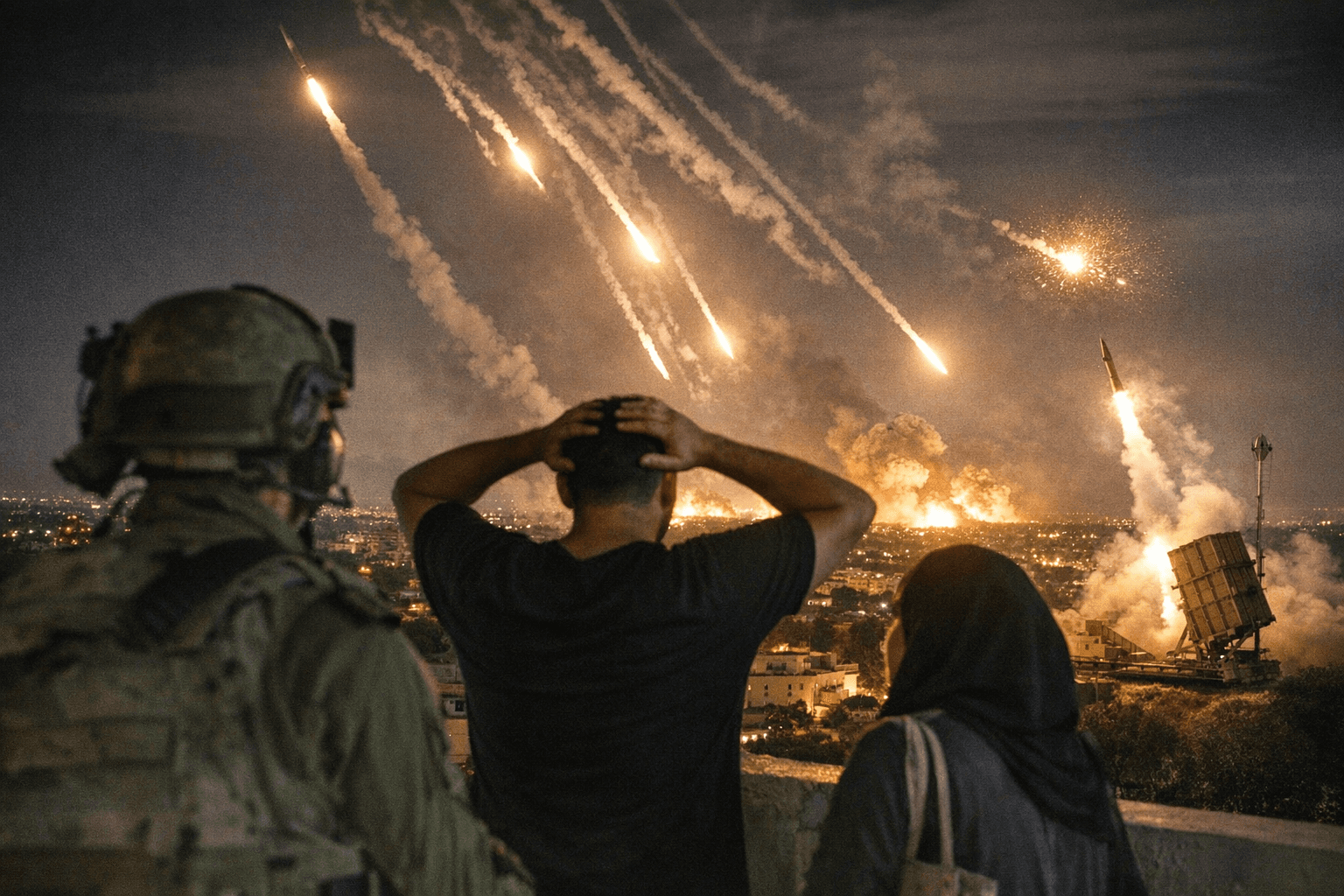
Rocket trails lit up the sky above the Israeli coastal city of Netanya on Tuesday as Iran launched another wave of ballistic missiles at central and southern Israel, a brazen escalation that unfolded hours after President Donald Trump declared the U.S. was making real progress toward ending the war and just as Washington's secret 15-point peace proposal became public knowledge.
The U.S. gave Iran a 15-point proposal for a possible deal to end the war, one that includes many of the same demands Washington made during the last round of nuclear talks in Geneva, according to U.S. and Israeli sources. The plan was reportedly delivered through Pakistan, though it remains unclear how widely it has been circulated within Iran's leadership or whether Tehran would consider it a viable basis for negotiations.
The contradiction at the heart of the diplomacy is stark. Trump said in the Oval Office that the U.S. and Iran are "in negotiations right now," suggesting Tehran is eager to make a peace deal, even as the Islamic Republic has denied it is in direct talks with Washington. Iran's parliament speaker Mohammad Baqer Qalibaf on Monday dismissed the reports of talks as "fake news."
While diplomats traded competing narratives, Iran's missiles kept flying. Rocket trails were visible in the sky above Netanya amid a fresh barrage of Iranian missile attacks on Tuesday. An explosion was reported in northern Israel, injuring at least one person, while other blasts were reported in southern Israel. At least nine people were injured in Bnei Brak in central Israel in one of the day's impacts.
Israel maintains a multi-layered missile defense system that includes the Arrow anti-ballistic missile system designed to intercept threats launched from Iran, David's Sling for medium-range missiles, and Iron Dome for shorter-range rockets. But the defenses have not been impenetrable. The Israeli air defense system that failed to shoot down two Iranian ballistic missiles that struck the southern cities of Dimona and Arad on Saturday night was the medium-range David's Sling; according to the Israeli Air Force's probes, there was no connection between the errors that led to the two impacts. The Israeli Ministry of Health said at least 180 people were wounded in those attacks.
Around 15 people in Israel and four Palestinians in the occupied West Bank have been killed by Iranian strikes since the start of the war on Feb. 28, according to Israeli and Palestinian authorities.
The 15-point proposal, details of which emerged Tuesday, sets a high bar for Tehran. The American document includes stringent conditions for Iran, most notably dismantling its nuclear capabilities, halting uranium enrichment within its borders, handing over enriched materials to the IAEA, closing key nuclear sites such as Natanz, Fordow, and Isfahan, and ceasing support for regional militias. U.S. envoy Steve Witkoff has told Trump that the Iranians agreed on several key points, including on giving up their stockpile of highly enriched uranium. That would be a major concession, but it is unclear if anyone with authority in Tehran has actually offered it.
Israel's position adds a further layer of complication. Prime Minister Benjamin Netanyahu is concerned Trump might strike a deal that falls well short of Israel's objectives, includes significant concessions, and limits Israel's ability to conduct strikes against Iran, according to two Israeli sources. The Israeli military said it cannot comment on Trump's announcement of negotiations, calling it a "political echelon matter," while adding it will continue to strike in Iran according to its plans until instructed otherwise.
At the heart of the current conflict, the plan is almost certain to include provisions on the Strait of Hormuz, specifically guarantees that the vital oil shipping route remains open and secure after weeks of disruption. The diplomatic efforts are also aimed at securing safe passage for ships through the strait.
Trump said he decided to back off from his recent threat to order strikes on Iranian energy infrastructure "based on the fact we're negotiating." But that restraint has a deadline: Trump suspended planned strikes on Iranian power plants only until Friday. One of the mediating countries proposed a temporary ceasefire to allow for detailed negotiations, but the Trump administration prefers negotiating under fire for now to maintain leverage; U.S. and Israeli officials are planning for another two to three weeks of war regardless of whether talks take place.
Know something we missed? Have a correction or additional information?
Submit a Tip