Pope Leo XIV's first encyclical targets AI, workers' rights and war
Pope Leo XIV will tie AI to workers’ dignity and war in his first encyclical, landing on the 135th anniversary of Leo XIII’s labor text.

Pope Leo XIV is preparing to use his first major teaching document to push the Vatican into the center of the global fight over artificial intelligence. The encyclical, titled Magnifica Humanitas, will be presented on May 25 in the Synod Hall in Vatican City at 11:30 a.m. Rome time, and Leo himself will take part in the launch, a break from the usual papal script. Christopher Olah, co-founder of Anthropic, is also expected at the event, a sign that the Church wants this message heard inside the technology industry as well as in parishes.
The Vatican has framed the text as a defense of “the human person” in the age of AI, an issue that now reaches far beyond theology. That makes the encyclical relevant to the same debates driving Washington, Brussels and Silicon Valley: whether automation should be restrained, how much responsibility employers bear for job losses, and who answers when machine decisions affect workers, patients or soldiers. Sources expect the document to speak not only about AI but also about wars and wider global conflict, widening its scope from workplace disruption to the moral cost of modern power.
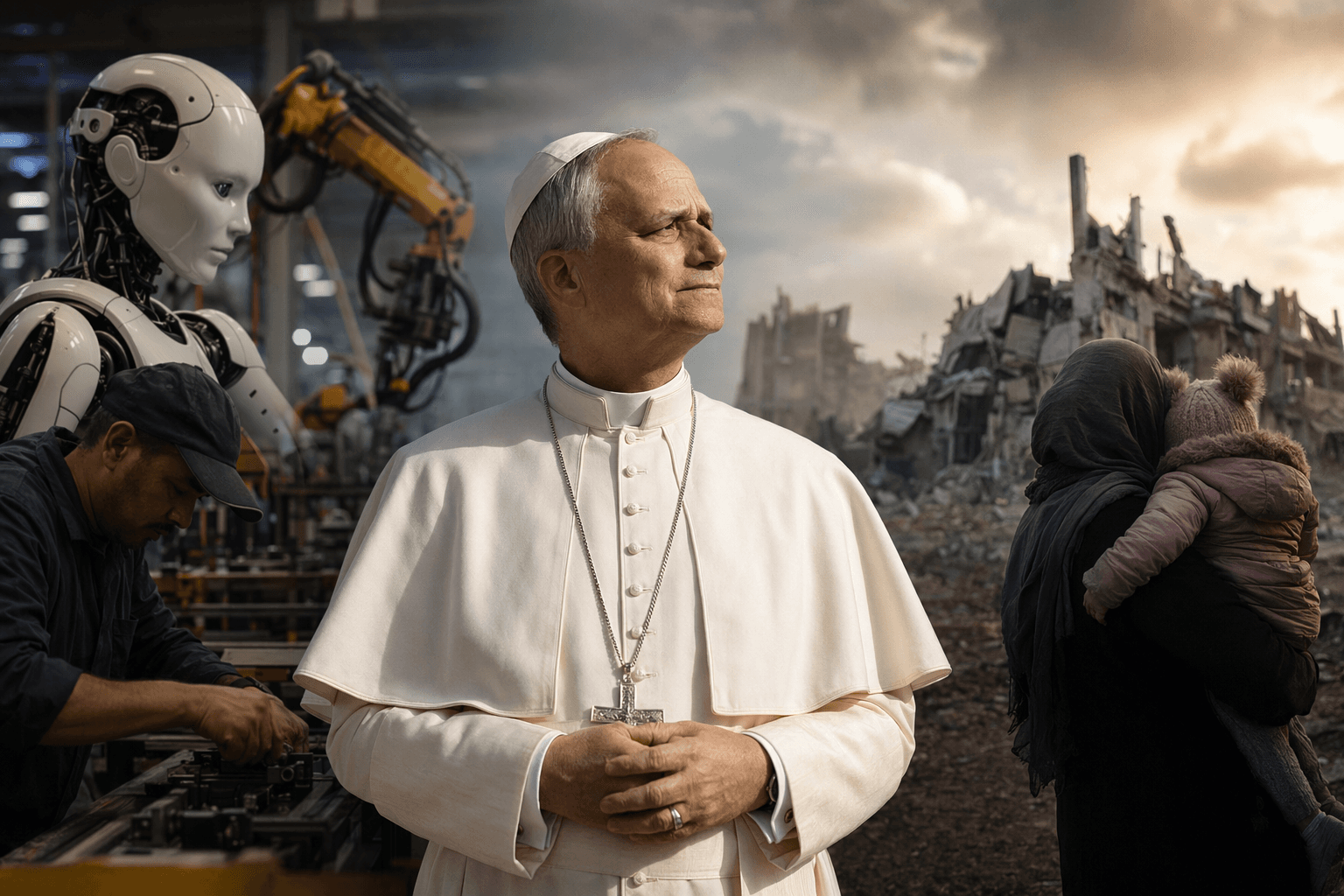
The timing is loaded with Catholic history. Leo signed the text on May 15, the 135th anniversary of Rerum Novarum, Pope Leo XIII’s 1891 encyclical on capital and labor that helped define the Church’s modern social teaching. Leo XIV, the first U.S. pope, has already signaled that he intends to treat AI as a moral question, not just a technical one. In a June 2025 message to a Rome conference on artificial intelligence, ethics and corporate governance, he said the Church wanted to help shape a “serene and informed discussion” and warned that AI could be used for selfish gain, conflict or aggression. He said its effects should be weighed by the “integral development of the human person and society.”

By November, Leo was again linking AI to human dignity in a Vatican message on medicine. That steady drumbeat now culminates in an encyclical that could give Catholic teaching new influence over policy arguments already unfolding in the United States and Europe. For governments wrestling with regulation, for companies racing to deploy AI, and for workers fearful of being left behind, the Vatican is stepping forward not as a bystander but as a moral authority seeking to define the rules of the age.
This article was produced by Prism’s automated news system from verified source data, official records, and press releases, then run through automated quality and moderation checks before publishing. The system is built and supervised by the people who set the standards it runs under. Read our full AI policy.
Did this article answer your question?