U.S. Destroys 16 Iranian Mine-Laying Vessels Guarding Hormuz Oil Lane
U.S. Central Command says it eliminated 16 Iranian mine-laying ships near the Strait of Hormuz, as conflicting figures and unconfirmed mine reports cloud the picture.

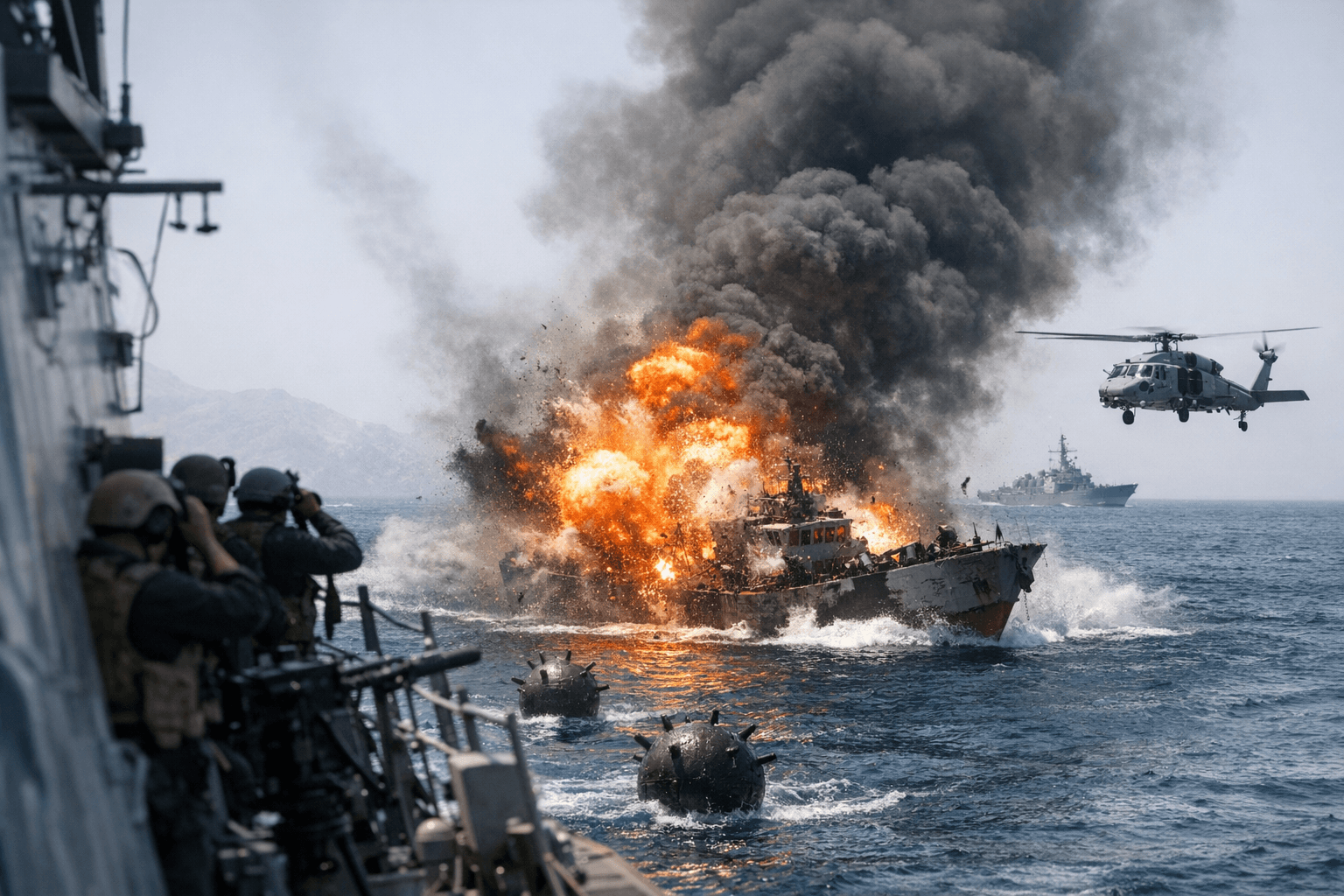
U.S. Central Command said it had "eliminated" 16 Iranian mine-laying vessels near the Strait of Hormuz on Tuesday, a strike that carries immediate consequences for the world's most critical oil shipping corridor. Centcom posted a video on X that appears to show the ships being struck.
The announcement came with a notable discrepancy: President Donald Trump had separately stated that U.S. forces struck 10 inactive Iranian boats in the strait, saying they were "completely destroyed." The gap between Centcom's count of 16 and Trump's figure of 10 has not been officially explained, and neither the Pentagon nor the White House has issued a clarifying statement.
Trump had warned Iran in stark terms earlier in the day. He initially said there had been "no reports" of Iran placing mines in the strait, then pivoted to a direct threat: any mines must be removed "IMMEDIATELY" or Iran would face military consequences "at a level never seen before." The president had earlier vowed to deal with any mine-laying vessels "quickly and violently."
Whether Iranian forces had actually laid mines in the Strait of Hormuz remains contested. CNN reported that a few dozen mines have been placed in recent days, while U.S. officials separately told CBS News that Iran may be preparing to deploy mines in the strait. The BBC noted that whether any mines had been laid since the war began on February 28 is unclear. No official U.S. government statement has confirmed that mines were in the water at the time of the strikes.
The Strait of Hormuz is the world's single most important chokepoint for oil supply, with roughly 20 percent of global petroleum trade passing through its narrow waters. Any sustained mining campaign there would send immediate shockwaves through international energy markets and alarm importing nations across Asia and Europe.
The maritime action unfolded alongside intensifying Israeli air operations. Israel launched what the Israeli Defense Forces described as a "massive wave of attacks against the infrastructure of the Iranian terrorist regime in Tehran," according to a post on the IDF's Farsi-language account on X. The Israeli military said it had earlier struck key command centers of Iran's armed forces in Tehran and Tabriz. Israel also launched fresh strikes on southern Beirut, targeting what it described as Hezbollah infrastructure. Al Jazeera reported explosions in Tehran shortly after the IDF announcement.
Iran's foreign minister, Abbas Araghchi, rejected the underlying U.S. justification for the strikes entirely. In a post on X, he called American claims about Iranian intentions "a sheer and utter lie" and wrote: "The sole purpose of that lie is to justify Operation Epic Mistake, a misadventure engineered by Israel and paid for by ordinary Americans." The phrase was a pointed dig at the U.S. name for its military campaign, Operation Epic Fury.
Inside Iran, authorities signaled zero tolerance for domestic dissent. The country's police chief warned that anyone considering protest against the government would be treated "in the same way we deal with the enemy."
The Pentagon confirmed that approximately 140 American service members have been wounded since the conflict began on February 28, eight of them severely. No casualty figures for Iranian forces or civilians have been released by either side.
This article was produced by Prism’s automated news system from verified source data, official records, and press releases, then run through automated quality and moderation checks before publishing. The system is built and supervised by the people who set the standards it runs under. Read our full AI policy.
Did this article answer your question?