U.S. economy grew 1.6% in first quarter, slower than first estimated
Consumer spending was weaker than first thought, and that is the clearest sign the first-quarter slowdown may be more than a statistical quirk.
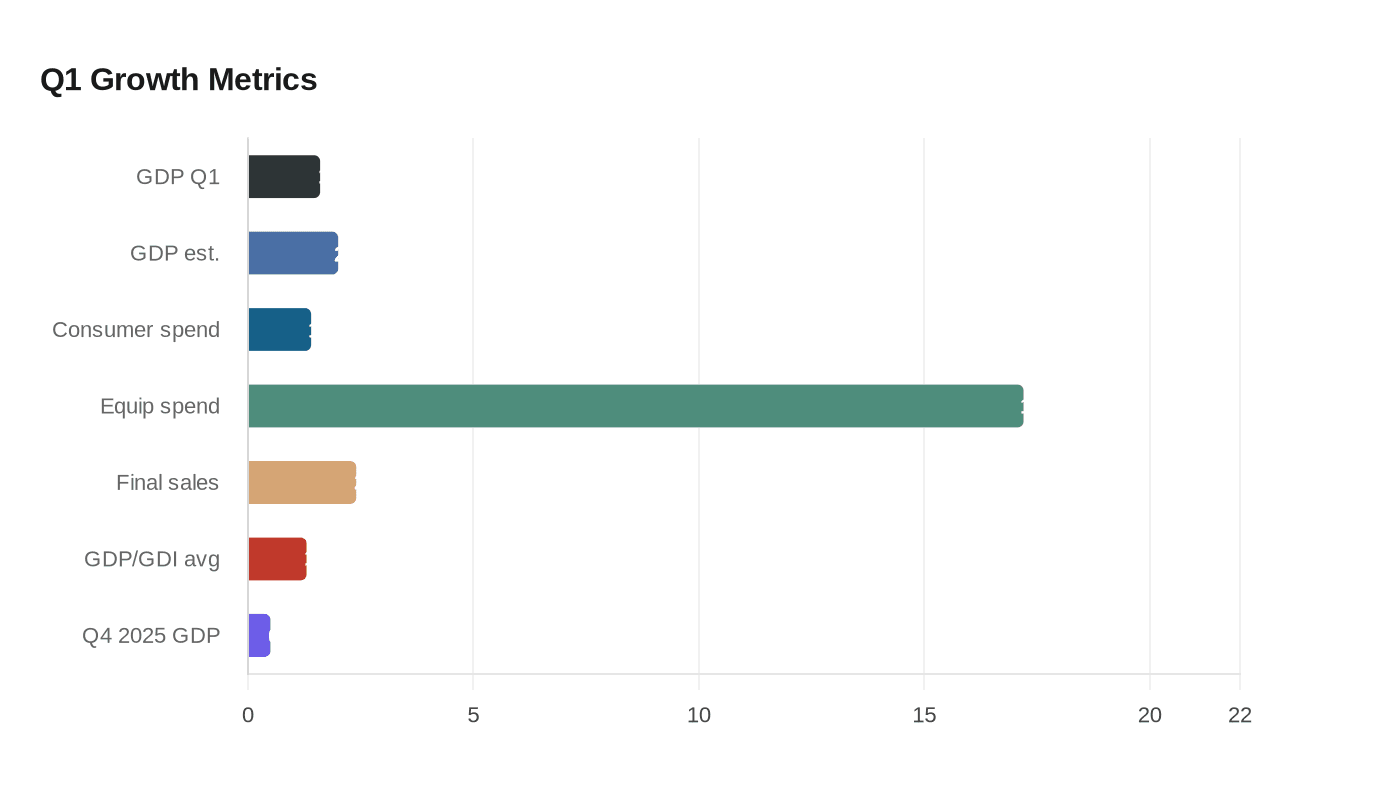
Households carried less of the U.S. economy in the first quarter than first estimated, a worrisome sign as spending lost momentum and inflation pressure stayed sticky. The Commerce Department said Wednesday that real gross domestic product rose at a 1.6% annual rate from January through March, down from the 2.0% pace first reported in April and below economists’ expectations that the figure would hold steady.
The revision put the consumer at the center of the slowdown. Consumer spending, which accounts for more than two-thirds of economic activity, was marked down to a 1.4% annualized pace from 1.6%. That weaker reading comes as households face high gasoline prices, policy uncertainty and inflation linked to the Iran war, all of which are squeezing budgets and making the first quarter look less resilient than the advance estimate suggested.
Even so, the economy still expanded faster than it did at the end of 2025, when GDP grew just 0.5% in the fourth quarter. Business investment provided an important offset, especially in equipment spending, which remained a strong 17.2% annualized. The Bureau of Economic Analysis said exports, investment, consumer spending and government spending all contributed to growth, while imports rose and subtracted from the total.
A closely watched gauge of underlying private demand, final sales to private domestic purchasers, came in at 2.4%, down from the prior 2.5% estimate. The figure suggests demand inside the economy was still positive, but less robust than the headline GDP number alone implied. Profits from current production also slowed sharply, and the average of GDP and gross domestic income increased only 1.3%, another sign that the first-quarter expansion was thinner than it first appeared.
The revision matters because it lands at a delicate moment for policymakers. Slower growth alongside persistent price pressure is the kind of combination that can complicate Federal Reserve decisions, especially if energy costs and geopolitical shocks keep weighing on household finances. For now, artificial intelligence-related spending remains a major source of support for overall activity, but the weaker consumer reading raises the risk that that support is not broad enough to carry the economy much further.
The Bureau of Economic Analysis said the next GDP release is scheduled for June 25, when investors and policymakers will get a fresh read on whether the first-quarter softness was temporary or the start of a more durable slowdown.
This article was produced by Prism’s automated news system from verified source data, official records, and press releases, then run through automated quality and moderation checks before publishing. The system is built and supervised by the people who set the standards it runs under. Read our full AI policy.
Did this article answer your question?

