U.S. economy grew at 1.6% pace as inflation stayed sticky
Growth cooled to 1.6% while inflation stayed near 4.5%, leaving the Fed with less room to cut rates and investors little comfort.
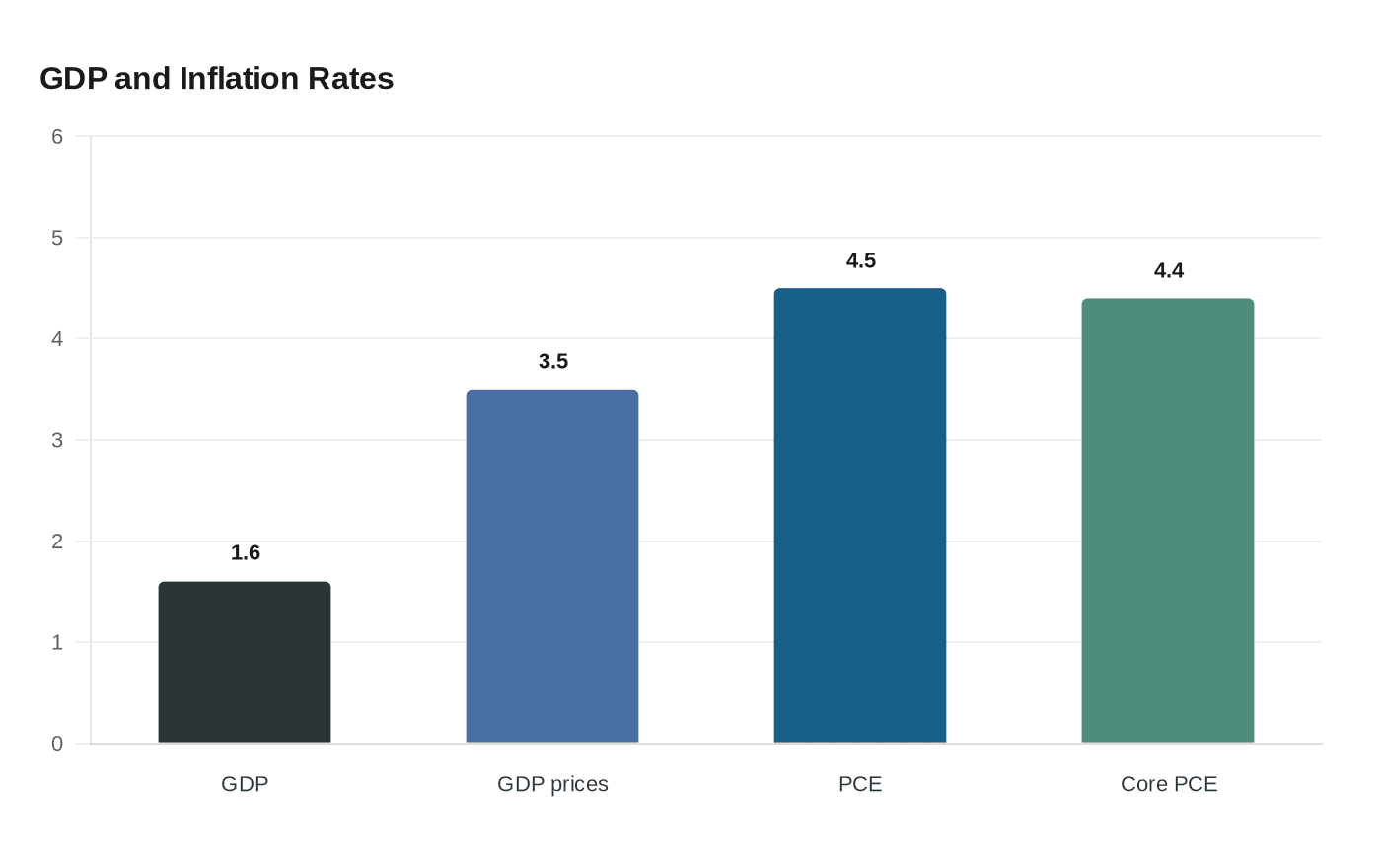
The U.S. economy did not stall in the first quarter, but it slowed enough to make the inflation problem harder to ignore. Real gross domestic product was revised down to a 1.6% annualized pace from the 2.0% advance estimate, with the weaker reading reflecting downward changes to inventory investment and consumer spending.
That matters because the revised growth figure pointed to fading household demand even before the quarter ended. The latest GDP report showed gross domestic purchases prices rising 3.5%, the personal consumption expenditures price index holding at 4.5%, and core PCE edging up to 4.4%. None of those numbers suggests inflation has yet returned to anything close to the Federal Reserve’s 2% target.
Markets read the combination the same way: not as a clean warning sign of recession, but as another reminder that slower growth alone is not enough to justify easier policy when price pressures remain elevated. U.S. stock index futures were already under pressure amid escalating U.S.-Iran tensions, and stocks opened slightly lower after the GDP and inflation data landed. For investors, the message was awkwardly mixed, with no obvious path to relief from borrowing costs or to a rapid shift in central bank policy.
A separate monthly report sharpened that tension. Personal income in April was essentially unchanged, while personal consumption expenditures rose. The PCE price index increased 3.8% from a year earlier, the fastest annual pace since May 2023, after a 3.5% rise in March. The monthly increase was 0.4%, down from 0.7% in March, but still strong enough to reinforce the sense that inflation is proving sticky as wage and spending gains lose some momentum.
The GDP revision also showed the economy was still being supported from several directions, with exports, investment, consumer spending and government spending all adding to growth even as imports rose and subtracted from the total. That leaves policymakers with a narrower margin for maneuver. Chicago Federal Reserve President Austan Goolsbee warned that an oil shock tied to the war in Iran could intensify inflationary pressure and complicate monetary policy further.
The next GDP release, including the third estimate and additional tables, is scheduled for June 25. Until then, the latest data leave the same uneasy conclusion in place: the economy is still expanding, but not fast enough to make sticky inflation feel benign.
This article was produced by Prism’s automated news system from verified source data, official records, and press releases, then run through automated quality and moderation checks before publishing. The system is built and supervised by the people who set the standards it runs under. Read our full AI policy.
Did this article answer your question?