US envoy urges Taiwan parliament to pass stalled defense package
Washington is pressing Taiwan’s opposition-led parliament to unlock a NT$1.25 trillion defense plan as delays threaten missile, air-defense and drone deliveries.
Taiwan’s defense fight has moved from budget politics to a test of U.S. resolve, with Washington’s top envoy in Taipei publicly urging the opposition-led parliament to approve a stalled NT$1.25 trillion, about US$40 billion, package that President Lai Ching-te proposed to run through 2033.
Raymond Greene, the de facto U.S. ambassador and director of the American Institute in Taiwan, pressed lawmakers to move ahead with the spending plan, arguing that integrated air and missile defense systems and drones are urgently needed and in high demand globally. The package, unveiled in late November 2025 and advanced by the Executive Yuan on November 27, was meant to reinforce Taiwan’s defenses at a time of rising Chinese pressure and to fund a multilayered T-Dome air-defense network.
The scale of the plan shows how far Taipei wants to go. Taiwan’s government has said it wants defense spending to exceed 3% of gross domestic product in 2026 and reach 5% by 2030. The Ministry of National Defense has said the special budget would cover precision artillery, long-range missiles, uncrewed platforms, counter-drone systems, air-defense and anti-armor systems, AI-enabled systems, sustainment and wartime production capabilities, and Taiwan-U.S. partnership equipment.
The Legislative Yuan has not yet approved the package, and the political stalemate has stretched into 2026. Taiwan’s main opposition party, the Kuomintang, says it supports defense spending in principle but will not approve what it calls blank checks without more detail. That resistance has turned the budget into a broader clash over oversight, urgency and how much latitude the executive branch should get as Beijing keeps up military pressure across the Taiwan Strait.
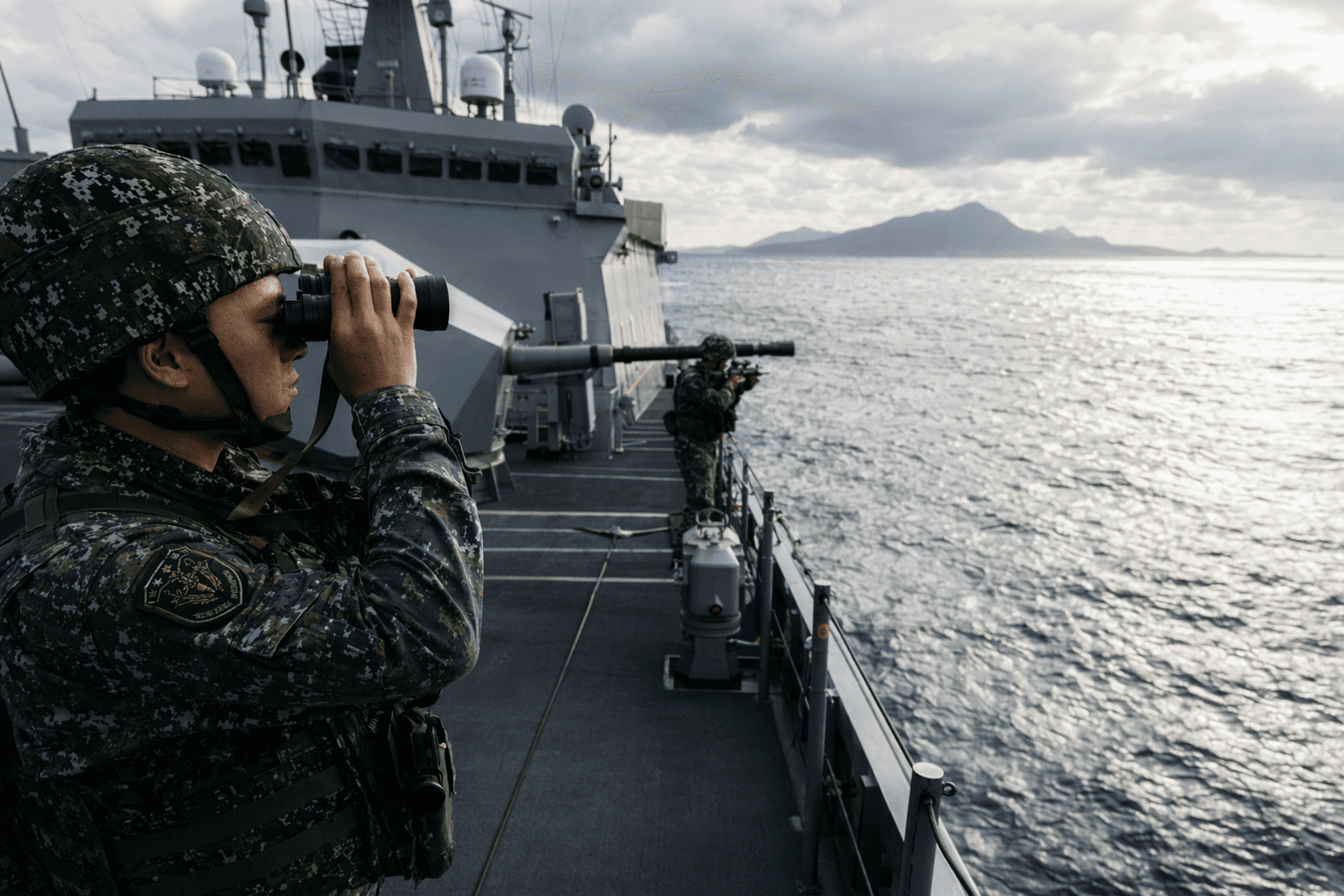
Greene’s message also reflected a harder-edged U.S. view of the clock. He pointed to weapons already approved for sale, including the HIMARS rocket system made by Lockheed Martin, and said the budget also includes air-defense systems and drones. He argued that combat in the Middle East and Ukraine has made clear why those capabilities matter and why production queues matter as well.
Taiwanese officials have warned that further delay could push the island back in line for U.S. weapons deliveries, a concern that gives the budget immediate strategic weight. In April, U.S. Assistant Secretary of Defense John Noh told Congress that the Pentagon had worked closely with Taiwan’s Ministry of National Defense on the special defense budget and urged faster movement, underscoring Washington’s impatience with deadlock on an issue that now sits at the center of deterrence against China.
This article was produced by Prism’s automated news system from verified source data, official records, and press releases, then run through automated quality and moderation checks before publishing. The system is built and supervised by the people who set the standards it runs under. Read our full AI policy.
Did this article answer your question?