US, EU deepen critical minerals cooperation to cut China dependence
Washington and Brussels agreed to coordinate critical-minerals policy, targeting China’s processing dominance with price floors, subsidies and offtake deals.
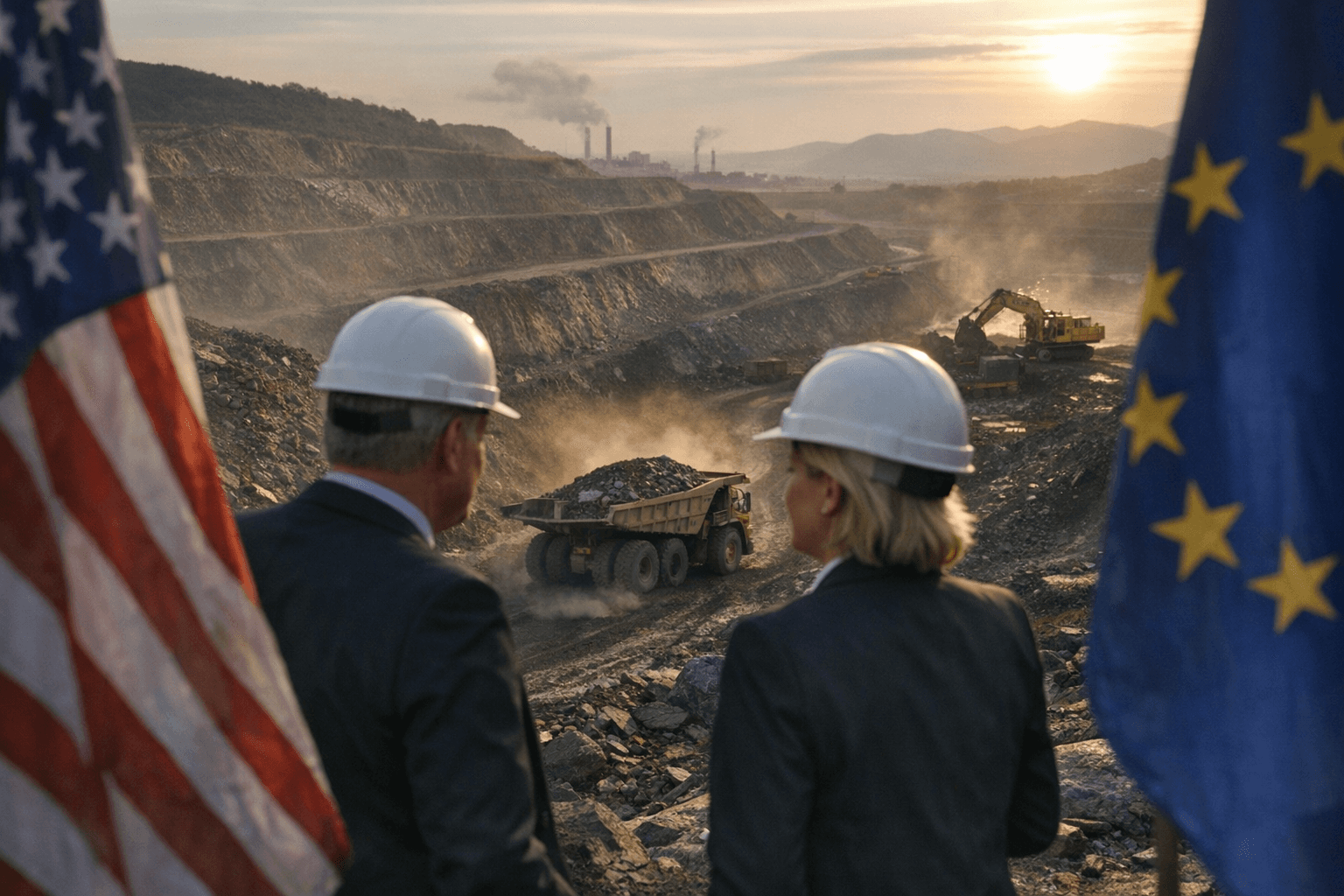
Critical minerals have become a choke point for batteries, semiconductors and advanced weapons, and Washington and Brussels moved to confront that risk with a new transatlantic framework aimed at loosening China’s grip on the supply chain. Secretary of State Marco Rubio and EU Trade Commissioner Maroš Šefčovič signed a memorandum of understanding at the State Department in Washington, while U.S. Trade Representative Jamieson Greer announced a separate action plan to align trade policy on the same issue.
The deal is designed to do more than signal intent. The U.S. trade office said the action plan will be the primary mechanism for coordinating trade policies and measures on critical minerals supply chains, with an eye toward a binding plurilateral agreement later on. The plan says the two sides will examine market and trade tools based on reference prices, including border-adjusted price floors, standards-based markets, price-gap subsidies and offtake agreements, starting with mutually agreed select critical minerals and the supply chains built around them.
That matters because the bottleneck is not only mining, but processing. China’s dominance in refining and other midstream stages has long given it leverage over rivals, allowing it to shape market conditions in ways that leave manufacturers exposed. Rubio avoided naming China in his public remarks, but he said the concentration of supply in one or two countries was too risky. For automakers, chipmakers and defense contractors, the issue is whether Western governments can create enough protected demand to pull investment into non-Chinese mining, refining and recycling capacity.
The new U.S.-EU move builds on a wider push that gathered speed earlier in the year. The United States hosted an inaugural Critical Minerals Ministerial on February 4, 2026, drawing delegations from more than 50 nations, and U.S., EU and Japanese officials said there that they intended to develop similar action plans. The European Union already has a legal base for the effort: its Critical Raw Materials Act, adopted on April 11, 2024, set out a framework for securing and sustaining supply across the whole chain, from extraction to processing and recycling. The European Commission also says the Minerals Security Partnership Forum now brings together 15 MSP partners and another 15 critical mineral-producing and consuming countries.
The transatlantic accord is still a framework, not a final treaty, but it is a meaningful step toward a more coordinated industrial strategy. Greer’s separate action plan with Mexico earlier in 2026 explored similar border-adjusted price floors, underscoring that the United States is trying to build a broader coalition around the same policy tools. For companies that rely on rare earths and other strategic inputs, the result could eventually reshape sourcing, pricing and where new manufacturing capacity is built.
This article was produced by Prism’s automated news system from verified source data, official records, and press releases, then run through automated quality and moderation checks before publishing. The system is built and supervised by the people who set the standards it runs under. Read our full AI policy.
Did this article answer your question?

