U.S. factory orders jump 1.5%, fueled by AI-driven electronics demand
Electronics orders surged to a 25-year high, lifting March factory bookings 1.5% and hinting AI spending is finally broadening through U.S. industry.

Orders for U.S. factory goods jumped 1.5% in March to $630.4 billion, with the biggest lift coming from electronics tied to the artificial intelligence buildout. Computers and electronic products rose 3.7% to $29.6 billion, the strongest monthly level in 25 years, while electromedical, measuring and control instruments climbed 7.9% to a record $10.6 billion.
The March gain was far stronger than economists’ 0.5% forecast and followed a revised 0.3% increase in February. On a year-over-year basis, factory orders were up 3.7%, a sign that manufacturing has begun to recover after a difficult stretch. The Census Bureau said shipments of manufactured goods rose 1.4% to $633.9 billion, while unfilled orders edged up 0.1% to $1.5409 trillion. The unfilled orders-to-shipments ratio slipped to 6.88 from 6.92 in February.
The numbers suggest the AI investment boom is reaching beyond software and cloud services and into physical equipment, instruments and industrial supply chains. Durable goods orders rose 0.8% to $318.9 billion, and nondefense capital goods orders excluding aircraft increased 3.3% in March after a revised 1.6% gain in February. That pattern points to stronger business equipment spending, which can feed through to first-quarter growth and later into factory employment and capital investment plans.
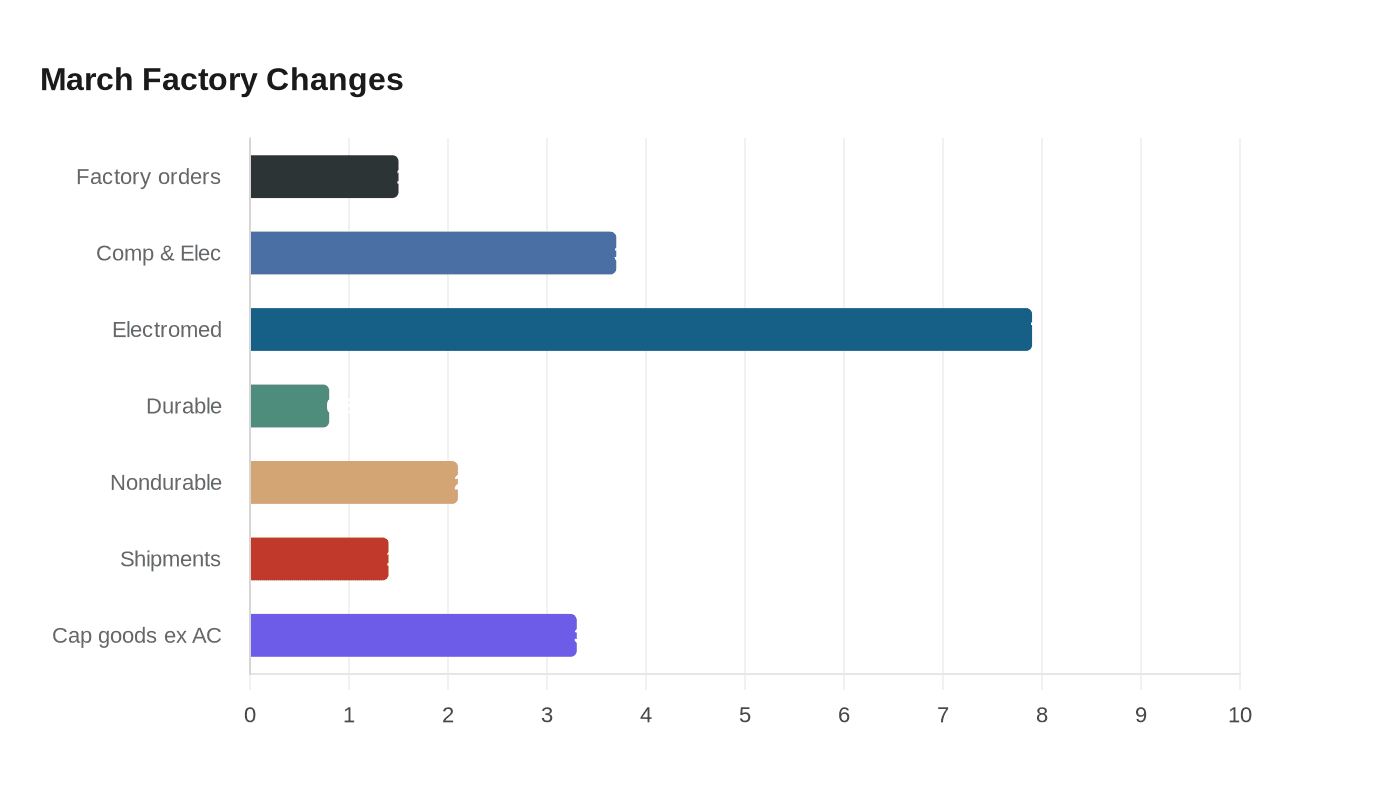
The broader mix also improved beyond electronics. Nondurable goods orders rose 2.1% to the highest level since October 2022, indicating demand was not confined to one narrow segment. Manufacturing still accounts for 10.1% of the U.S. economy, and the sector has been working through the drag from President Donald Trump’s tariffs last year, even as some producers have benefited from stronger orders tied to data centers and advanced computing.
Still, the industrial backdrop remains uneven. The Institute for Supply Management’s April manufacturing index came in at 52.7, marking a fourth straight month of expansion, but the report also showed employment contracting, supplier deliveries slowing and prices rising. Higher oil prices, which have jumped nearly 50%, and longer delivery times tied to conflict in the Middle East have also added pressure on input costs. For the Federal Reserve, the March factory report leaves a split message: AI-related investment is clearly supporting demand, but tariffs, energy shocks and supply disruptions are still weighing on the broader factory base.
This article was produced by Prism’s automated news system from verified source data, official records, and press releases, then run through automated quality and moderation checks before publishing. The system is built and supervised by the people who set the standards it runs under. Read our full AI policy.
Did this article answer your question?