U.S. firms in Europe see stable transatlantic ties after trade deal
Most U.S. firms in Europe expected stable transatlantic ties after the EU-US deal, with 51% seeing calm ahead and 28% bracing for worse relations.
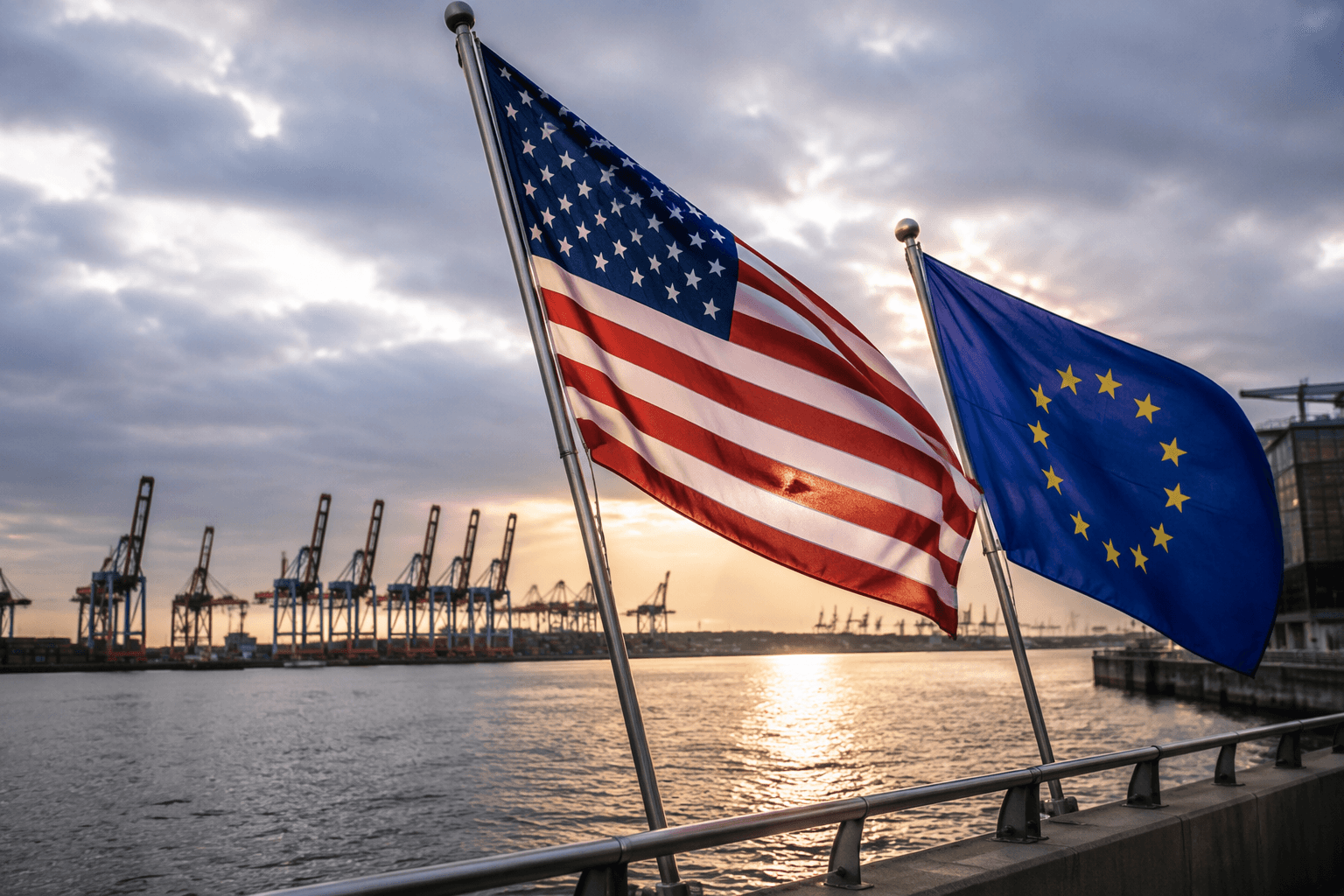
Political anxiety over transatlantic trade has stayed loud, but U.S. companies operating in Europe expected a steadier picture, with 51% seeing stable ties over the next 12 months and 28% predicting worse relations. The survey marked a clear improvement from 2025, when nearly half of respondents expected economic ties to deteriorate.
The readout came a year after the EU-US framework agreement, which AmCham EU said had brought more predictability to transatlantic trade and investment. Its annual Transatlantic Economy review, now in its 23rd edition and published March 16 by the U.S. Chamber of Commerce and AmCham EU, has tracked jobs, trade and investment across the Atlantic for years.
The shift in sentiment did not mean friction had disappeared. Tariffs, changing compliance rules and lingering political tension still shaped day-to-day planning for firms on both sides of the Atlantic. Even so, the latest survey suggested many companies had settled on a workable baseline rather than preparing for a fresh shock.
That matters because businesses move quickly when policy risk rises. Capital spending, hiring and supply-chain decisions often react to the prospect of tariff changes or regulatory clashes long before any formal dispute reaches a climax. A steadier outlook gives executives room to plan around investment and sourcing without assuming the transatlantic relationship will suddenly worsen.
The numbers point to more than a temporary sigh of relief. Companies did not describe a transformed trading relationship, but they did show a lower level of fear than in 2025, when expectations of deterioration were far more widespread. That suggests the deal delivered measurable business certainty, even if it mainly served to prevent further deterioration rather than produce a broad new upswing.
For the wider economy, that kind of stability can still be valuable. If U.S. firms in Europe believe the policy environment is manageable, cross-border commerce is easier to sustain, and the chances of abrupt changes in hiring or investment fall. The latest survey showed the transatlantic link had held up better than political headlines implied.
This article was produced by Prism’s automated news system from verified source data, official records, and press releases, then run through automated quality and moderation checks before publishing. The system is built and supervised by the people who set the standards it runs under. Read our full AI policy.
Did this article answer your question?