US food prices are up 20% in four years as inflation jumps again
Gas hit $4.55 a gallon and food stayed 20% higher than four years ago, squeezing family budgets as summer travel begins.
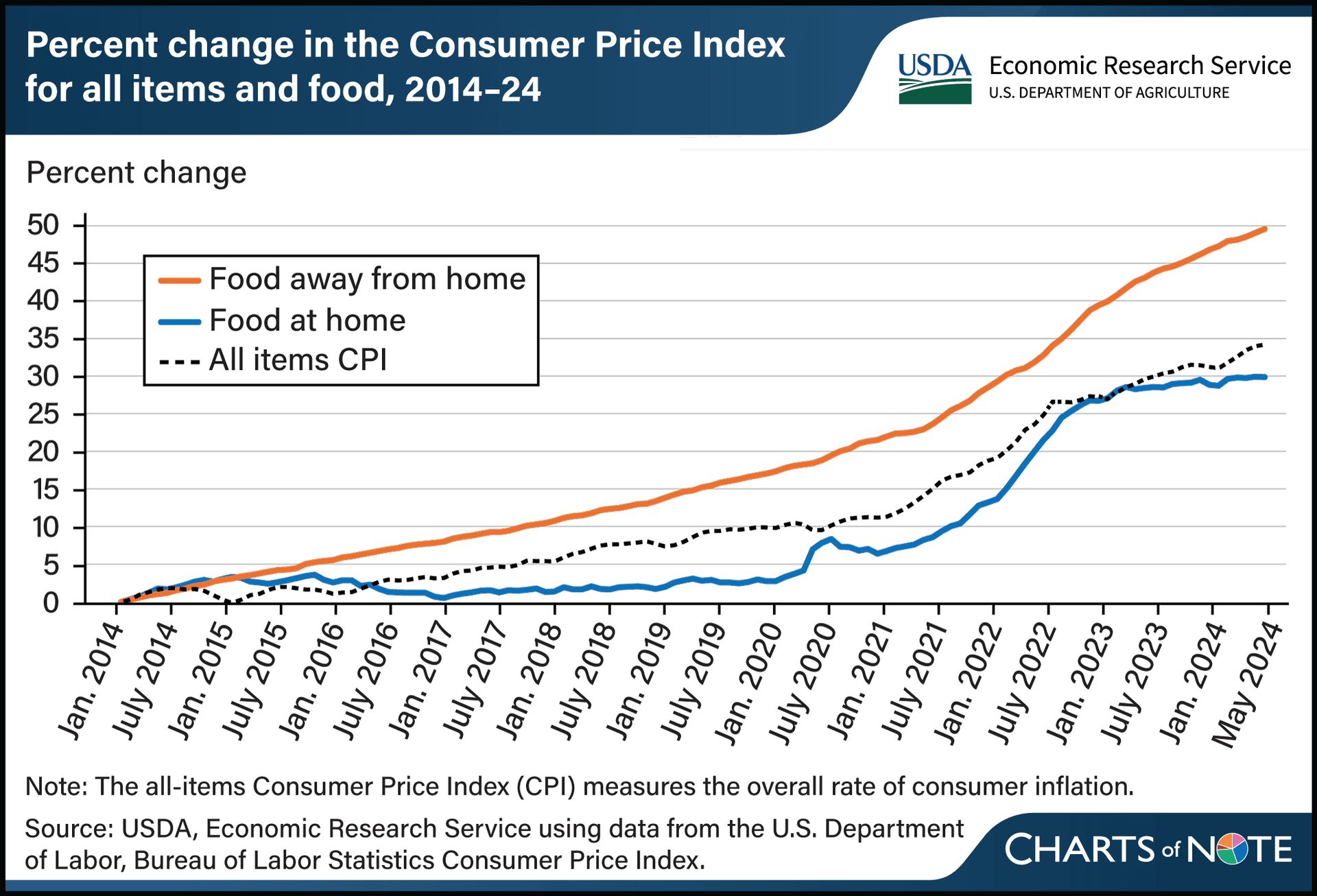
A 15-gallon fill-up was costing about $21 more than a year earlier, and grocery bills were still running roughly one-fifth higher than they were four years ago, putting fresh pressure on household budgets just as summer travel and backyard cooking season began.
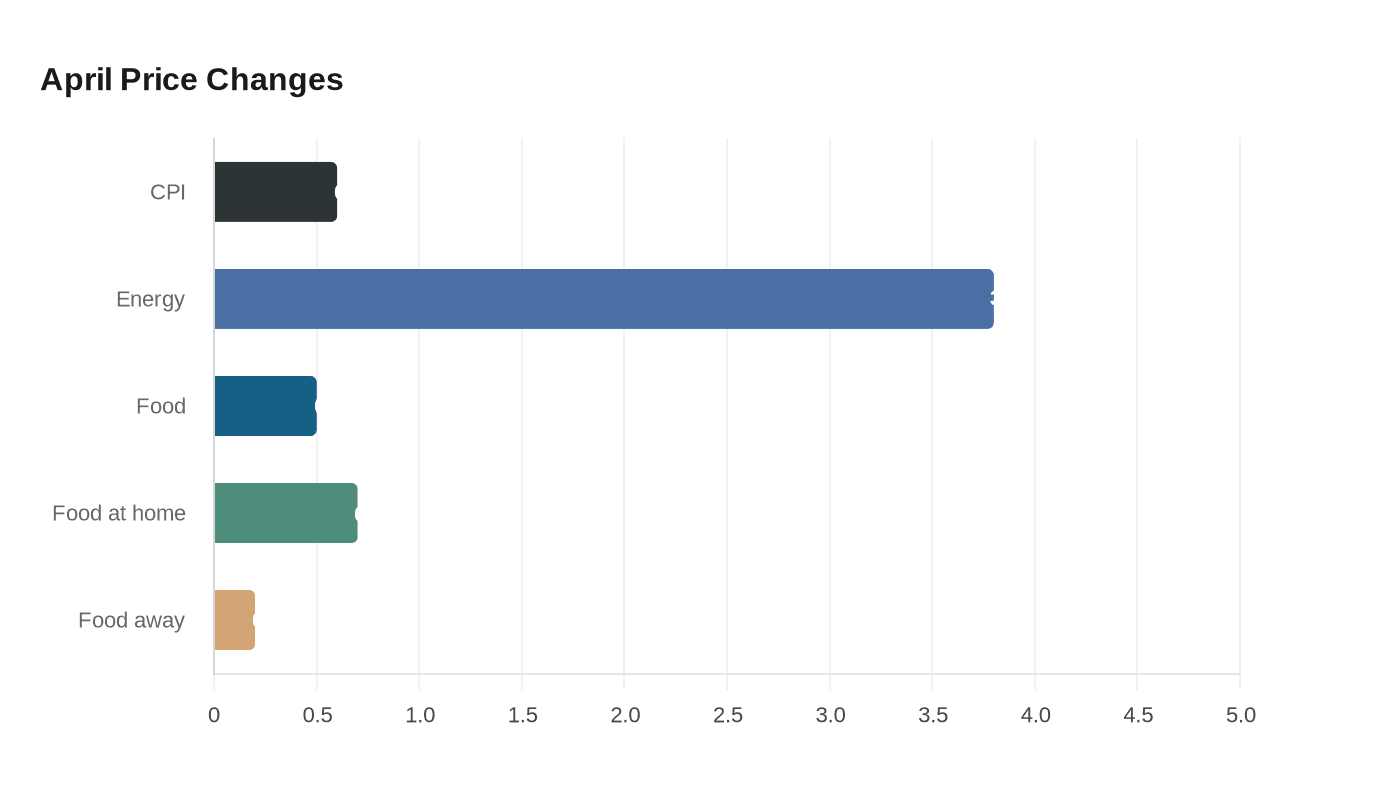
The U.S. Bureau of Labor Statistics said the Consumer Price Index for all urban consumers rose 0.6% in April after a 0.9% jump in March. On a year-over-year basis, the all-items index was up 3.8%, the fastest annual pace since May 2023. Energy was the biggest force behind the monthly increase: the energy index climbed 3.8% in April and accounted for more than 40% of the rise in overall prices.
Food costs kept climbing too. The BLS said food prices rose 0.5% in April, with food at home up 0.7% and food away from home up 0.2%. For a family spending $200 a week on groceries four years ago, that translates to about $40 more a week now. The pressure has been building long enough that it is no longer just a flashpoint at the checkout line; it has become a steady drag on weekly household spending.
The strain was visible at the pump ahead of Memorial Day weekend. AAA said the national average price for regular gasoline reached $4.55 a gallon on May 7, up 25 cents in a week and $1.40 from a year earlier. At that price, a typical 15-gallon tank costs about $21 more to fill than it did last year, raising the cost of commuting, school runs and road trips at the start of the summer season.
The U.S. Department of Agriculture’s Economic Research Service said its May 2026 Food Price Outlook is built from the latest BLS consumer and producer price data and is meant to guide farmers, processors, wholesalers, consumers and policymakers. That makes grocery inflation more than a household problem; it is also a signal for the broader food supply chain, where prices can ripple from farmgate costs to supermarket shelves.
Consumers are already noticing. The University of Michigan’s Surveys of Consumers said May sentiment weakened, with 57% of consumers spontaneously citing high prices as a factor eroding their personal finances. Retail spending still rose in April despite higher gas and food costs, but the combination of more expensive fuel, pricier groceries and elevated borrowing pressure suggests the summer economy will feel tighter even if spending has not collapsed.
This article was produced by Prism’s automated news system from verified source data, official records, and press releases, then run through automated quality and moderation checks before publishing. The system is built and supervised by the people who set the standards it runs under. Read our full AI policy.
Did this article answer your question?

