U.S. forces seize Guyana‑flagged tanker Veronica in Caribbean operation
U.S. Marines and Coast Guard boarded and seized the motor/tanker Veronica pre-dawn, part of an intensified campaign to interrupt Venezuela-linked oil shipments.
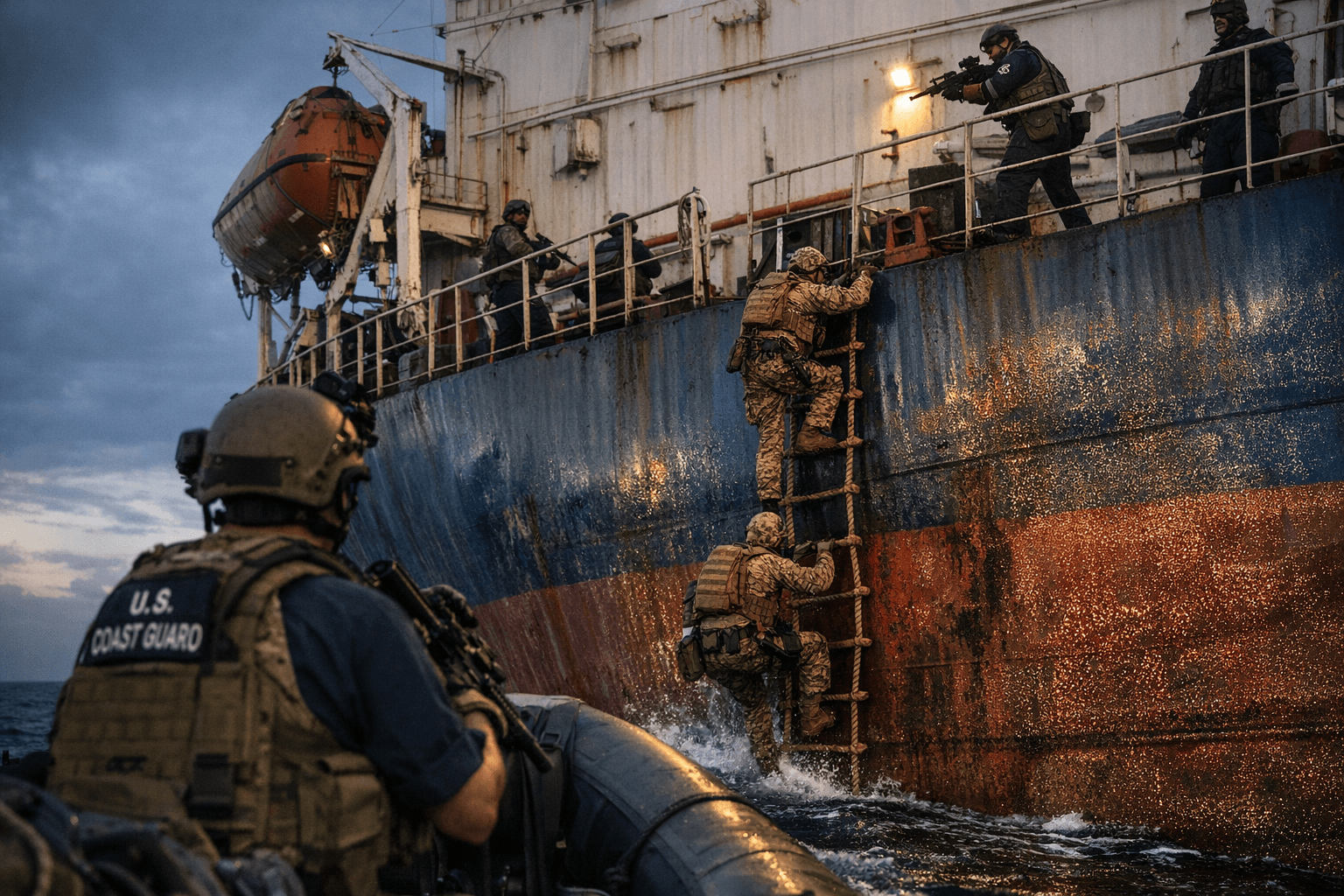
U.S. Marines, sailors and a Coast Guard tactical team boarded and seized the motor/tanker Veronica in a pre-dawn operation in the Caribbean Sea on Jan. 15, officials said. Personnel launched from the aircraft carrier USS Gerald R. Ford and carried out the boarding without resistance; Department of Homeland Security officials said the vessel was apprehended "without incident." Homeland Security Secretary Kristi Noem posted video of the action and said the Coast Guard executed the boarding in close coordination with the Defense, State and Justice departments.
Southern Command described the seizure as enforcement of an established quarantine of sanctioned vessels, saying the Veronica was "operating in defiance of President Trump’s established quarantine of sanctioned vessels in the Caribbean." The command added, "The only oil leaving Venezuela will be oil that is coordinated properly and lawfully." Secretary Noem characterized the operation as flawlessly executed and in accordance with international law.
The ship, identified as Motor/Tanker Veronica, is an Aframax crude tanker currently listed as Guyana-flagged. International Maritime Organization vessel records show prior registration in Russia under different names. Shipping documents from Venezuela’s state oil company PDVSA and monitoring service TankerTrackers.com indicate the Veronica departed Venezuelan waters in early January; automatic identification system transmissions captured on Jan. 3 showed the vessel at anchor off Aruba and, according to that broadcast, partially filled with crude. The differing accounts on cargo status are recorded in official and monitoring sources.
U.S. officials framed the seizure as the sixth Venezuela-linked tanker targeted since mid-December in a concerted effort to disrupt a so-called shadow fleet that maritime monitors estimate includes hundreds to more than 1,000 vessels that obscure ownership and cargo origins to move oil from sanctioned producers. Authorities have said they have filed court warrants to seize dozens more vessels tied to the Venezuelan oil trade, signaling a sustained legal and operational campaign to choke off illicit or opaque shipments.
The Veronica operation follows a period of rapid U.S. intervention in Venezuela’s oil sector after a Jan. 3 action that removed President Nicolás Maduro from power. The White House has signaled plans to manage Venezuelan oil resources directly; President Trump has spoken of controlling Venezuelan oil "indefinitely" and has publicly discussed seeking private investment to rebuild the country’s energy infrastructure, including references to a roughly $100 billion plan. Officials also reported an initial U.S. sale of Venezuelan oil, valued at about $500 million.
The seizures carry immediate market and geopolitical implications. Disruptions to complex illicit logistics will likely reduce short-term flows from Venezuelan producers that relied on opaque shipping practices, while raising shipping, insurance and legal costs for tanker operators in the wider Caribbean trade. For global markets, the U.S. campaign increases a new supply-side policy risk that could sustain premiums for heavier crudes and heighten price volatility amid already-tight markets.
Longer term, the operation reflects a Washington strategy to wrest control of sanctioned crude supplies and to dismantle networks that bypass sanctions through reflagging, false documentation and ghost voyages. The approach risks diplomatic fallout, Moscow condemned a prior seizure of a Russian-flagged tanker, and raises questions about how quickly U.S. legal and commercial arrangements can replace the shadow fleet’s logistics without destabilizing customers and refining chains that relied on Venezuelan barrels. Courts will now play a central role in determining how many of the targeted ships are permanently seized and how Venezuela’s oil is reintegrated into global markets.
This article was produced by Prism’s automated news system from verified source data, official records, and press releases, then run through automated quality and moderation checks before publishing. The system is built and supervised by the people who set the standards it runs under. Read our full AI policy.
Did this article answer your question?


