U.S. forces seize Iranian tanker in Arabian Sea after warning shots
U.S. destroyer fired disabling shots at the Iranian-flagged Touska, then Marines boarded it in a rare escalation near the Strait of Hormuz.
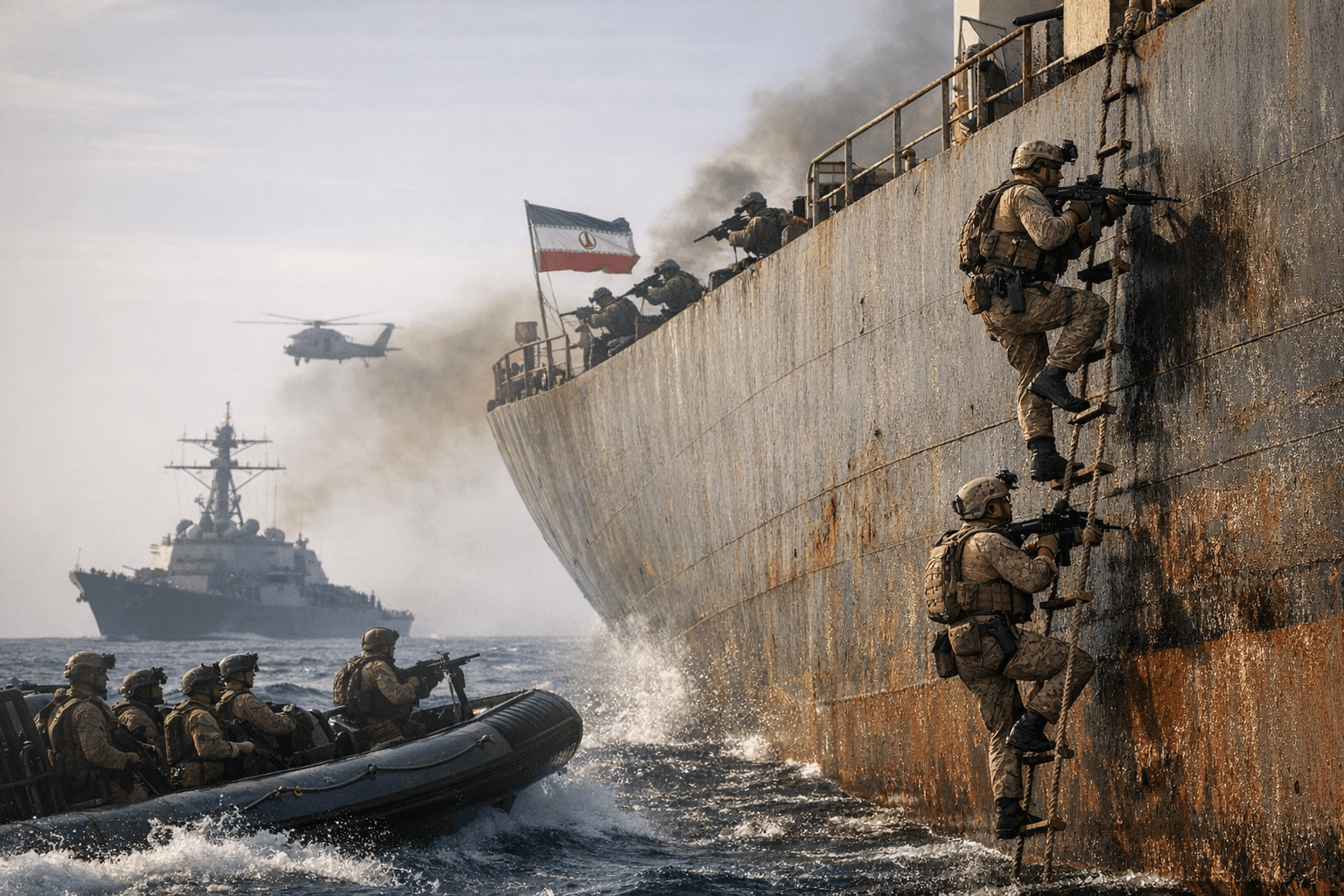
U.S. forces fired warning shots and then disabling rounds at an Iranian-flagged cargo ship in the Arabian Sea, boarded it with Marines, and took control of a vessel Washington said was already under Treasury sanctions. The seizure of the 960-foot M/V Touska marked a sharper turn in the maritime standoff around the Strait of Hormuz, where every move now carries the risk of wider conflict.
U.S. Central Command said the USS Spruance, a guided missile destroyer, intercepted the ship in the Gulf of Oman after the vessel ignored repeated instructions to stop. Crew members aboard the destroyer called out repeatedly ordering the Touska to comply before firing 5-inch MK 45 rounds that disabled its propulsion, allowing Marines from the 31st Marine Expeditionary Unit to board it. U.S. officials said the ship was headed toward Bandar Abbas, Iran, when it was stopped.
The Touska had been sanctioned by the U.S. Treasury Department in 2020 over alleged links to Iranian financial entities and weapons programs. That designation gave Washington a ready-made legal and political rationale for action, casting the seizure not as a random interdiction but as enforcement against a vessel already marked by the United States as tied to sanctioned activity. The operation also signaled that Washington was prepared to move beyond warnings and denial of passage to direct fire at sea.
The episode matters because it appears to be the first time American forces have fired upon or seized an Iranian-linked ship in this blockade context. U.S. naval forces in the region had already ordered 25 commercial vessels to turn around, but the Touska case showed a willingness to escalate from pressure to force when a ship did not yield. In practical terms, that raises the stakes for commercial shipping through the Arabian Sea, the Gulf of Oman, and the Strait of Hormuz, where even a single interception can reverberate through insurers, port operators, and energy traders.
The seizure came as Iran tightened the political and military pressure around the strait, imposed route restrictions, later declared it closed, and accused the United States of violating a two-week ceasefire. Tehran has vowed retaliation against U.S. forces and signaled it would not send negotiators for a second round of talks Washington had been planning. With peace efforts already fragile and energy markets rattled, the message from Washington was unmistakable: it is willing to test how far it can go at sea short of open war.
This article was produced by Prism’s automated news system from verified source data, official records, and press releases, then run through automated quality and moderation checks before publishing. The system is built and supervised by the people who set the standards it runs under. Read our full AI policy.
Did this article answer your question?


