Japan warns stronger quake could strike within a week after 7.7 temblor
Japan put 182 coastal municipalities on alert after a 7.7 quake, warning the odds of a megaquake rose to 1% for the next week.
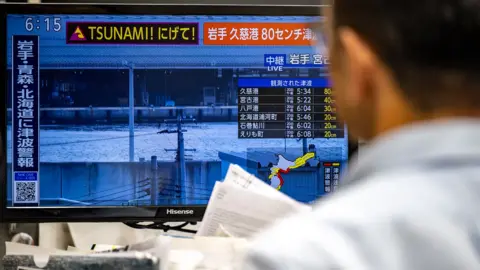
Japan’s weather agency is urging residents along the northern Pacific coast to stay ready for another major earthquake after Monday’s offshore 7.7 temblor rattled Sanriku and sent a short-lived tsunami warning across the region. Officials said the risk is elevated for about a week, but stressed the advisory is not a prediction, only a call to tighten preparedness.
The quake struck at about 4:53 p.m. local time off the coast of Sanriku in Iwate Prefecture. The Japan Meteorological Agency first placed it at magnitude 7.7, later reports cited a range of 7.5 to 7.7, and the U.S. Geological Survey listed it at 7.4. Within an hour, a tsunami wave of about 80 centimeters, or 2.6 feet, was observed at Kuji Port in Iwate, while another wave of 40 centimeters was recorded elsewhere in the prefecture. The agency had initially warned that waves could reach 3 meters before lifting or downgrading the alerts as the immediate threat eased.
The follow-up advisory covered 182 municipalities across seven prefectures, stretching from Hokkaido to Chiba Prefecture. The Japan Meteorological Agency and the Cabinet Office of Japan said there was a 1% chance of a magnitude-8-or-greater megaquake in the next week or so, compared with 0.1% under ordinary conditions. Prime Minister Sanae Takaichi urged residents to confirm evacuation shelters, evacuation routes, emergency food and emergency grab bags, reflecting an effort to keep the public alert without triggering panic.
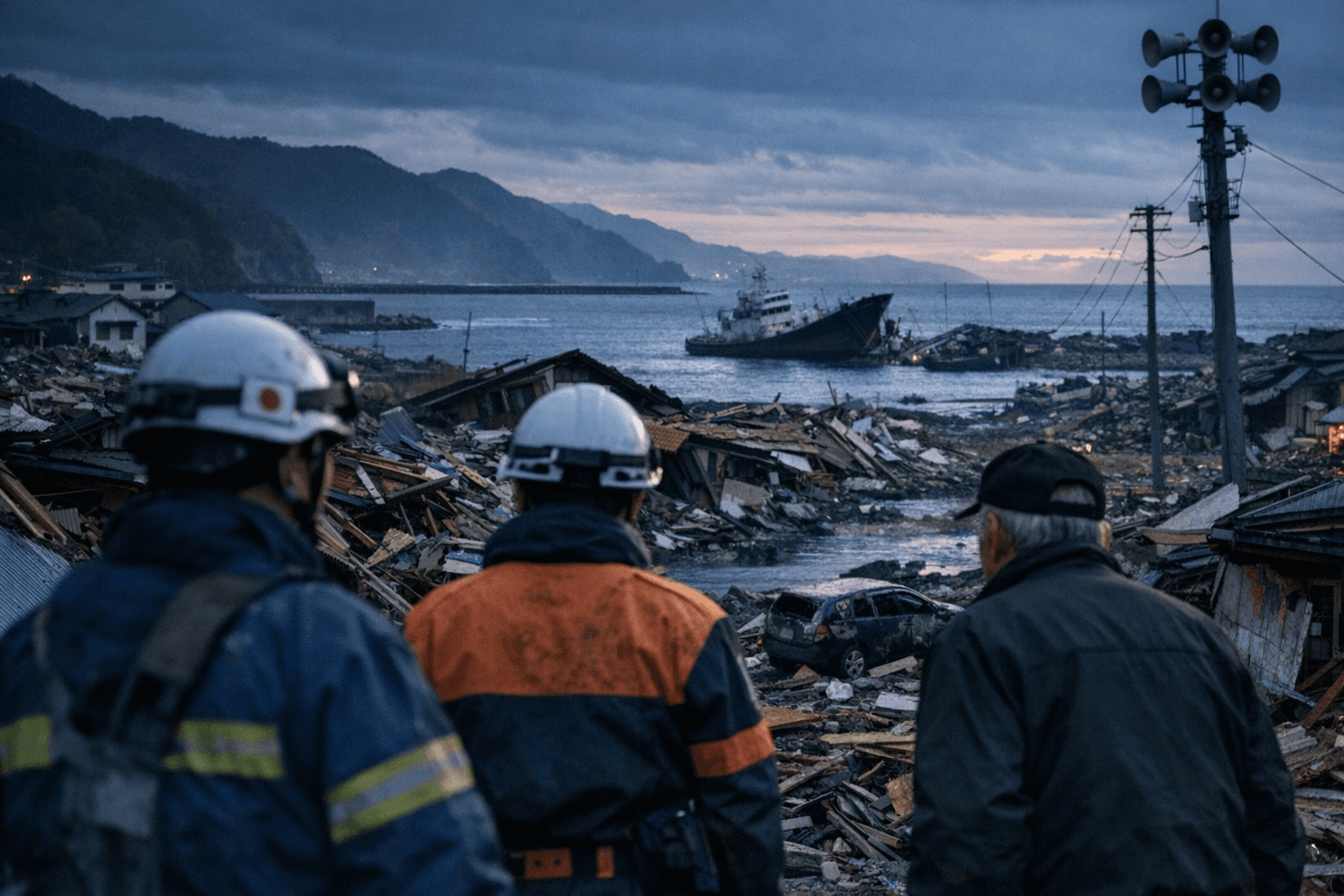
Damage appeared limited, even as authorities moved quickly through the emergency response. One person in Aomori Prefecture was reported injured after falling, but officials said there were no major damage reports at power stations or other facilities and that nuclear plants in the region were intact. Shinkansen services between Tokyo and northern Japan were suspended during the emergency response.
The warning carries unusual weight in a country that lives with earthquakes as a basic fact of life. The advisory system was introduced in December 2022 after lessons from past megathrust events in the Japan and Chishima trenches, and it now serves as a bridge between scientific uncertainty and public action. The broader region still remembers the March 11, 2011 Great East Japan Earthquake and tsunami, which devastated coastal communities and triggered the Fukushima nuclear crisis.
Know something we missed? Have a correction or additional information?
Submit a Tip