Japan Eases Arms Export Limits as China Threats and US Uncertainty Grow
Japan scrapped its five-category export cap, opening the door to warships and missiles as China pressure and doubts about U.S. reliability deepen.
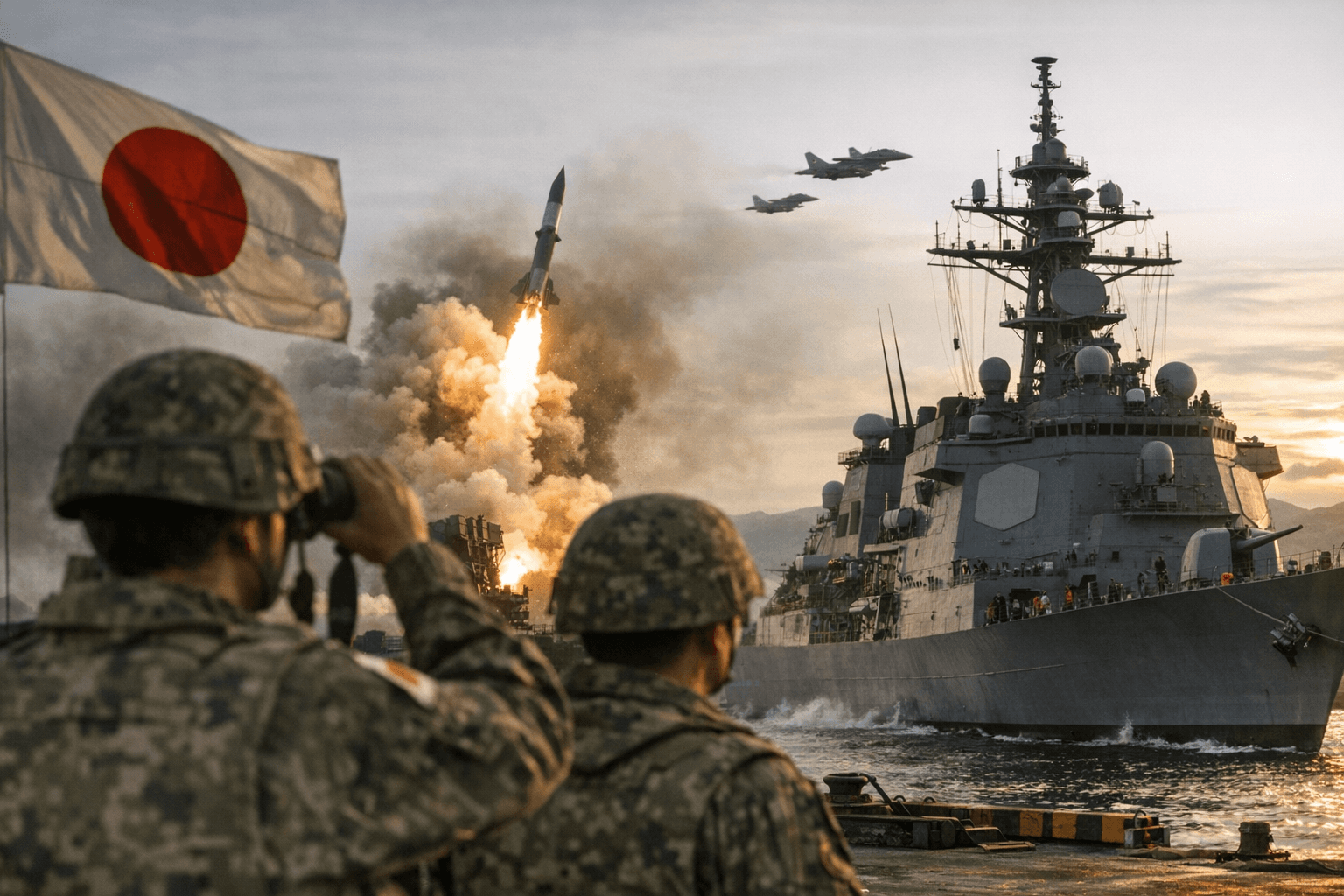
Japan took its boldest step yet away from postwar weapons restraint as Sanae Takaichi’s Cabinet approved a sweeping rewrite of defense export rules, removing the five-category limit that had kept most overseas sales to nonlethal gear. The new framework opens the way for exports of warships, missiles and other weapons, while still preserving the core three principles that govern screening, third-country transfers and sales to countries involved in conflict.
The shift marks a major strategic realignment for a country whose arms policy has long been shaped by Article 9 of the constitution, the postwar clause that renounces war. Japan created the Self-Defense Forces on July 1, 1954, but its export rules remained tightly restricted for decades, tracing back to Prime Minister Eisaku Sato’s 1967 Diet remarks and the 1976 policy under the Takeo Miki administration. Japan adopted the current Three Principles on Transfer of Defense Equipment and Technology on April 1, 2014, replacing the older arms-export principles, and then revised the implementation guidelines on December 22, 2023. Even after that update, most exports were still limited to rescue, transport, warning, surveillance and minesweeping equipment.
Takaichi’s overhaul reflects growing anxiety in Tokyo over China’s military rise and a more uncertain United States. Wars in Ukraine and the Middle East have strained American weapons supplies, while President Donald Trump’s wavering security commitments have prompted allies to look for alternative suppliers. Interest in Japanese equipment has already surfaced from Warsaw and Manila, a sign that Tokyo sees a market not just at home but across Asia and Europe. The government has argued that larger export opportunities can strengthen Japan’s defense industrial base, giving companies more scale and helping sustain production lines that are difficult to maintain on domestic demand alone.
The decision is likely to sharpen debate inside Japan. Protesters and opposition figures have warned that expanded weapons exports could fuel conflict abroad and erode the country’s pacifist identity. Supporters counter that the old limits no longer fit a security environment defined by China’s pressure, regional instability and doubts about how far Washington will go to defend its partners. For Tokyo, the change is not just about selling more weapons. It is about whether Japan can build a more independent deterrent posture without abandoning the pacifist framework that has defined it since 1945.
Know something we missed? Have a correction or additional information?
Submit a Tip