US Hands Over Last Base in Syria, Ending Decade-Long Military Presence
A final U.S. convoy left Qasrak air base in Hasakah, closing Washington’s decade-long military presence as Syria reclaimed sites long outside state control.
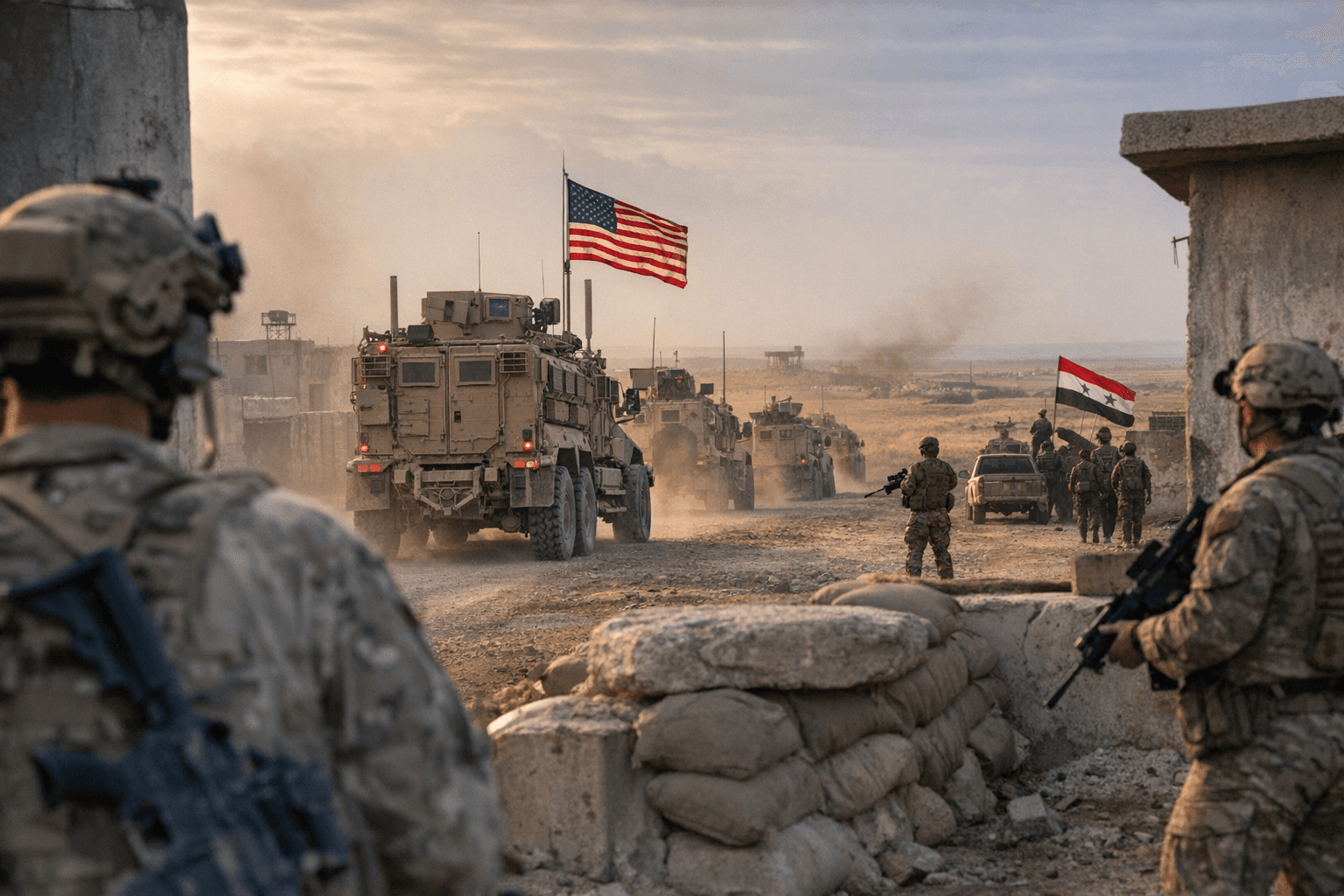
The last American convoy rolled out of Qasrak Air Base in Syria’s Hasakah province on April 16, ending the U.S. military’s formal presence in the country after more than a decade of war. Soldiers and equipment departed as Syrian forces took control of the site, closing the chapter that began in 2014 when Washington entered Syria as part of the campaign against ISIS.
U.S. Central Command said all major bases had been handed over in a deliberate, conditions-based transition. That drawdown follows a wider shift in the battlefield and in Syria’s politics. In December 2024, the Assad government collapsed, and the Pentagon later disclosed that roughly 2,000 U.S. troops were in Syria, far more than the roughly 900 publicly cited for years.
The departure from Qasrak matters because the American footprint had become a network, not a single outpost. It stretched across northeastern Syria and included al-Tanf near the Jordan-Iraq border, where U.S. forces had helped anchor anti-ISIS operations and support local partners. Washington said it would continue backing partner-led counterterrorism efforts against ISIS even after the handover, but the withdrawal leaves open who will carry the burden on the ground.
Damascus framed the transfer as a recovery of sovereignty. Syria’s Foreign Ministry said the handover restored state control over areas that had been outside government authority, especially the northeast and border regions. For President Ahmad al-Sharaa, the exit offers a tangible sign that his government is reasserting authority after the upheaval that followed Assad’s fall.
The bigger test is whether the security vacuum can be contained. A March 10, 2025 agreement between al-Sharaa and Mazloum Abdi set out a path to integrate the Syrian Democratic Forces’ civil and military institutions into the Syrian state, including border and security structures. That deal was widely seen as a precursor to the U.S. pullback, and it now becomes central to whether Kurdish-led forces, Syrian state institutions, and counter-ISIS operations can align without reopening old fault lines.
The U.S. exit from Qasrak ends the first formal American military presence in Syria in more than 10 years, but it does not end the fight over who controls the northeast or how ISIS remnants will be kept from regrouping. The handover shifts the burden to Syrian authorities and their partners at a moment when every security gap carries real risk.
This article was produced by Prism’s automated news system from verified source data, official records, and press releases, then run through automated quality and moderation checks before publishing. The system is built and supervised by the people who set the standards it runs under. Read our full AI policy.
Did this article answer your question?