U.S. import prices rise faster than expected, signaling lingering inflation
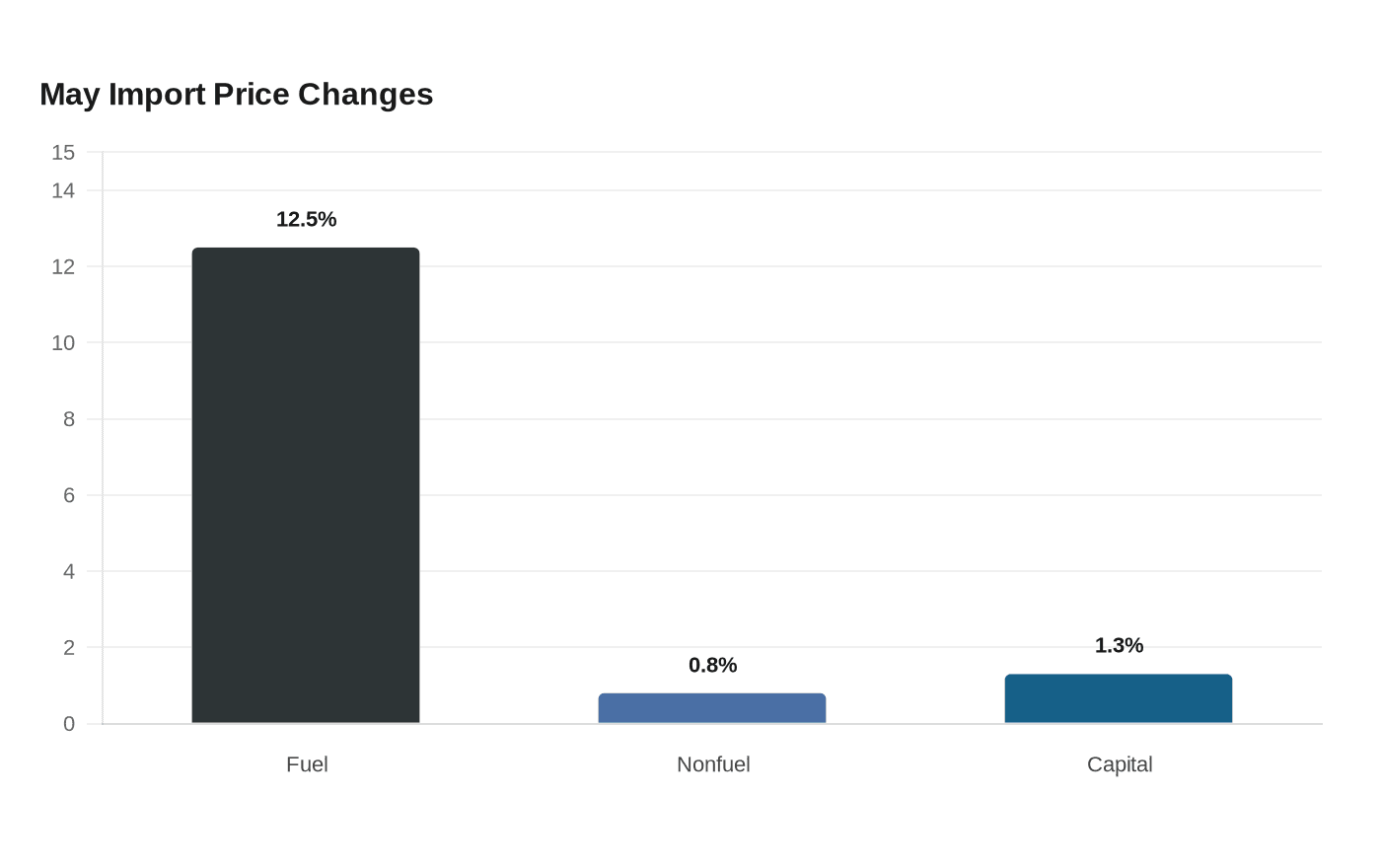
Import prices jumped 1.9% in May, led by a 12.5% surge in fuels and a 1.3% rise in capital goods. The data keeps pressure on Fed rate expectations.

U.S. import prices climbed more than expected in May, reinforcing the view that inflation pressures are still moving through the supply chain even as some consumer measures have cooled. Prices rose 1.9% from April after an upwardly revised 2.0% gain the month before, and were up 6.7% from a year earlier, the biggest 12-month increase since August 2022.
The most aggressive move came from fuel. Imported fuels and lubricants jumped 12.5% in May and were up 45.1% over the past 12 months, while petroleum import prices rose 48.1% year over year and natural gas import prices climbed 35.3%. The Bureau of Labor Statistics said the three-month increase in fuels and lubricants imports from February to May, 47.0%, was the largest since the period ended July 2020. Nonfuel import prices also rose 0.8% in May and 3.7% over 12 months, showing that the pressure was not limited to energy.
Capital goods added another layer to the inflation pipeline. Import prices for those goods rose 1.3% in May, driven by higher prices for computers, peripherals and semiconductors, along with scientific and medical machinery and industrial and service machinery. That fits with a broader investment cycle tied to artificial intelligence, which the Federal Reserve said in February was increasingly boosting demand for the critical inputs and intermediate goods needed to build data centers. The Fed’s research said U.S. data-center spending alone was expected to exceed half a trillion dollars in 2025.
The pattern matters because import prices exclude tariffs and therefore offer a cleaner read on global market pricing than a tax-inflated measure. It also helps explain why goods inflation can reappear even when headline inflation appears to be easing. Fitch Ratings said in May that capital goods imports had risen 28% on a three-month average annualized basis between February 2025 and February 2026, driven overwhelmingly by computers, telecoms and semiconductors, while China’s share of U.S. imports fell and Taiwan, Vietnam and Mexico gained share.
The latest numbers landed as the Federal Open Market Committee began its June 16-17 meeting in Washington, with a press conference set for June 17. In a Reuters poll conducted June 4-9, 72 of 102 economists expected the fed funds target range to stay at 3.50% to 3.75% through the rest of 2026, and none expected a cut at this meeting. Stronger import-price data, especially in fuel and AI-linked capital equipment, makes it harder for policymakers to argue that inflation risk has fully passed.
This article was produced by Prism’s automated news system from verified source data, official records, and press releases, then run through automated quality and moderation checks before publishing. The system is built and supervised by the people who set the standards it runs under. Read our full AI policy.
Know something we missed? Have a correction or additional information?
Submit a Tip