U.S. Imposes Antidumping and Countervailing Duties on Chinese Erythritol Imports
Cargill's petition sparked a 14-month trade investigation that ends with new duties on a sweetener hiding in your keto ice cream, just as scientists warn it may raise clotting risks.
Check the ingredient label on your favorite sugar-free chocolate bar, keto protein shake, or "no added sugar" baked good and there's a reasonable chance you'll find erythritol listed near the top. Now find out where that erythritol came from, and there's a very good chance the answer is China. As of March 27, that supply chain just got significantly more expensive.
The U.S. Department of Commerce published final antidumping and countervailing duty orders on erythritol imported from China, effective March 27, 2026, following affirmative final determinations by both Commerce and the U.S. International Trade Commission. The orders formalize more than a year of investigation and set legally binding duty rates that Customs and Border Protection must now enforce on Chinese erythritol shipments entering the country.
The petitioner behind the case is Cargill, Incorporated, headquartered in Wayzata, Minnesota. Commerce announced the initiation of both antidumping and countervailing duty investigations on January 3, 2025, after Cargill argued that Chinese producers were selling the sweetener below fair value and benefiting from government subsidies that allowed them to undercut American manufacturers. The China-wide entity subject to the investigation includes Dongxiao Biotechnology Co., Ltd. and Shandong Sanyuan Biotechnology Co., Ltd., the two producers selected as mandatory respondents.
Commerce published the antidumping preliminary determination on July 16, 2025, and the countervailing duty preliminary determination on May 16, 2025. The timeline was complicated by Washington's own dysfunction: a federal government shutdown in November 2025 caused Commerce to toll all administrative deadlines by 47 days, then by an additional 21 days due to a backlog of electronically filed documents. The ITC formally notified Commerce of its final injury determination on March 23, 2026.
The stakes for food manufacturers are real. Erythritol is a naturally abundant sweetener used in calorie-reduced foods, candies, and baked goods. It is a popular ingredient in a lot of food marketed for weight loss, keto-friendly diets, and diabetes management. It is also added to many sugar substitutes sold as "natural" alternatives, including some formulations of stevia and monk fruit sweeteners. The global erythritol market is projected to grow from $261.2 million in 2025 to $544.5 million by 2035, with the keto and low-carb diet boom as one of the primary engines. Duties that raise the landed cost of the dominant supply source could pressure prices across that entire category.
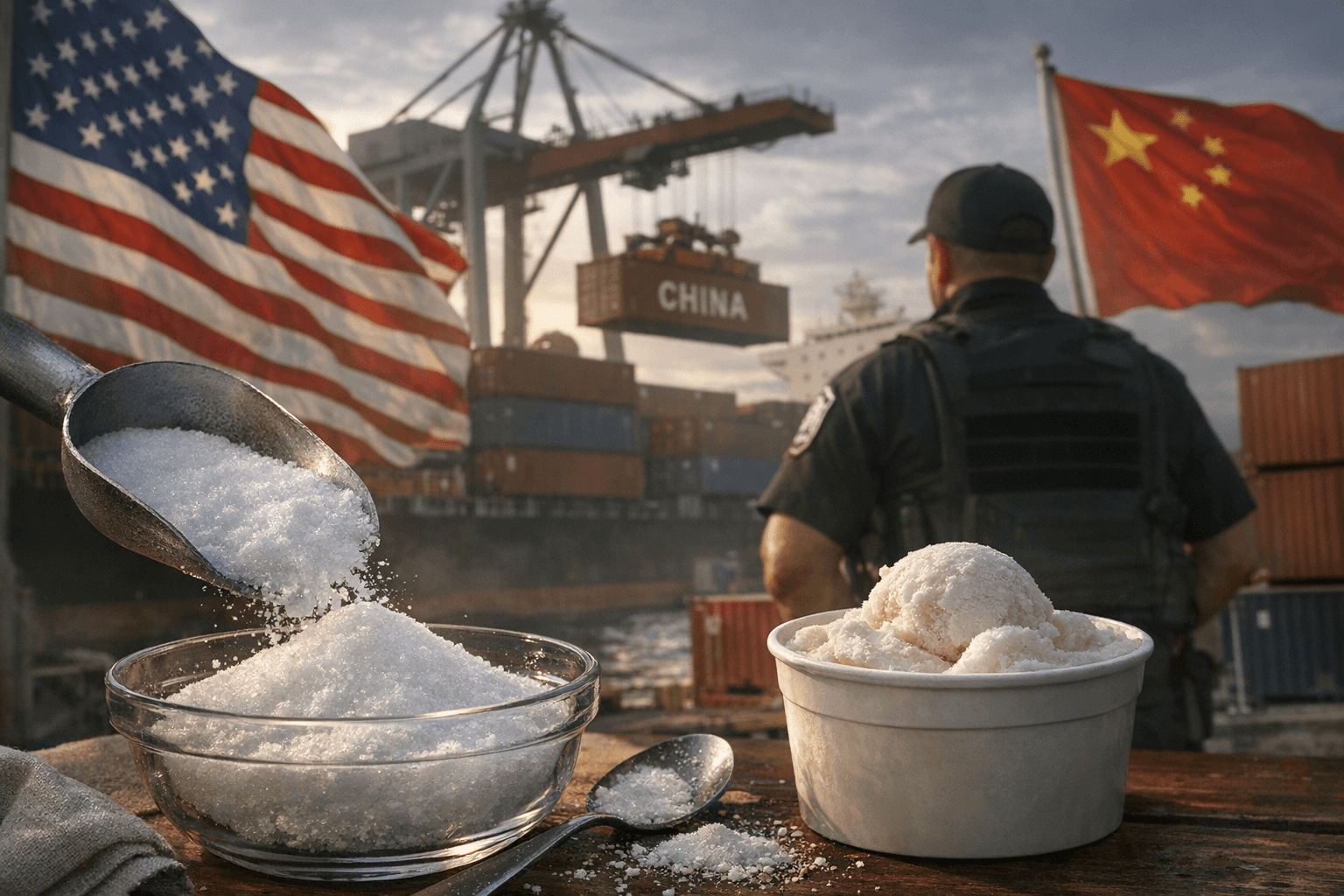
The timing of the trade action lands against a backdrop of deepening scientific anxiety about the ingredient itself. Research from the Cleveland Clinic shows that consuming erythritol increases the risk of cardiovascular events such as heart attack and stroke, with findings indicating it made platelets more active, which can raise the risk of blood clots. Published in Arteriosclerosis, Thrombosis and Vascular Biology, the research added to increasing evidence that erythritol may not be as safe as currently classified by food regulatory agencies. From low-carb ice cream to keto protein bars to "sugar-free" soda, erythritol is everywhere, but newer research shows the popular sugar substitute may also impact brain cells in ways that boost stroke risk. A direct causal relationship between its use and cardiovascular events, however, is still lacking.
That scientific controversy creates an odd political economy around the new duties. Domestic producers like Cargill stand to benefit from reduced foreign competition. But downstream food manufacturers, confectioners, and beverage makers will face higher input costs, and may be forced to reformulate products or source erythritol from alternative countries, just as the ingredient they rely on is generating its own negative headlines with consumers.
Erythritol remains classified by the U.S. Food and Drug Administration and the European Food Safety Authority as a GRAS, or "generally recognized as safe," ingredient, allowing its use without restriction in food products. That classification has not changed. What has changed is the price of the world's cheapest supply, the credibility of the health claims built around "sugar-free" product lines, and the willingness of Washington to use trade remedy law as leverage against Beijing, even in a sweetener aisle most policymakers have never thought about.
This article was produced by Prism’s automated news system from verified source data, official records, and press releases, then run through automated quality and moderation checks before publishing. The system is built and supervised by the people who set the standards it runs under. Read our full AI policy.
Did this article answer your question?

