U.S. Inflation Surges to 3.3 Percent as Iran War Drives Fuel Costs Higher
March CPI hit 3.3 percent, driven by the Iran war's closure of the Strait of Hormuz and the biggest one-month fuel cost jump since 1957.
American consumers got their clearest price tag on the Iran war when March inflation data arrived: a 3.3 percent annual rate, according to the Bureau of Labor Statistics, nearly a full percentage point above the 2.4 percent readings posted in both January and February 2026. On a monthly basis, prices surged 0.9 percent, the largest single-month jump since 2022.
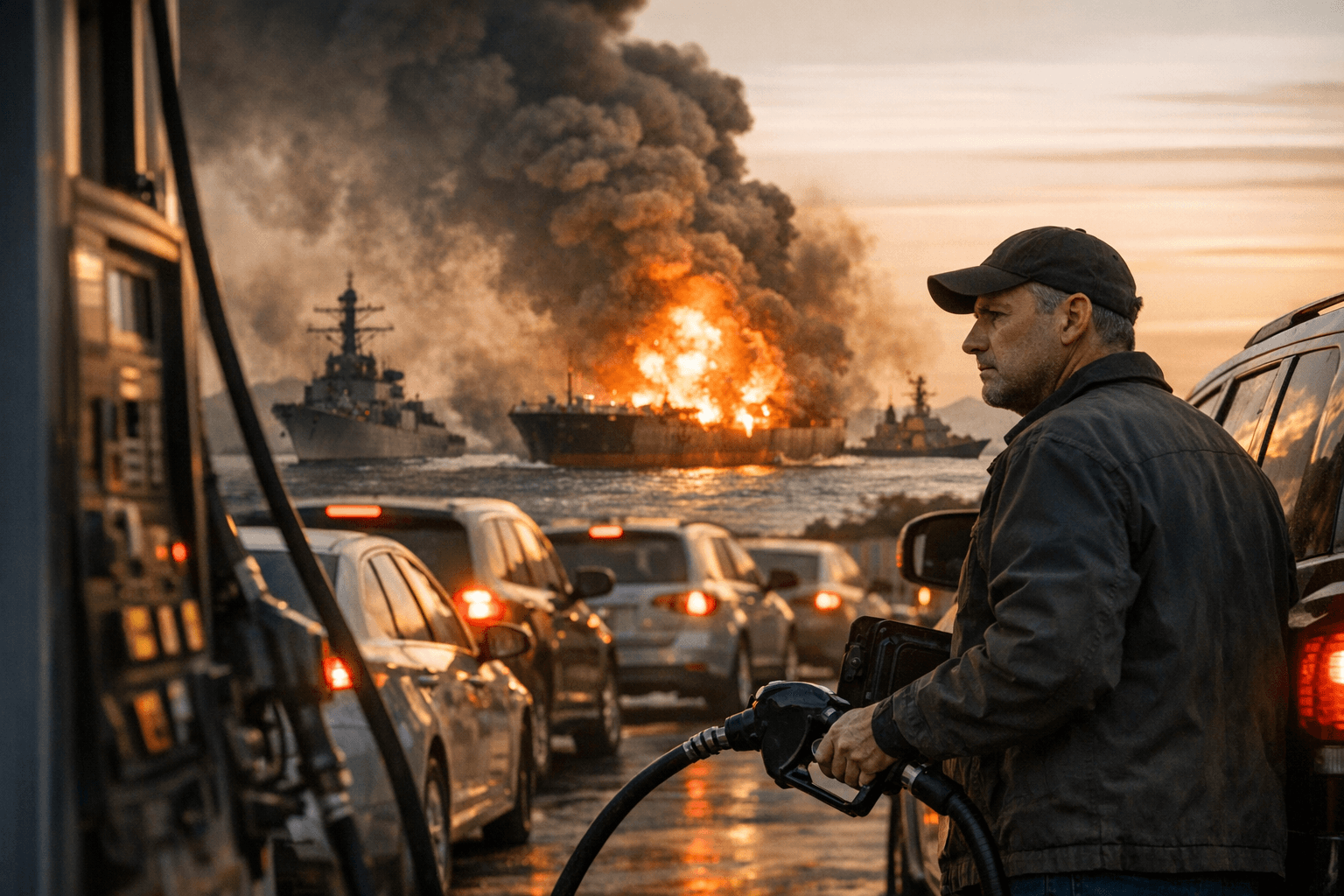
The driver is unmistakable. The conflict effectively closed the Strait of Hormuz, through which roughly 20 percent of the world's oil flows daily. U.S. benchmark West Texas Intermediate crude surged above $116 per barrel, about 43 percent above prewar levels, and the country recorded its largest one-month jump in fuel costs since at least 1957, according to Pantheon Economics. Gasoline prices climbed nearly 50 percent since fighting began, and the average American driver is projected to pay $235 more at the pump over the next year. In the conflict's first month alone, U.S. consumers absorbed $8.4 billion in extra fuel costs, according to a Joint Economic Committee minority estimate.
President Trump announced a two-week ceasefire with Iran on April 7 via Truth Social, writing: "I agree to suspend the bombing and attack of Iran for a period of two weeks. This will be a double-sided CEASEFIRE!" WTI crude tumbled nearly 15 percent to $96.41 a barrel; international benchmark Brent slid about 17 percent to $91. Both figures remain roughly 43 percent above prewar levels.
Economists warn the gap will persist. Energy prices spike quickly during supply disruptions but ease far more slowly once a crisis ends, a dynamic known as the "rockets and feathers" principle. "We're going to be paying the price for this through much of the year," said Mark Zandi, chief economist at Moody's Analytics. The Energy Information Administration projects retail gasoline will still average $3.46 per gallon in 2027, compared to $3.10 before the war. Shell CEO Wael Sawan warned at the CERAWeek conference in Houston on March 24 that shortages would ripple globally, from jet fuel to diesel to gasoline, and TD Securities strategist Ryan McKay warned that oil inventories could fall to multiyear lows as early as August.
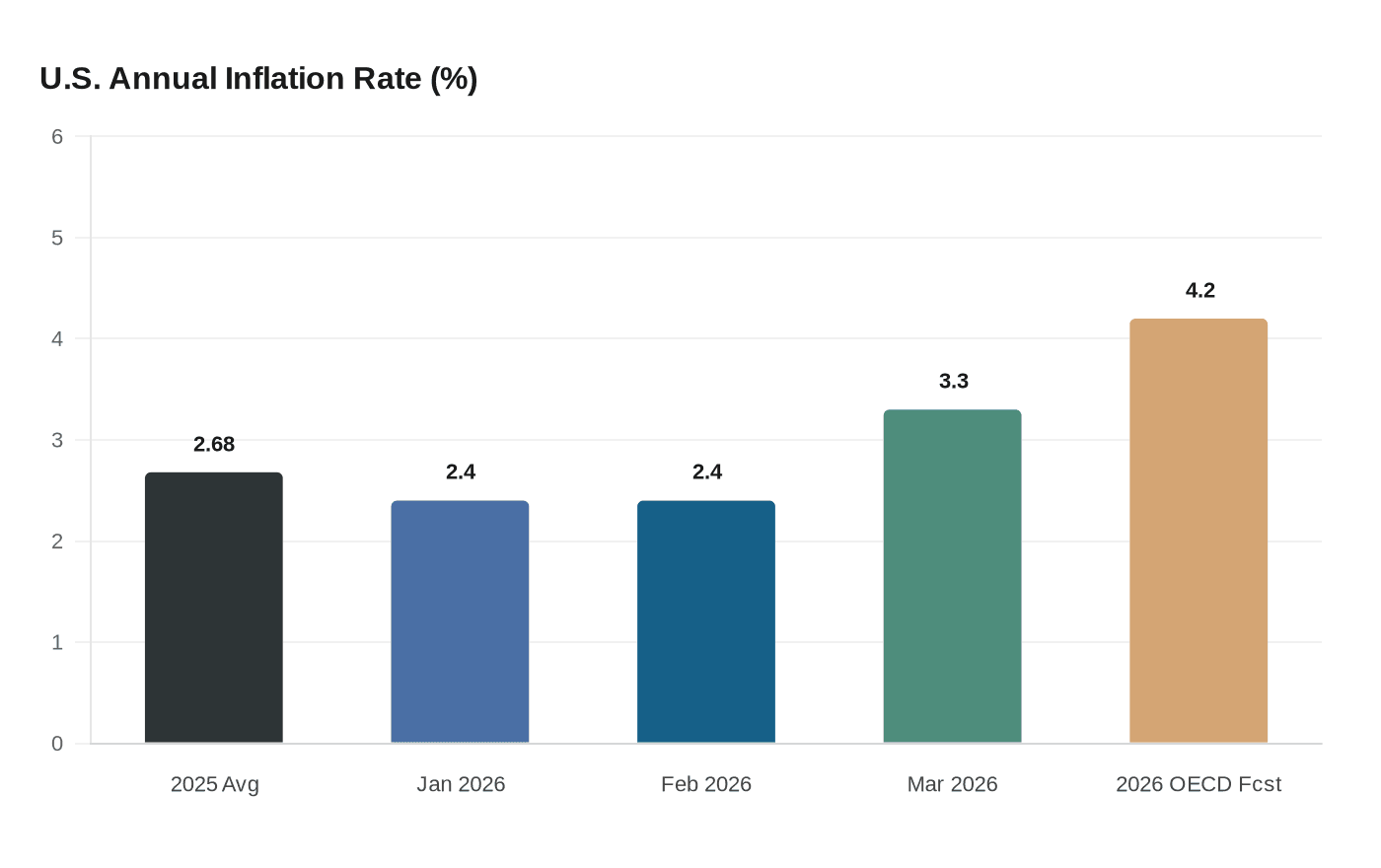
The March headline figure came in below consensus: FactSet had forecast 3.70 percent annually. Core CPI, which strips out food and energy, rose just 0.2 percent for the month, and the food-at-home index fell 0.2 percent, with eggs down 3.4 percent. Tariffs, carrying an effective rate of about 8 percent after falling from a peak of 21 percent in April 2025, per the Yale Budget Lab, are still expected to lift prices in household furnishings, recreation, and personal care goods in the months ahead. LPL Financial chief economist Jeffrey Roach warned that "trade policy pressures have not gone away, despite the ceasefire announcement and oil prices falling." The Organization for Economic Cooperation and Development predicts U.S. inflation will reach 4.2 percent for all of 2026, nearly double the 2.68 percent average of 2025.
That trajectory leaves the Federal Reserve boxed in. The central bank held rates steady at its March 17-18 meeting, and its minutes suggest some policymakers are now weighing a future rate hike rather than a cut. "The Federal Reserve is on a prolonged pause until the fog of war clears and they can assess the full impacts on the U.S. economy," said Heather Long, chief economist at Navy Federal Credit Union. Consumer spending accounts for roughly 70 cents of every dollar of GDP, and Federal Reserve Bank of Chicago President Austan Goolsbee has warned that sustained price pressure could derail household budgets and undercut that engine.
Hardship withdrawals from 401(k)s hit a record in 2025, delinquency rates rose even among higher-income households, and overseas tourist visits fell nearly 12 percent in March. The ceasefire bought time; it did not buy certainty. "There is no way to predict the outcome," said Ed Yardeni, president of Yardeni Research. "We can't rule out that Iran will cave in. Or, Trump may postpone the deadline again, explaining that negotiations are making progress. Or the war will escalate.
This article was produced by Prism’s automated news system from verified source data, official records, and press releases, then run through automated quality and moderation checks before publishing. The system is built and supervised by the people who set the standards it runs under. Read our full AI policy.
Did this article answer your question?

