US, Iranian officials hold historic Islamabad peace talks, no deal reached
Islamabad hosted rare, face-to-face U.S.-Iran negotiations tied to a fragile two-week ceasefire, but a roughly 21-hour session ended without agreement after Iran balked at U.S. nuclear demands.

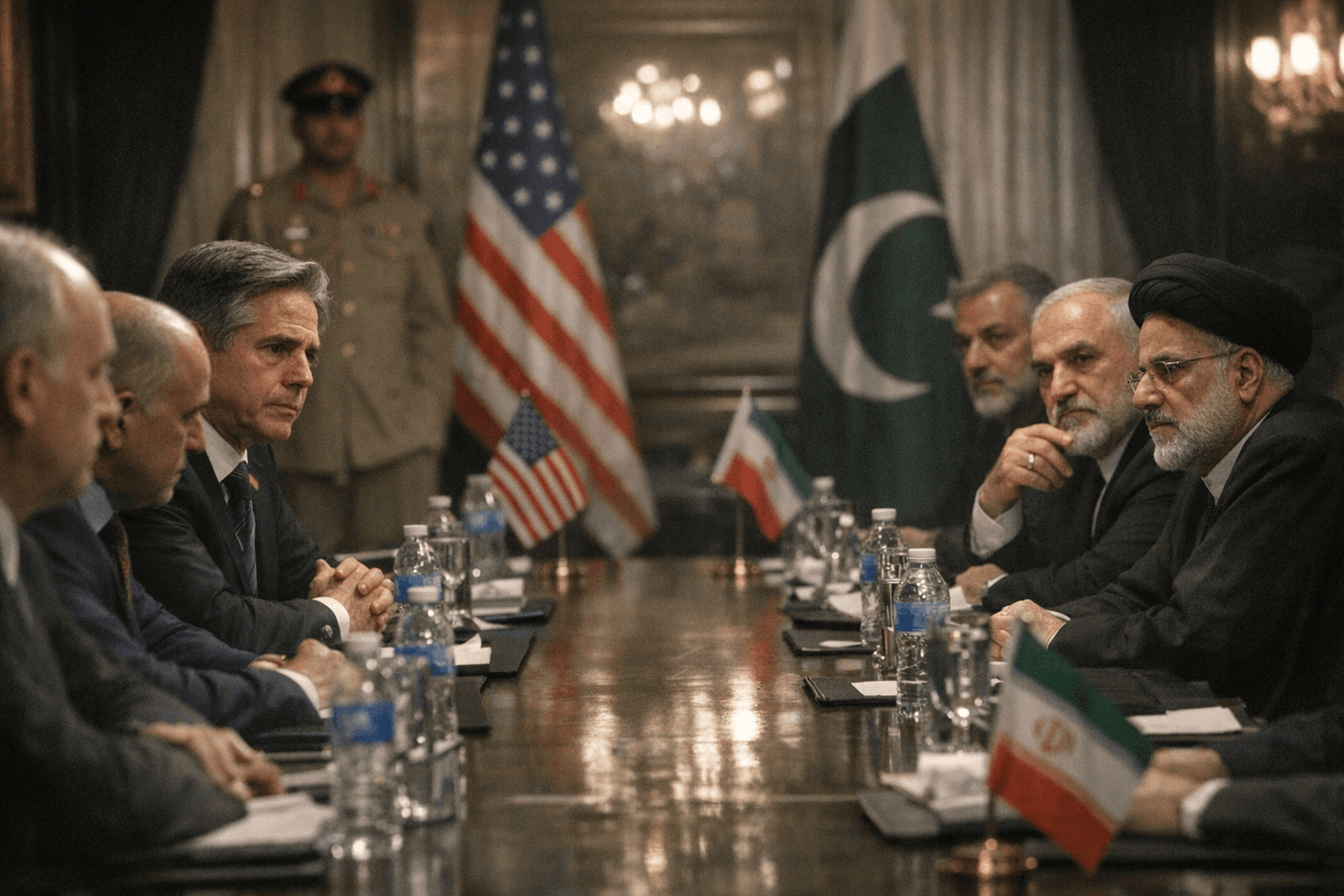
Senior U.S. and Iranian delegations met in Islamabad in a Pakistan-mediated session tied to a fragile two-week ceasefire, a diplomatic opening many described as historic. The U.S. team was led by Vice President J.D. Vance and included Special Envoy Steve Witkoff; Iran’s delegation was led by Parliament Speaker Mohammad Bagher Ghalibaf and Foreign Minister Abbas Araqchi. Pakistan’s Prime Minister Shehbaz Sharif played an active mediating role in arranging the talks.
The negotiations began on April 11 and stretched into the early hours of April 12, 2026, running roughly 21 hours before concluding. After the marathon session, Vice President Vance said no agreement had been reached, leaving the two-week ceasefire’s future uncertain. The length and intensity of the talks underscored both the urgency and the depth of the disagreements on the table.
Diplomatic impasse clustered around nuclear constraints: U.S. negotiators sought an explicit Iranian commitment not to develop a nuclear weapon, a demand Iranian officials rejected. Iranian state media characterized elements of the U.S. position as “unreasonable demands,” and Iran presented a set of red lines that Moscow and Tehran have defended in past talks. Those red lines included protections for passage through the Strait of Hormuz, release of Iran’s blocked and frozen assets, payment of war reparations, and enforcement of a region-wide ceasefire.
Pakistan positioned itself as the intermediary throughout. Prime Minister Shehbaz Sharif publicly affirmed Islamabad’s resolve to continue mediating, and Pakistani authorities established a media center in the capital to accommodate coverage, according to Pakistani officials. Hosting the talks signaled Pakistan’s intention to act as a regional power broker, bringing Washington and Tehran together in its capital for direct engagement.
The stakes for American policy are concrete. Absent a commitment constraining Iran’s nuclear program, U.S. nonproliferation options become more limited and leave open the risk of renewed escalation. Iran’s emphasis on blocked assets and reparations intersects with leverage Washington can exert through sanctions and financial controls, and those economic disputes often overlap with negotiations over detained nationals and hostage cases. The ceasefire’s fragility was already visible in commerce: vessel traffic through the Strait of Hormuz was reported to be very low during the early cessation period, highlighting a direct pathway from diplomatic failure to energy-market disruption and potential oil-price volatility.
Realistic next steps center on continued Pakistani mediation or a diplomatic stalemate that would shift pressure back to indirect measures. If Iran maintains its red lines and refuses the specific nuclear pledges the U.S. demanded, the ceasefire risks unraveling and proxy violence across the region could resume. Islamabad’s role may prove decisive in the coming days, but the outcome now depends on whether negotiators convert marathon talks into enforceable, mutually acceptable arrangements or return to a cycle of brinkmanship.
Know something we missed? Have a correction or additional information?
Submit a Tip