U.S.-Israeli strikes and Iranian retaliation shut Gulf airspace, cancel thousands of flights
Strikes and counterstrikes closed Gulf airspace, canceling 2,400-3,400+ flights and stranding thousands, with major hubs like Dubai and Abu Dhabi reporting injuries and airport damage.
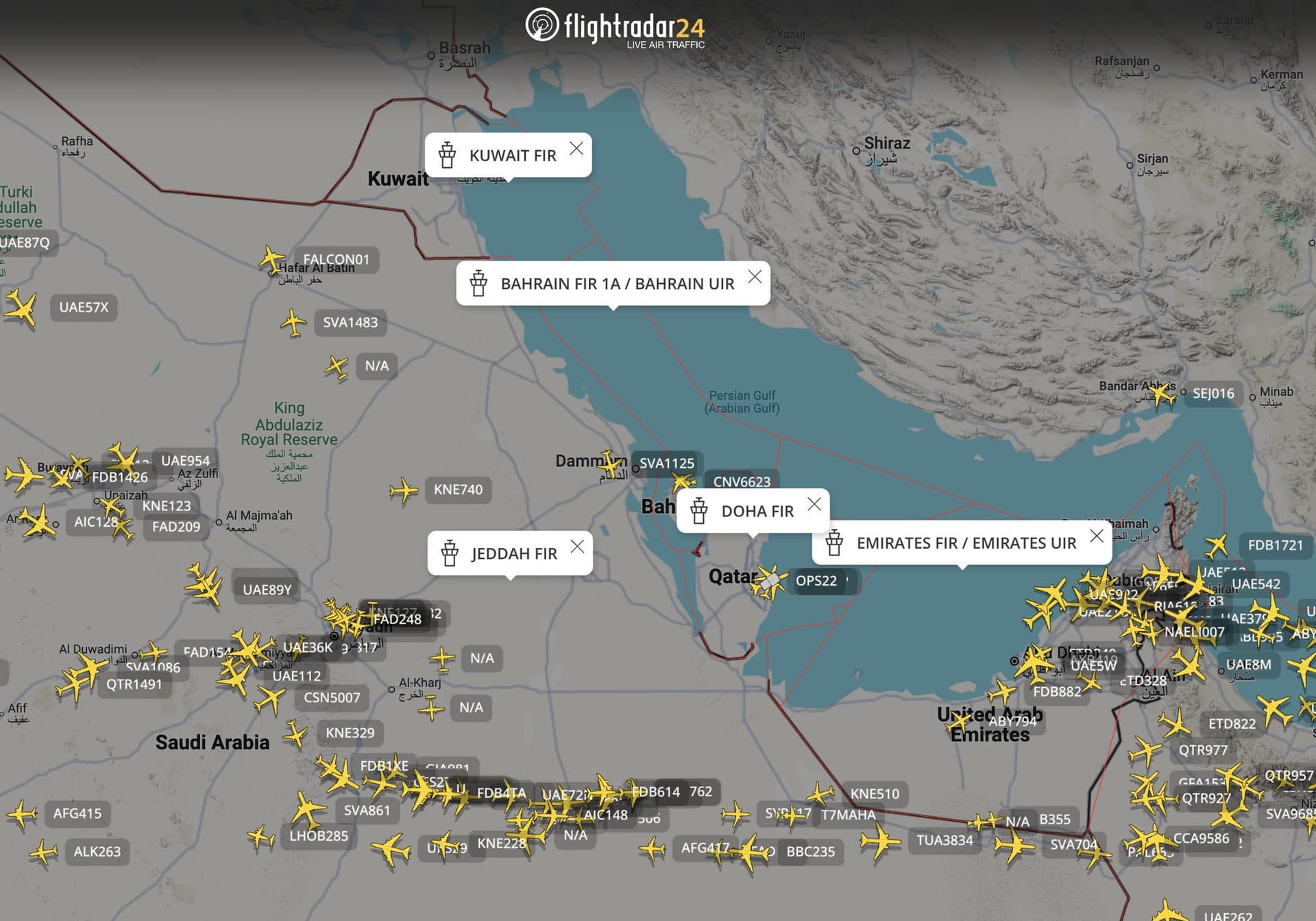
U.S.-Israeli strikes on Iran and Iran’s retaliatory attacks forced multiple Middle Eastern countries to close their skies, canceling between 2,400 and 3,400 flights on Sunday and leaving thousands of travelers stranded across the globe. Flight trackers reported a sharp collapse in flight activity over the United Arab Emirates, and major hubs that normally move tens of thousands of passengers a day halted operations.
FlightAware counted more than 2,400 cancellations across the region on Sunday, while Flightradar24 reported upward of 3,400 cancellations across seven airports, a difference analysts said likely reflects divergent tracker scope and update times. Flightradar24 also showed no flight activity over the UAE after its government ordered a temporary and partial airspace closure. Aviation analytics firm Cirium notes that Emirates, Qatar Airways and Etihad typically handle roughly 90,000 passengers a day through their Gulf hubs, underscoring the disruption’s scale.
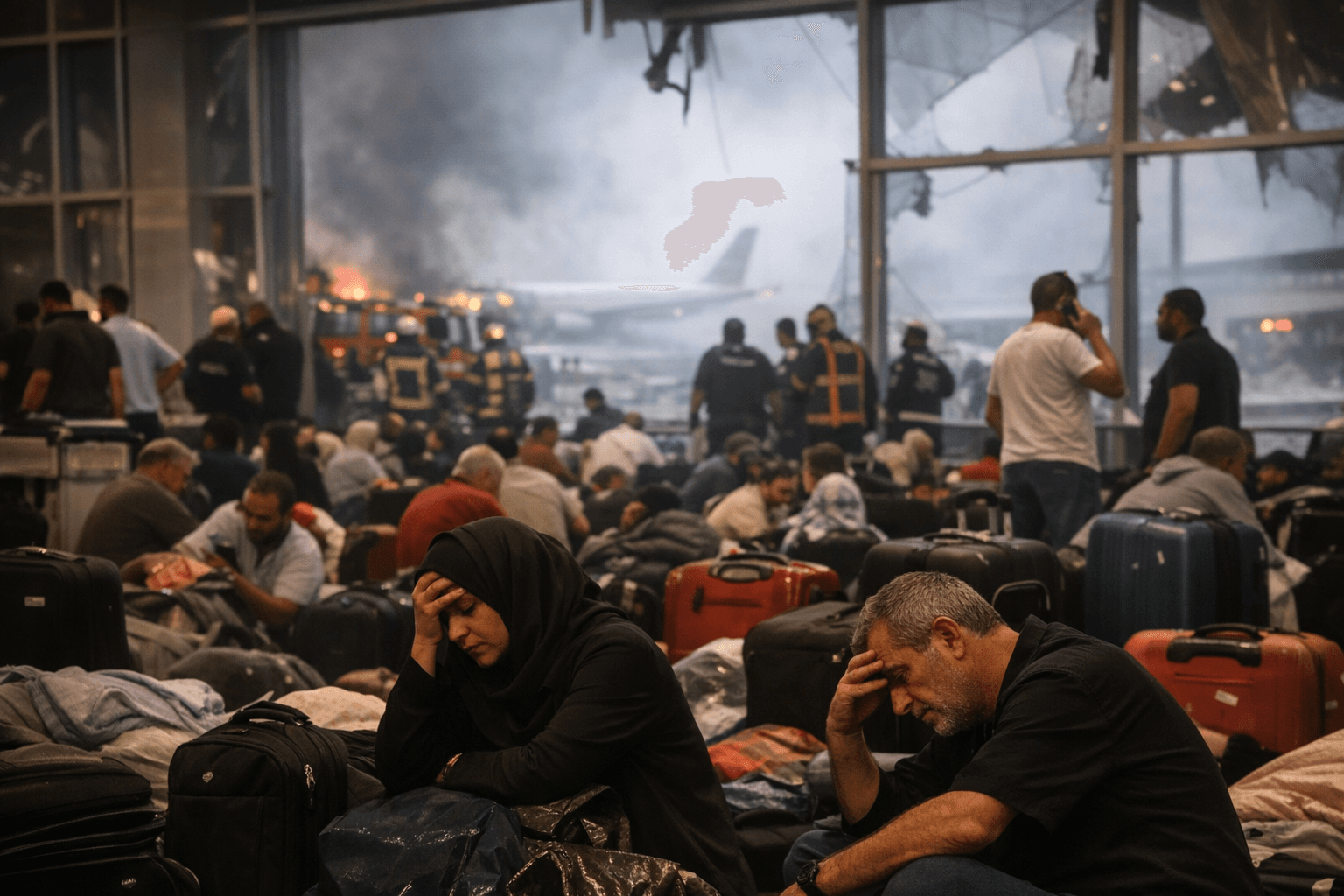
Dubai International suspended operations after reported strikes produced smoke-filled passageways and chaotic evacuations at the terminal; airport officials said four people were injured. Zayed International in Abu Dhabi reported one person killed and seven injured in a drone strike. Strikes were also reported at Kuwait International, and Israeli airspace remained closed. Local footage and airline advisories showed travelers diverted to alternate airports or left waiting at closed gates.
The human toll is already visible. One airport in Bali reported more than 1,600 tourists stranded on Sunday after five flights to the Middle East were canceled or postponed. Jonathan Escott and his partner, who arrived at Newcastle airport, England, found their direct Emirates flight to Dubai canceled and were left stranded with other passengers. Broad estimates of the weekend disruptions put the number of stranded or diverted travelers in the hundreds of thousands when Saturday’s initial closures are included.
Airlines moved quickly to alter schedules. Emirates suspended flights to and from Dubai until at least Sunday afternoon, Qatar Airways said Doha airport would remain closed until at least Monday morning, and Lufthansa suspended services to Tel Aviv, Beirut, Amman, Erbil and Tehran through March 7. Some carriers issued waivers allowing affected passengers to rebook without paying extra fees.
Analysts warn the operational fallout will be costly. Flights rerouted south over Saudi Arabia will add hours and burn extra fuel, increasing airline operating costs and raising the risk of fare rises if the disruption persists. “For travelers, there's no way to sugarcoat this,” said Henry Harteveldt, an airline industry analyst and president of Atmosphere Research Group. “You should prepare for delays or cancellations for the next few days as these attacks evolve and hopefully end.”
Safety and reopening remain contingent on military-to-airline coordination, a former Federal Aviation Administration air traffic control overseer said. Mike McCormick said over the next few days “these countries might be able to reopen parts of their airspace once American and Israeli officials share with the airlines where military flights are operating and how capable Iran remains at firing missiles.”
The strikes have also deepened regional tensions. State-affiliated Tasnim News Agency quoted Grand Ayatollah Makarem Shirazi as saying Khamenei’s revenge is the “religious duty of all Muslims in the world to eradicate the evil of these criminals from the world,” and reported Ayatollah Nouri Hamedani issued a fatwa declaring an obligation for all Muslims to “avenge the blood” of Khamenei. Iran has not publicly claimed responsibility for all the strikes attributed to it.
Authorities and airlines are updating notices and rerouting guidance; travelers should monitor official airline alerts and airspace notices as the situation evolves.
Know something we missed? Have a correction or additional information?
Submit a Tip