U.S., Israeli Strikes Hit Iran as Hormuz Crisis Escalates Across Region
Strikes on Iran's Isfahan province and a tanker attack near Dubai signal a conflict stretching deep into Persian Gulf shipping lanes and Iran's military heartland.
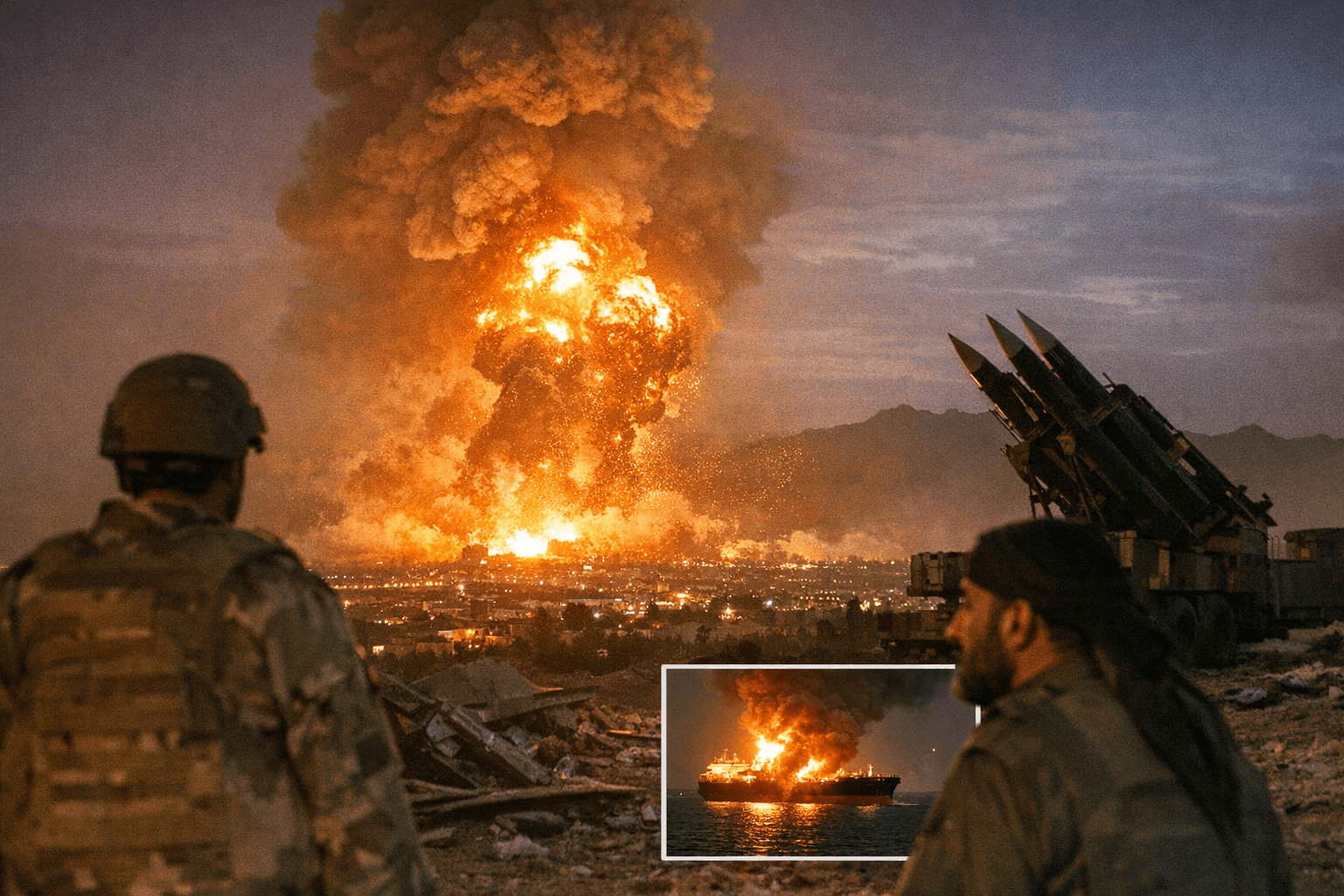
Fresh U.S. and Israeli strikes hit military sites in Iran's Isfahan province on Monday, extending kinetic operations deeper into Iranian territory than at any prior point in the current conflict and raising immediate questions about the survivability of Iran's command and industrial infrastructure. The strikes, described by Iranian and regional sources as targeting military installations in the central province, arrived alongside a tanker attack off Dubai and a barrage of ballistic missiles and drones that Kuwait said it intercepted crossing its airspace, painting a picture of a conflict that has stopped respecting borders.
Secretary of State Marco Rubio, speaking as the strikes unfolded, said President Donald Trump "always prefers diplomacy" but delivered a pointed warning: Iran faces "real consequences" for the partial closure of the Strait of Hormuz, the narrow waterway through which roughly a fifth of the world's seaborne oil passes. The partial chokehold has already pushed oil prices and freight-insurance premiums sharply higher, delivering an early economic jolt to markets watching the crisis closely.
The diplomatic pressure is intensifying at the highest levels. Saudi Crown Prince Mohammed bin Salman, the Emir of Qatar, and King Abdullah II of Jordan each condemned Iranian strikes on civilian infrastructure at a summit in Jeddah, a rare joint rebuke from governments that do not always speak in unison on Gulf security matters. Their collective statement underscored how broadly the conflict's blast radius is now perceived across the region, even among states that have maintained cautious neutrality.
Isfahan's significance is hard to overstate. Located in Iran's heartland, the province hosts defense-industrial and military assets that Tehran considers strategically vital. Striking there is categorically different from targeting facilities closer to Iran's borders or proxies outside its territory; it signals that U.S. and Israeli planners are willing to reach inside Iran's core in ways that carry genuine escalation risk.
On the ground and at sea, the exchanges continued to multiply. Hezbollah claimed fresh strikes on Israeli positions along the Lebanon border, sustaining a cross-border rhythm of fire that has drawn Israeli retaliatory responses. The tanker attack off Dubai, attributed to Iran-aligned actors, demonstrated that the maritime theater extends well beyond the Strait of Hormuz into the Gulf's port approaches, where commercial shipping had largely felt insulated from conflict.
Kuwait's interception of ballistic missiles and drones crossing its airspace marked another threshold: a Gulf Cooperation Council member state now actively defending its own skies against projectiles tied to the broader confrontation. That development has focused attention on how quickly the conflict's operational geography is expanding.
The escalation pattern stretching back weeks through tit-for-tat U.S.-Israeli strikes and Iranian or Iran-linked retaliatory attacks on shipping and installations has moved faster than diplomatic channels can contain. Governments are pressing urgently through back channels to secure shipping lanes and limit spillover, but with strikes reaching Isfahan, missiles over Kuwait, and a burning tanker off Dubai, the off-ramps are narrowing as the costs of miscalculation continue to rise.
This article was produced by Prism’s automated news system from verified source data, official records, and press releases, then run through automated quality and moderation checks before publishing. The system is built and supervised by the people who set the standards it runs under. Read our full AI policy.
Did this article answer your question?


