U.S. job openings jump to five-year high, but hiring stays weak
Job openings climbed to 7.618 million in April, but hires fell to 5.1 million and quits hit a nearly six-year low, exposing a wary labor market.
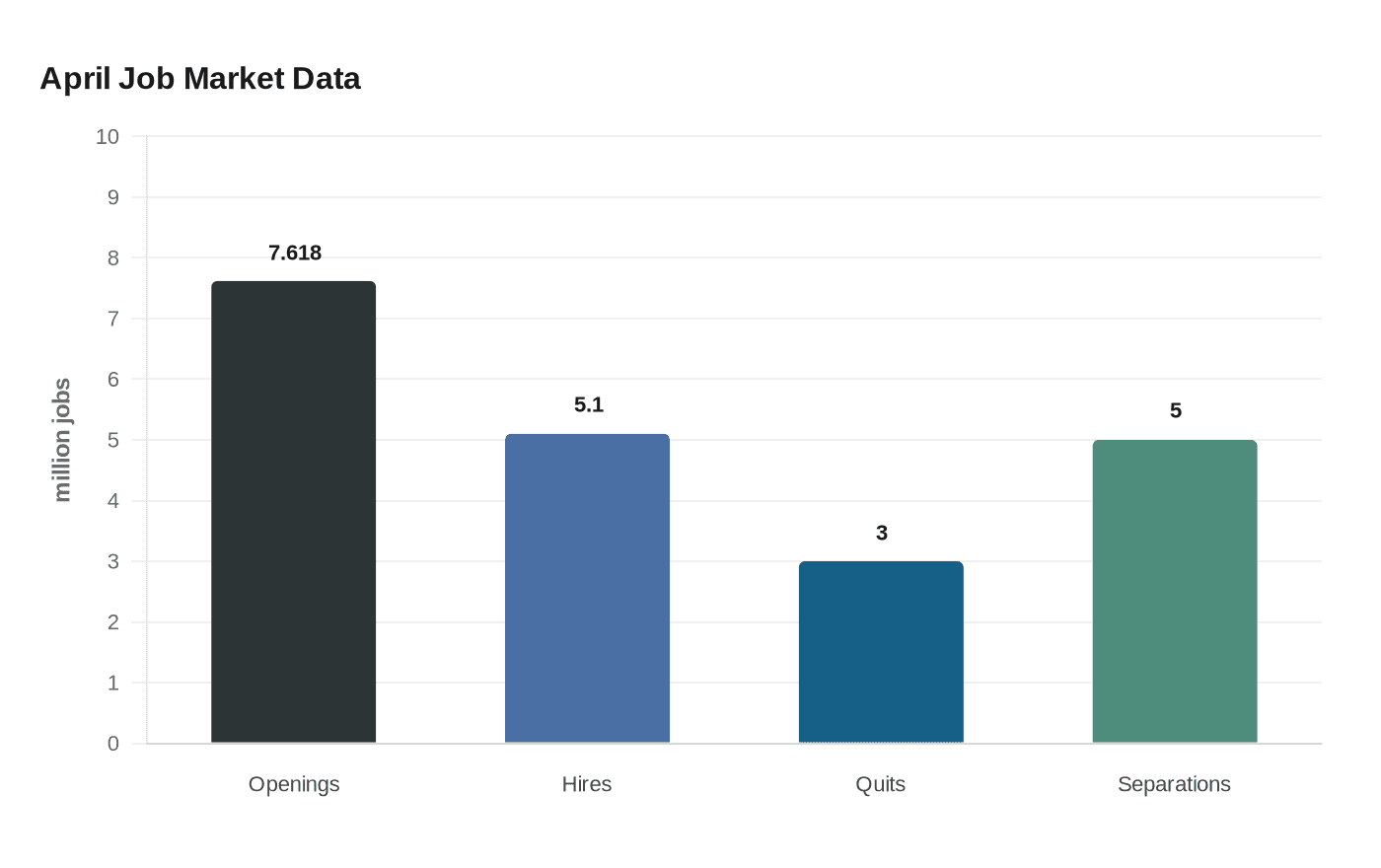
Employers posted more openings, but workers did not see a matching surge in hiring. U.S. job openings rose by 731,000 in April to 7.618 million, the highest level since May 2024 and the biggest monthly increase in five years, yet hires slipped to 5.1 million and quits fell to 3.0 million, the weakest pace of voluntary job changing in nearly six years. The openings rate climbed to 4.6%, but the details pointed to a labor market still moving cautiously rather than accelerating.
The gains were narrow. Openings in professional and business services jumped by 668,000, accounting for most of the increase, while finance and insurance lost 135,000 openings. March openings were also revised higher, to 6.9 million from the prior estimate, which sharpened the contrast between a strong headline number and a softer underlying hiring picture.
That split matters because openings alone do not tell the whole story. Hires fell even as listings rose, and total separations eased to 5.0 million. Layoffs and discharges were 1.7 million, a sign that employers are not rushing into large-scale cuts, but are also not expanding payrolls with much confidence. Economists describe that pattern as a slow-hire, slow-fire labor market, one in which firms keep positions open but remain hesitant to commit to faster expansion.
The broader labor report reinforced that message. Total nonfarm payroll employment rose by 115,000 in April, and the unemployment rate held at 4.3%. That combination suggests the economy is not weakening sharply, but it is losing momentum. Job seekers are still facing a market with available openings, yet the pace of actual hiring remains muted and worker turnover is subdued.
For the Federal Reserve, the gap between job listings and hires complicates the policy outlook. Strong openings can argue that labor demand is still intact, but weak hiring and falling quits suggest cooling beneath the surface. With higher oil prices, supply disruptions and wider geopolitical uncertainty linked to the war with Iran in the background, companies may be even more reluctant to add staff aggressively. That makes near-term rate cuts harder to justify, and keeps the labor market at the center of the Fed’s inflation-and-growth balancing act.
This article was produced by Prism’s automated news system from verified source data, official records, and press releases, then run through automated quality and moderation checks before publishing. The system is built and supervised by the people who set the standards it runs under. Read our full AI policy.
Did this article answer your question?

%3Amax_bytes(150000)%3Astrip_icc()%2FCertificate-of-deposit-2301f2164ceb4e91b100cb92aa6f868a.jpg&w=1920&q=75)
