U.S. Jobs Rebound Strongly in March Despite Oil Shock From Iran War
The U.S. added 178,000 jobs in March, tripling forecasts, but soft wages and a surging oil shock from the Iran war cloud what comes next for the Fed.

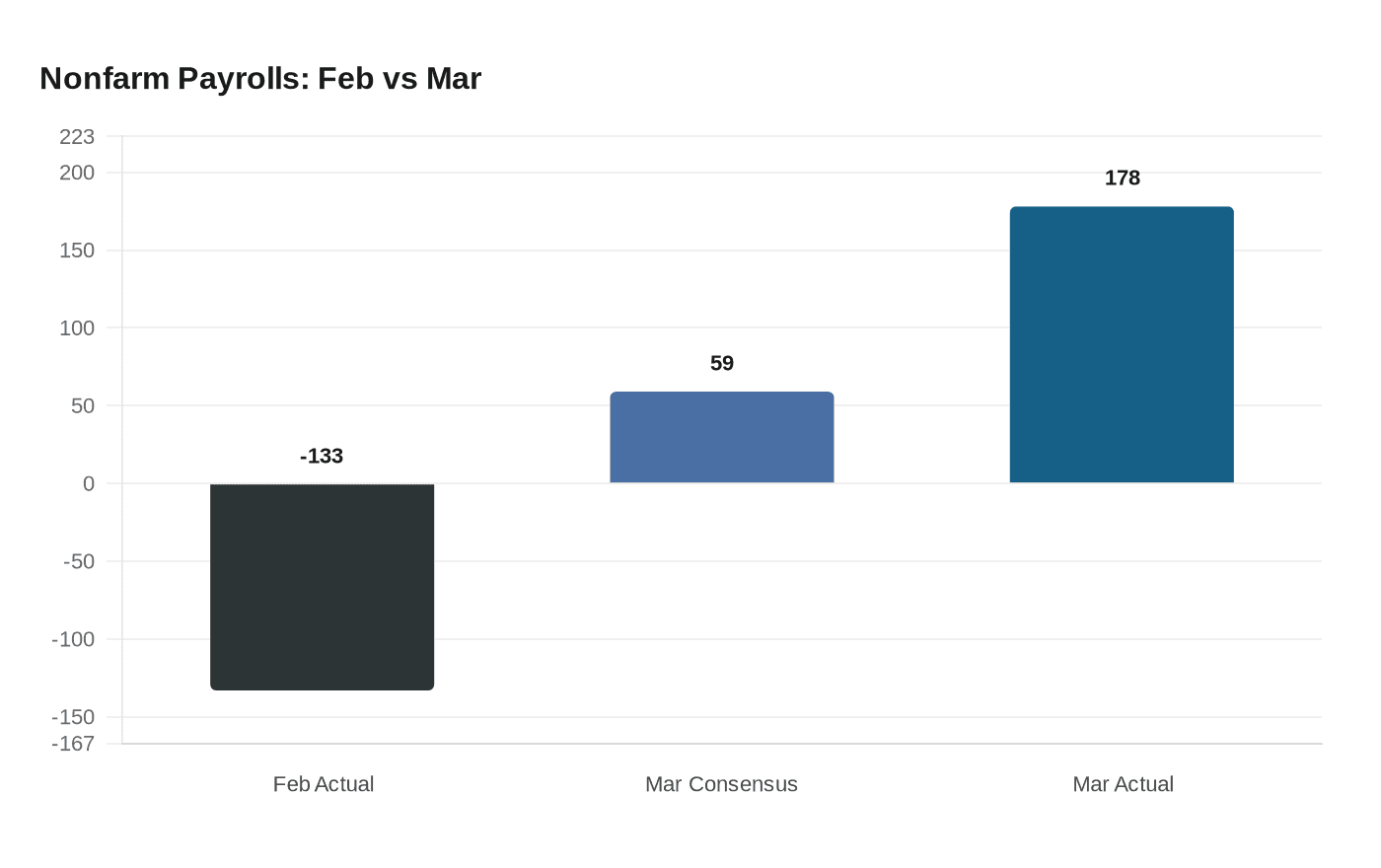
The U.S. labor market staged a sharp reversal in March, adding 178,000 nonfarm payrolls on a seasonally adjusted basis, a reversal from the 133,000 decline in February and better than the Dow Jones consensus estimate for 59,000, the Bureau of Labor Statistics reported Friday. The result was nearly three times what most economists anticipated and the most jobs added since the end of 2024.
Health care was responsible for much of the growth, with the sector adding 76,000 jobs. Leisure and hospitality added 44,000 jobs in March, marking its rebound from February's loss of 11,000 jobs, making it the second-largest contributor to private sector job growth behind health care and social assistance. On the other side of the ledger, employment in financial activities edged down by 15,000, reflecting a loss in finance and insurance of 16,000. Financial activities employment is now down by 77,000 since reaching a peak in May 2025. Federal government employment continued to decline for yet another month, according to the Bureau of Labor Statistics.
The headline gain, however, comes with an important asterisk: the BLS establishment survey captures payroll data from the pay period that includes the 12th of each month, meaning the March figures largely predate the full economic transmission of the oil shock triggered by the U.S.-Israeli war on Iran. The suspension of tanker traffic in the Strait of Hormuz, through which 20 percent of the world's oil passes, and the displacement of roughly 200 ships in the region disrupted global supply chains. Saudi Arabia's largest refinery and Qatar's export facilities were also targeted by drone attacks, with Brent crude jumping 15 percent to $83 per barrel by March 5.
The national average for regular gasoline stood at $3.842 a gallon on March 18, up from $2.923 a month earlier. Those price increases have fed directly into inflation expectations and rattled bond markets. The 10-year Treasury yield spiked from below 4 percent to nearly 4.5 percent as markets priced in higher inflation.
Federal Reserve Chair Jerome Powell addressed students at Harvard University on March 30, where he said the oil price shock from the war would likely be temporary, but noted it was too early to judge the war's full impact. "Now we're facing events in the Middle East which will certainly affect gas prices, and we feel like our policy is in a good place for us to wait and see how that turns out," Powell said. In a separate statement, he acknowledged the depth of uncertainty: "The thing I really want to emphasize is, nobody knows. The economic effects could be bigger, they could be smaller, they could be much smaller, they could be much bigger. We just don't know," Powell said.
Financial markets are now predicting that the Federal Reserve will not make any rate cuts in 2026 as policymakers grapple with the potential economic fallout from the conflict. If oil prices remain elevated and supply disruptions persist, Fed officials could find themselves with few viable options: holding interest rates higher to contain prices even as the job market softens.
Beneath the strong headline, several internal indicators pointed to a labor market that remains under strain. Wages rose less than expected, with average hourly earnings up just 0.2 percent for the month and 3.5 percent from a year ago, below expectations of 0.3 percent monthly and 3.7 percent annual. The annual increase was the lowest since May 2021. An alternative unemployment measure that counts discouraged workers and those holding part-time jobs for economic reasons edged up to 8 percent. Long-term unemployment remained elevated, though the average duration of joblessness fell to 25.3 weeks.
Indeed Hiring Lab's director of economic research Laura Ullrich noted that while the job gains were "a seemingly welcome plot twist after months of downbeat reports," she cautioned that healthcare and social assistance sectors were continuing to do much of the heavy lifting, a pattern that has propped up headline numbers for well over a year. The March report, in other words, captured a resilient labor market as it existed before the oil shock's full weight arrived. Whether that resilience holds through the spring will be the defining question for Fed policy the rest of the year.
This article was produced by Prism’s automated news system from verified source data, official records, and press releases, then run through automated quality and moderation checks before publishing. The system is built and supervised by the people who set the standards it runs under. Read our full AI policy.
Did this article answer your question?

