U.S. Launches Large-Scale Operation Across Syria Against Islamic State
U.S. Central Command said American and partner forces carried out a broad series of airstrikes across Syria on January 10 as part of Operation Hawkeye Strike, a campaign ordered after a deadly December ambush. The strikes underscore Washington's renewed willingness to use force to deter attacks on its personnel, but leave unanswered questions about civilian harm, partner roles and the long-term stability of Syria.
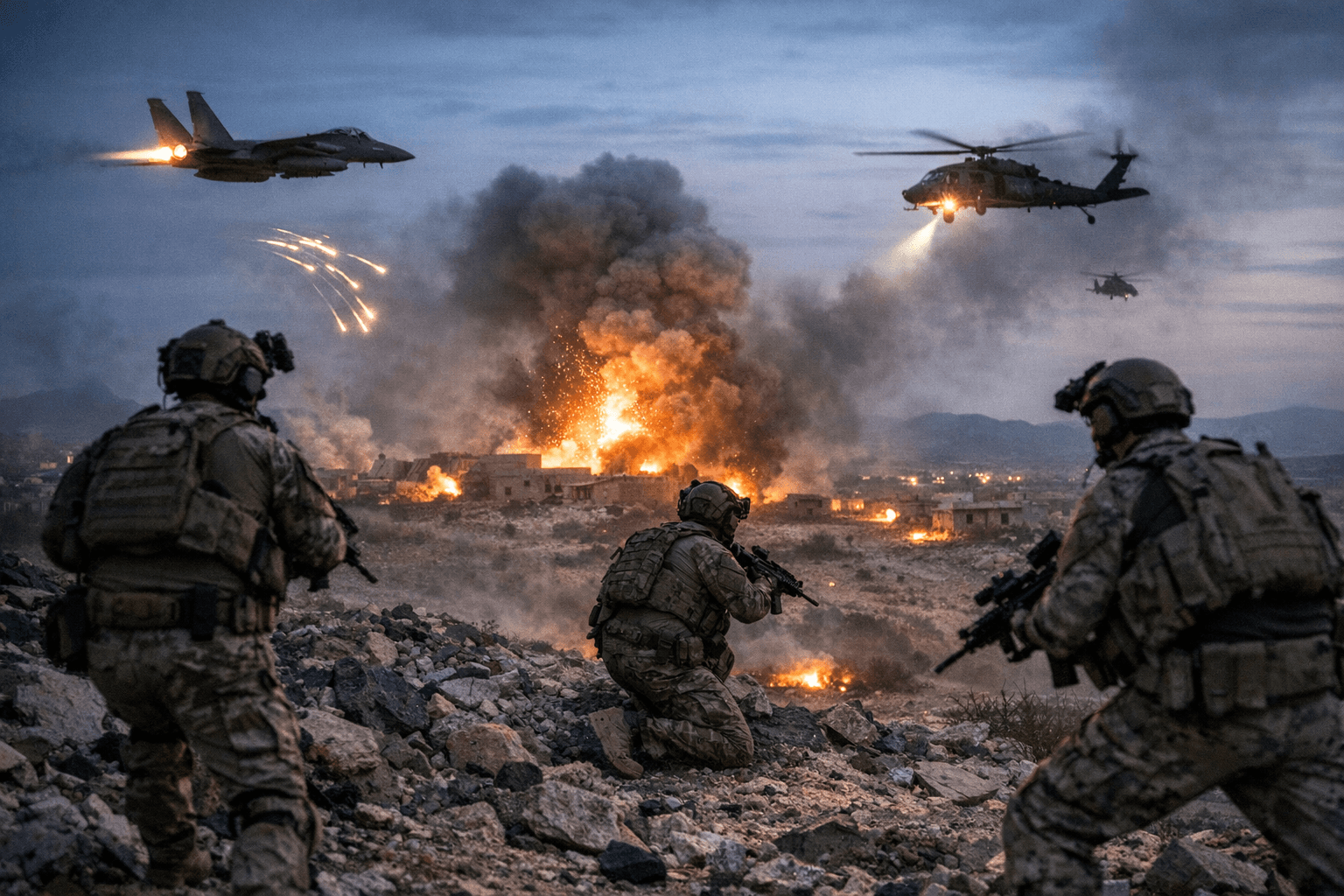
U.S. Central Command announced that American forces, alongside partner aircraft, conducted large-scale strikes across Syria on January 10 in a campaign officials described as retaliation for a December ambush that killed three U.S. citizens. CENTCOM said the operation, designated Operation Hawkeye Strike and ordered by President Donald Trump on December 19, was carried out at about 12:30 p.m. Eastern Time and hit more than 35 Islamic State-related targets using over 90 precision munitions and more than 20 aircraft.
CENTCOM characterized the strikes as conducted "alongside partner forces" and listed participating aircraft types including F-15Es, A-10s, AC-130Js, MQ-9s and Jordanian F-16s. The command reiterated an uncompromising message: "Our message remains strong: if you harm our warfighters, we will find you and kill you anywhere in the world, no matter how hard you try to evade justice." Defense Secretary Pete Hegseth posted on X that "We will never forget, and never relent."
U.S. officials said the Jan. 10 action was a continuation of a campaign that began on Dec. 19, when CENTCOM reported strikes on more than 70 targets across central Syria employing more than 100 precision munitions. Washington has framed the campaign as both retaliation for the Dec. 13 ambush near Palmyra and a deterrent to future attacks on American and partner forces. The December attack killed two U.S. soldiers, Sgt. Edgar Brian Torres-Tovar and Sgt. William Nathaniel Howard, both members of the Iowa National Guard, and Ayad Mansoor Sakat, a civilian interpreter; three other U.S. personnel were wounded, and U.S. officials said the assailant was killed in the engagement.
Operational details beyond munitions and aircraft remain sparse. CENTCOM did not provide precise strike locations, and independent assessments of damage, Islamic State casualties and potential civilian harm had not been made public as of January 11. Syrian security officials reported an arrest the day before the Jan. 10 strikes of an operational leader of Islamic State in the Levant, a development that the U.S. and its partners may seek to synchronize with kinetic and intelligence operations.
The strikes illuminate shifting dynamics in Syria's complex battlefield. Washington long relied primarily on the Kurdish-led Syrian Democratic Forces as its principal local partner against Islamic State, but coordination with Damascus' central government has increased since President Bashar al-Assad's ouster from some areas of international legitimacy in December 2024, and Syria has signaled participation in the broader fight against IS. CENTCOM's refusal to fully inventory partner participants in the Jan. 10 operation reflects the opaque nature of evolving coalitions.
Beyond tactical effects, the campaign raises legal and diplomatic questions. Large-scale cross-border strikes engage issues of state sovereignty and the law of armed conflict, particularly when strike locations and assessments of civilian harm are not disclosed. Regional governments and humanitarian organizations have repeatedly warned that military pressure without clear plans for civilian protection and political reconciliation risks reinforcing cycles of violence.
U.S. officials have described Operation Hawkeye Strike as a sustained response that could last weeks to a month. For Syrians recovering from a decade of war and for regional capitals balancing counterterrorism with fragile diplomatic arrangements, the latest U.S. strikes will be judged not only on their immediate disruption of Islamic State capabilities but also on whether they advance a durable, lawful and humane approach to stabilizing the country.
This article was produced by Prism’s automated news system from verified source data, official records, and press releases, then run through automated quality and moderation checks before publishing. The system is built and supervised by the people who set the standards it runs under. Read our full AI policy.
Did this article answer your question?


