U.S. lawmakers revise chip bill, keep major ASML tool restrictions
Lawmakers scaled back the MATCH Act, but kept a countrywide restriction on ASML’s key chipmaking tools, exposing the limits of Washington’s China hawkishness.
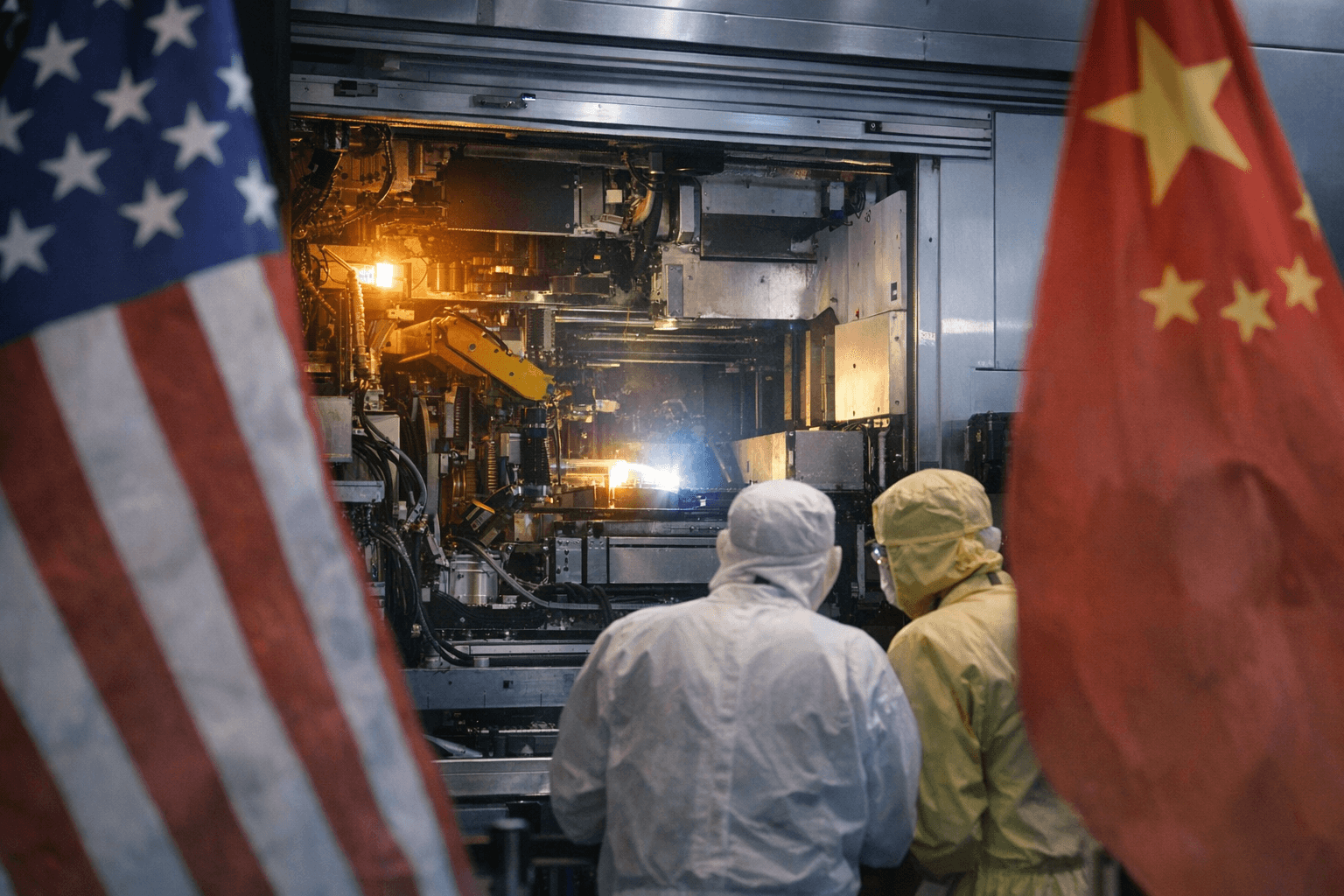
U.S. lawmakers have pulled back some of the most aggressive language in their latest semiconductor bill, but they left intact a major new restriction on ASML’s deep ultraviolet immersion lithography machines, one of the most important tools in modern chipmaking. The revised MATCH Act shows how far Washington is still willing to go in the fight over China’s access to advanced production equipment, and where bipartisan resolve begins to bend under industry pressure.
The bill, introduced in the House as H.R. 8170 on April 2, 2026, was offered by Republican Rep. Michael Baumgartner of Washington state with bipartisan backing from John Moolenaar, Rich McCormick, Bill Huizenga, Jefferson Shreve, Mike Lawler, John Mannion, Jared Golden, Josh Riley, Maggie Goodlander and Suhas Subramanyam. The original version drew concern inside the semiconductor sector because it went beyond narrower export controls and threatened broader company-tied and countrywide restrictions. The revised draft appears designed to keep the bill politically viable while preserving the hard edge that supporters say is needed to close gaps in export controls and align U.S. policy more closely with allies such as Japan and the Netherlands.
Even after the rewrite, the most consequential provision remains a countrywide restriction on ASML’s DUV immersion lithography equipment. ASML is the dominant global supplier of that toolset, which sits at the center of advanced semiconductor fabrication. The company declined to comment on the latest draft. Earlier versions of the legislation were also said to target tools from Lam Research and Tokyo Electron, signaling that the scope of the fight extends well beyond a single European vendor.
The timing underscores the political stakes. The House Foreign Affairs Committee is expected to vote next Wednesday, April 23, 2026, as part of a broader package of more than a dozen bills tied to AI, semiconductors and export controls. Congress is still trying to tighten pressure on China’s chip supply chain even as the Trump administration has held back on updating some controls and loosened curbs on advanced chips. The MATCH Act is now testing how much of that agenda can survive contact with the market.
ASML’s numbers show why the company is so exposed. China accounted for 29% of its sales in 2025, down from 36% in 2024, and the company spent €4.7 billion on research and development while employing more than 16,000 research staff. On April 15, 2026, ASML reported first-quarter net sales of €8.8 billion and a 53% gross margin, then raised its 2026 revenue outlook. For Washington, the lesson is plain: the toughest language may be negotiable, but the core tool restrictions are still being kept in place.
This article was produced by Prism’s automated news system from verified source data, official records, and press releases, then run through automated quality and moderation checks before publishing. The system is built and supervised by the people who set the standards it runs under. Read our full AI policy.
Did this article answer your question?

