U.S. Lifts Blockade, Allows Russian Oil Tanker to Reach Cuba
A Russian government tanker carrying 730,000 barrels of crude slipped through Washington's own Cuba blockade Sunday, with Trump's blessing and no explanation from the White House.
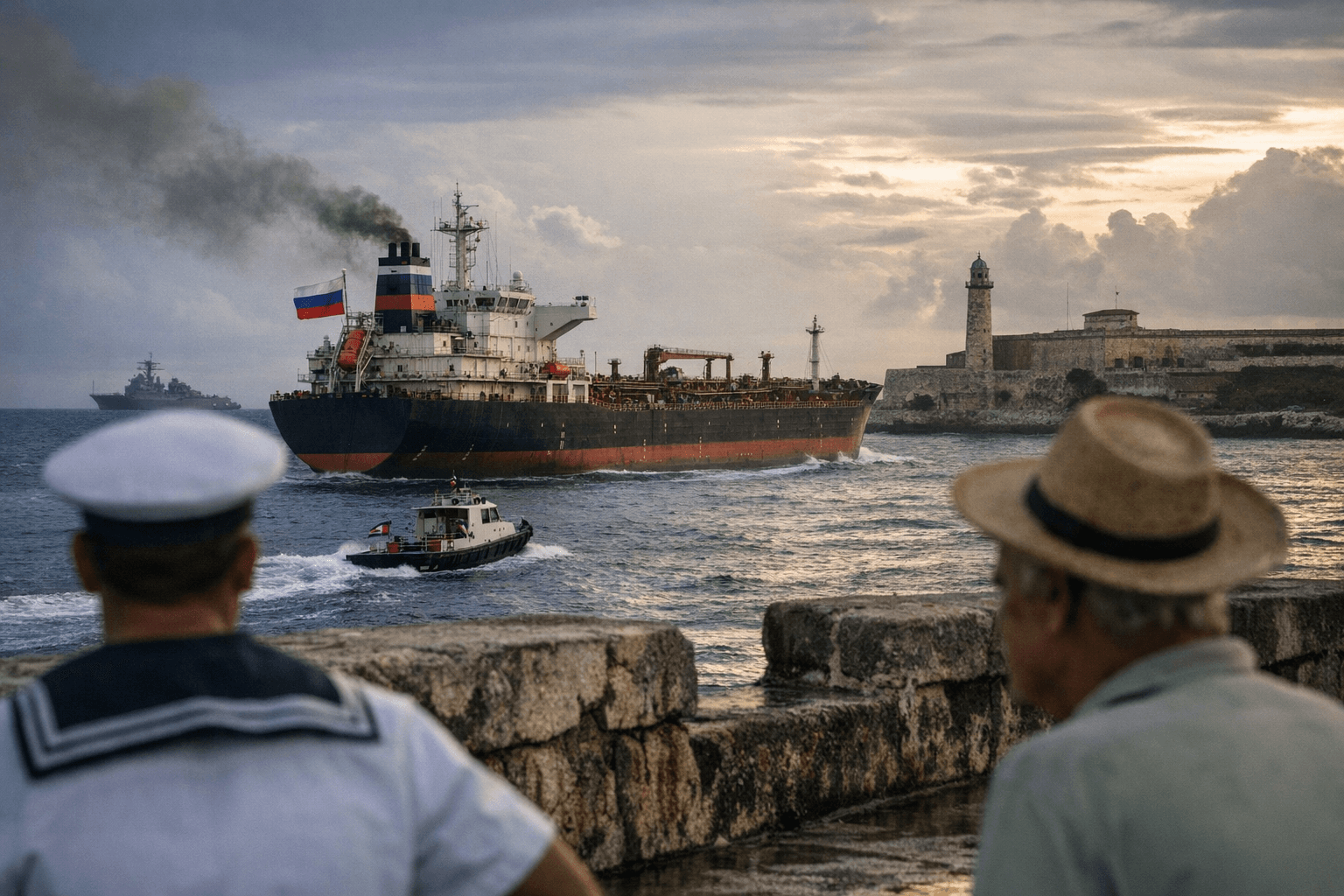
Within several miles of Cuban territorial waters, the Anatoly Kolodkin was steaming south at 12 knots Sunday evening when Washington blinked. The Russian government-owned tanker, loaded with an estimated 730,000 barrels of crude, was not turned back. It was not intercepted. According to an unnamed U.S. official briefed on the matter, the U.S. Coast Guard was letting it through.
The decision to allow the ship to reach Matanzas punctured a de facto oil blockade that the Trump administration had maintained for months to squeeze Havana. It would deliver Cuba's first oil shipment since January to a nation of 9.6 million people enduring near-daily blackouts and severe gasoline rationing. And it raised a question neither the White House nor the Coast Guard answered on Sunday: what exactly does the blockade mean, and who decides when to enforce it?
President Trump, speaking to reporters aboard Air Force One as he flew back to Washington from Mar-a-Lago, offered his own answer. "If a country wants to send some oil into Cuba right now, I have no problem with that, whether it's Russia or not," he said. In the same remarks, he dismissed any strategic significance of the delivery: "Cuba's finished, they have a bad regime, they have very bad and corrupt leadership, and whether or not they get a boat of oil it's not going to matter." He predicted the communist government would fall "within a short period of time."
The remarks put Trump in the unusual position of simultaneously maintaining a pressure campaign against Havana while waving through a Kremlin-owned vessel that Washington's own sanctions architecture was designed to deter. The reasons for the administration's decision remained unclear, even to officials briefed on the matter. Analysts noted separately that a forceful attempt to stop the tanker could have raised tensions at sea with Russia, a calculation that appears to have shaped the operational choice even absent a public rationale. The Coast Guard referred queries to the White House; the White House did not immediately respond.
For Cuba, the math is unforgiving regardless of the geopolitics. According to energy expert Jorge Pinón of the University of Texas at Austin, once the Anatoly Kolodkin's crude reaches Matanzas, it will take roughly 15 to 20 days to process and another 5 to 10 days to distribute refined products. "The urgent need today in Cuba is diesel," said Pinón, a former oil executive. Cuban President Miguel Díaz-Canel has said the island has not received oil imports in three months, a drought that has left the country dependent on rationed supplies and intermittent power. The shipment could buy the island at least a few weeks before its fuel reserves run out, analysts said, even with the processing lag built in.
The Anatoly Kolodkin did not travel quietly. According to the British Royal Navy, the tanker was escorted by a Russian navy vessel across the English Channel before the two ships parted ways when the tanker entered the Atlantic. MarineTraffic data showed it off the northeastern tip of Cuba by Sunday evening, on course for the western port of Matanzas, where it was expected to dock by Tuesday. The tanker departed from Russia's Primorsk port, according to LSEG ship monitoring data.
Cuba was not the only intended destination for Russian fuel this week. The Hong Kong-flagged Sea Horse, reportedly carrying Russian diesel for Cuba, rerouted to Venezuela instead.
The Anatoly Kolodkin's passage tests whether the U.S. blockade is a policy or a preference. Allies watching Washington use tanker interdictions, port denials, and secondary sanctions as tools of statecraft will note that a Russian state-owned vessel carrying Kremlin crude reached a sanctions-target island without incident, over the explicit objection of no one in the U.S. government on the record. The White House offered no statement. The Coast Guard offered no comment. Only the president, at 30,000 feet over the Atlantic, explained what happened: he had no problem with it.
This article was produced by Prism’s automated news system from verified source data, official records, and press releases, then run through automated quality and moderation checks before publishing. The system is built and supervised by the people who set the standards it runs under. Read our full AI policy.
Did this article answer your question?


