U.S. Lifts Sanctions on Venezuela's Acting President Delcy Rodríguez
The U.S. removed Venezuela's acting president Delcy Rodríguez from its sanctions blacklist, a calculated policy pivot following Nicolás Maduro's detention and transfer to American custody.
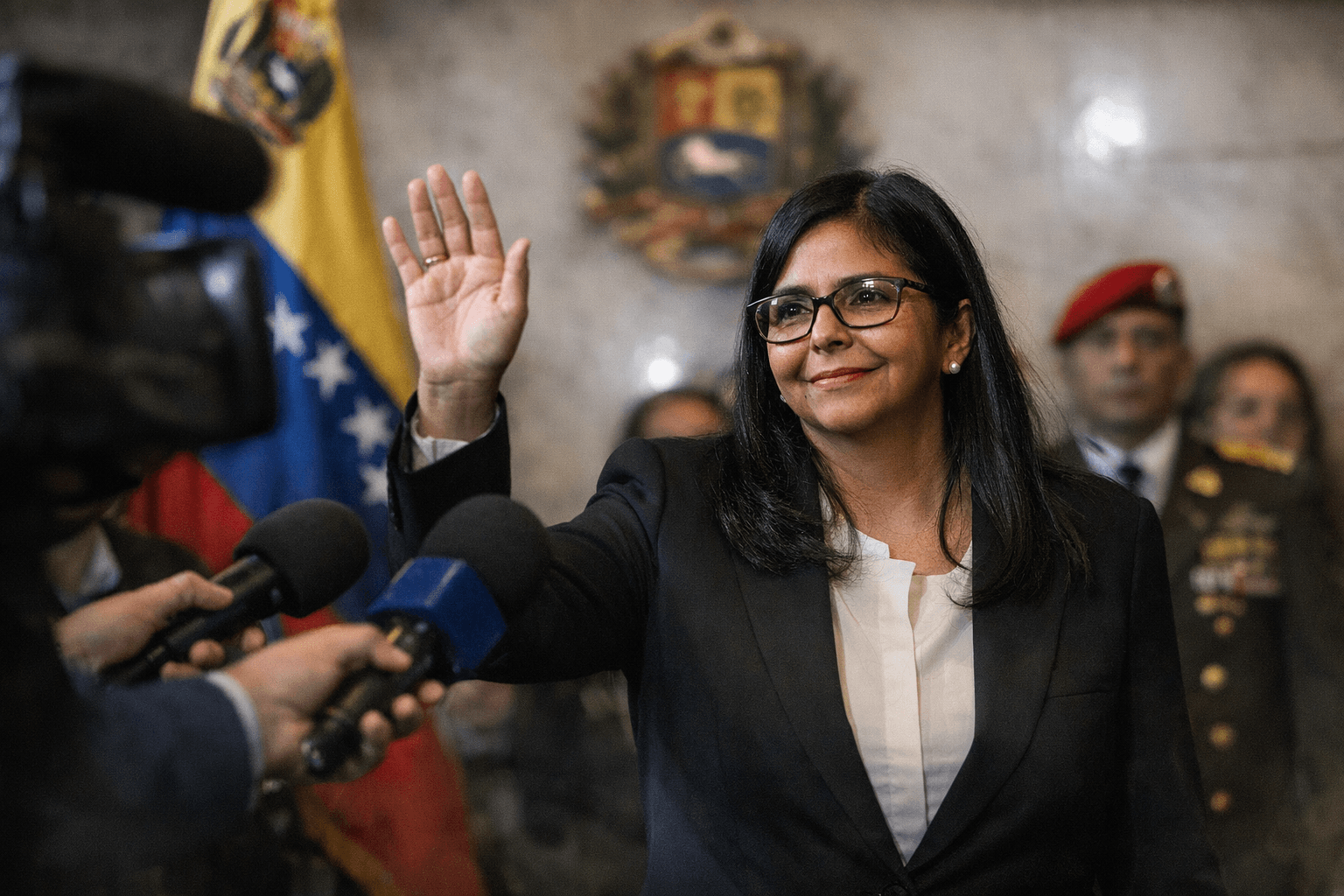
The removal of Delcy Rodríguez from America's most consequential financial blacklist is the clearest signal yet that Washington views Venezuela's post-Maduro political order as legitimate and open for business.
The Treasury Department's Office of Foreign Assets Control posted the change to its Specially Designated Nationals list on April 1, stripping away a designation that had barred U.S. persons and companies from any financial dealings with Rodríguez and frozen any U.S.-held assets tied to her name. The delisting followed a dramatic sequence of events: earlier this year, Nicolás Maduro and his wife were detained and transported to the United States to face criminal charges, clearing a path for Rodríguez to assume the role of acting president. Washington had already acknowledged that shift, recognizing Rodríguez as Venezuela's interim leader in diplomatic and legal contexts before OFAC formalized the change.
Administration officials described the move as part of a broader effort to encourage economic recovery in Venezuela and to incentivize political stability through trade and investment. That framing matters: the delisting is less a reward for democratic progress than a calculated bid to use commercial access as ongoing leverage over Venezuela's fragile new political order.
What changes immediately is significant for a specific set of actors. U.S. banks and financial institutions, which were legally prohibited from processing transactions involving Rodríguez or entities she controlled, can now engage without triggering sanctions liability. Energy firms that had been evaluating Venezuelan assets from the sidelines face a materially different legal landscape for direct negotiations with the interim government. The practical barriers to restarting formal diplomatic and commercial contact dissolve with her name off the list.
But officials were careful to temper expectations. Removing one individual from the SDN list does not automatically clear the broader sanctions architecture that still governs Venezuela's oil sector, financial system, and dozens of other named actors. OFAC retains the authority to reimpose Rodríguez's designation if policy or behavior changes, a provision that preserves Washington's ability to pull back if the interim government fails to deliver on stability or cooperation.
Venezuela's interim government welcomed the move as recognition of its legitimacy. The reaction in Washington was more divided. Human rights advocates and some opposition figures warned that normalizing relations without concrete political reforms risks entrenching interim authorities rather than accelerating a democratic transition.
The geopolitical ripple effects extend beyond Caracas. U.S. allies will be watching for signals about coordination and broader regional strategy. Oil markets and energy analysts are tracking whether the OFAC action precedes further regulatory changes that would allow American companies to meaningfully re-enter Venezuelan operations. Follow-up signals from the State Department will determine whether the April 1 delisting is the beginning of a structured normalization process or an isolated gesture testing the interim government's response.
This article was produced by Prism’s automated news system from verified source data, official records, and press releases, then run through automated quality and moderation checks before publishing. The system is built and supervised by the people who set the standards it runs under. Read our full AI policy.
Did this article answer your question?


