U.S. manufacturing hits four-year high, but supply shocks cloud outlook
Factory activity climbed to a four-year high in May, but war-driven shortages and soaring input costs are pushing manufacturers to front-load orders.
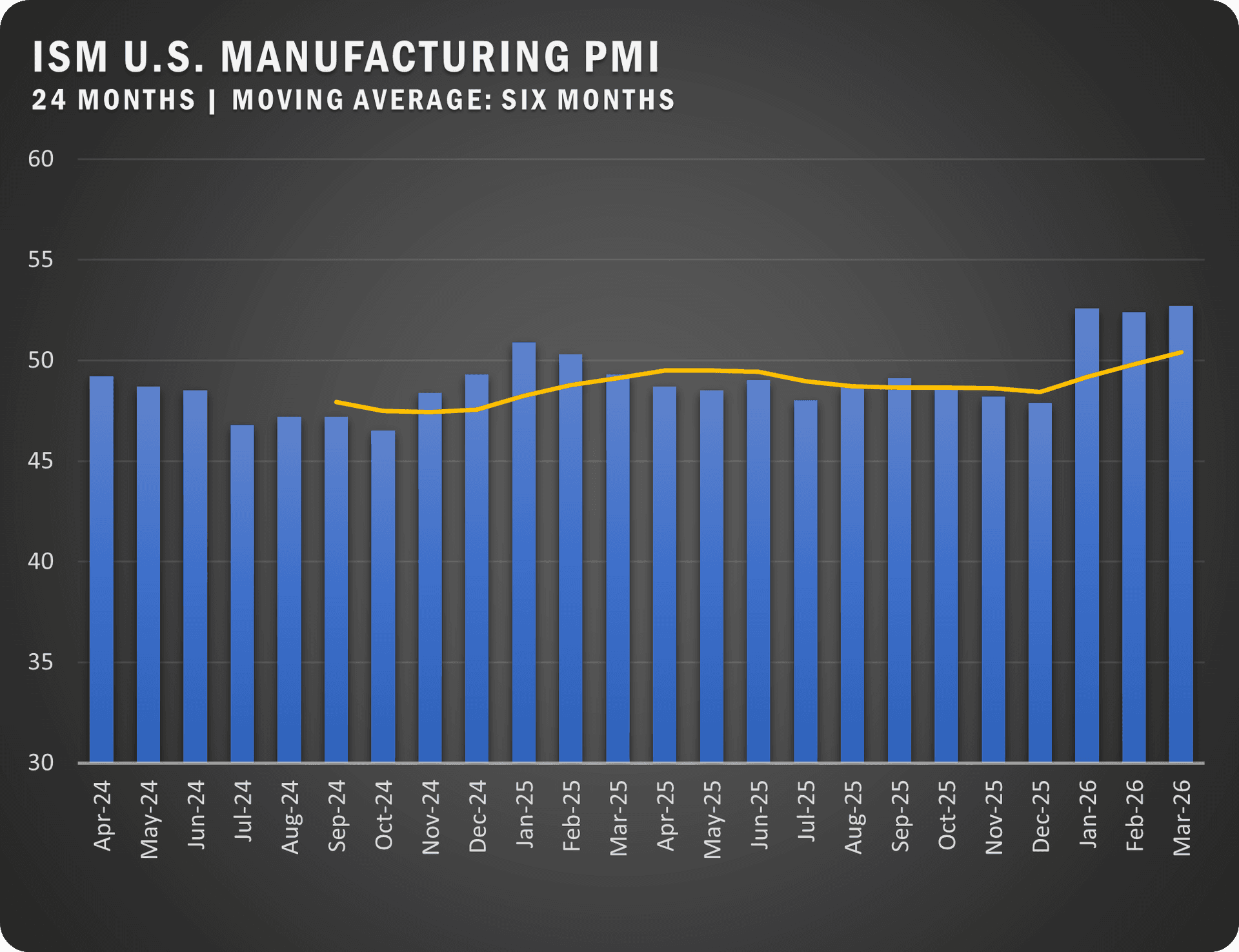
U.S. factory activity reached its strongest level in four years in May, but the surge arrived with a warning attached: war-related supply shocks were choking inputs, lifting prices and making the recovery look less like steady demand and more like a scramble to secure materials.
The Institute for Supply Management said its manufacturing PMI rose to 54.0 from 52.7 in April, the highest reading since May 2022 and above expectations. A reading above 50 signals expansion, and ISM said the broader U.S. economy had expanded for a 19th straight month. Yet the headline gain masked a business climate shaped by the war with Iran, which has disrupted supply chains and virtually closed the Strait of Hormuz, a critical route for energy flows. Manufacturers reported shortages and higher costs for energy, aluminum and fertilizers.
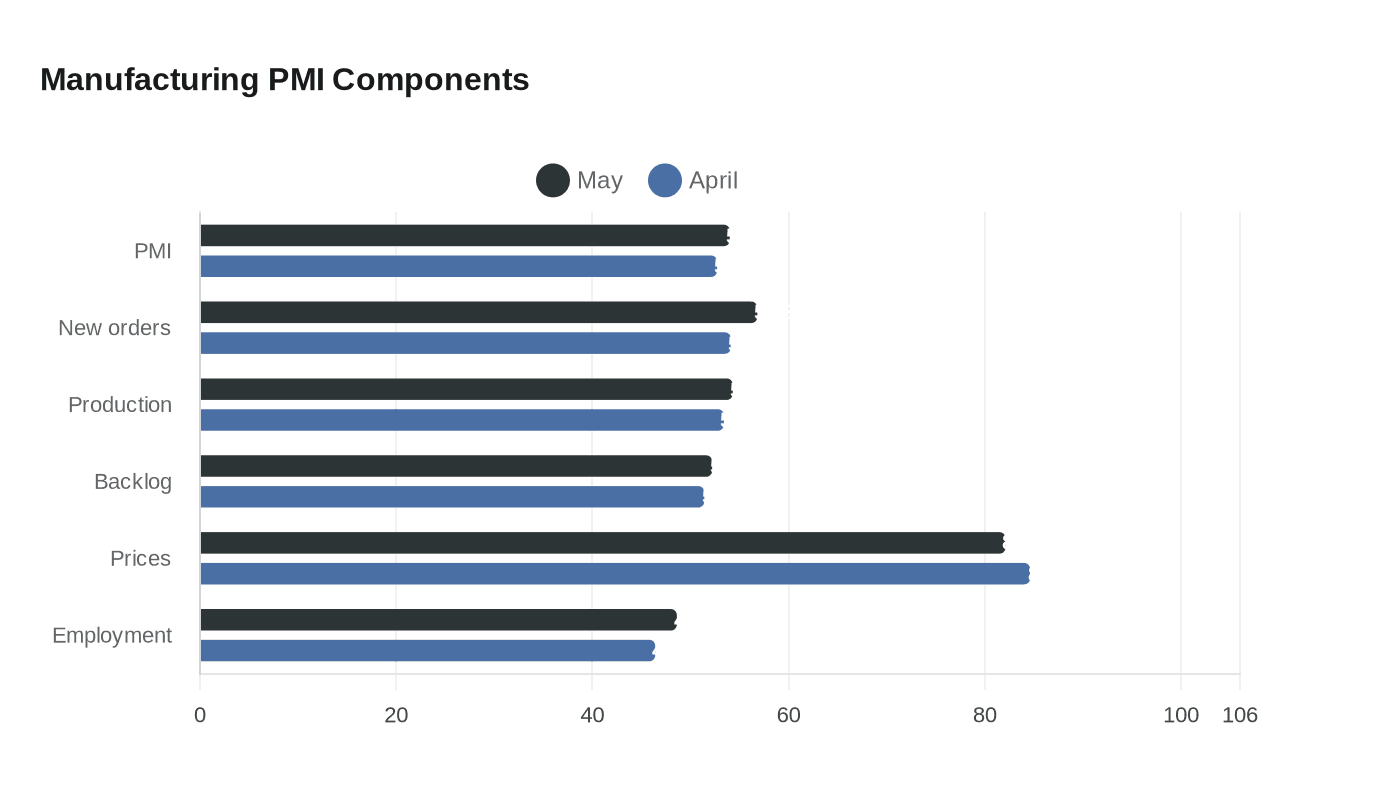
The improvement was broad, with 16 industries reporting growth and wood products the only sector in contraction. New orders rose to 56.8 from 54.1, production climbed to 54.3 from 53.4, and backlog orders improved to 52.2 from 51.4. New export orders returned to expansion at 50.6, while imports rose to 53.0 as companies reached for supplies ahead of further disruption. Manufacturing accounts for 9.4% of the U.S. economy, so the shift carries meaningful macroeconomic weight even though services dominate overall output.

The trouble showed up most clearly in prices and deliveries. ISM’s Prices Index remained extremely elevated at 82.1, down from 84.6 in April but still signaling intense cost pressure. Supplier deliveries stayed slow at 60.6, and 57% of respondents said pricing volatility was an issue. Susan Spence, chair of the ISM Manufacturing Business Survey Committee, said 25% of comments were positive and 69% were negative.
Employment remained weak. ISM’s employment gauge rose to 48.6 from 46.4 but stayed in contraction for a 32nd consecutive month, underscoring how manufacturers are adding activity without yet adding many workers. One electrical equipment respondent said panic was starting in the industry, while a fabricated metal products company said business was weakening because of uncertainty tied to the Iran war, rising energy prices and customers unwilling to commit beyond the very short term.
Economists said the strength may be partly artificial. Oliver Allen of Pantheon Macroeconomics said the durability of the upturn remained in doubt and that the lift from bringing orders forward would probably be short-lived. TD Economics said only 2% of manufacturing GDP was in contraction in May, down from 19% in April, showing growth had broadened sharply. For now, the factory sector looks less like a clean growth story than an inflationary warning sign.
This article was produced by Prism’s automated news system from verified source data, official records, and press releases, then run through automated quality and moderation checks before publishing. The system is built and supervised by the people who set the standards it runs under. Read our full AI policy.
Know something we missed? Have a correction or additional information?
Submit a Tip