U.S. Measles Cases Surpass 1,671 Across 33 States, Outbreaks Drive Surge
Measles cases in the U.S. hit 1,671 across 33 states, with 94% outbreak-linked and 92% of patients unvaccinated or with unknown vaccine history.
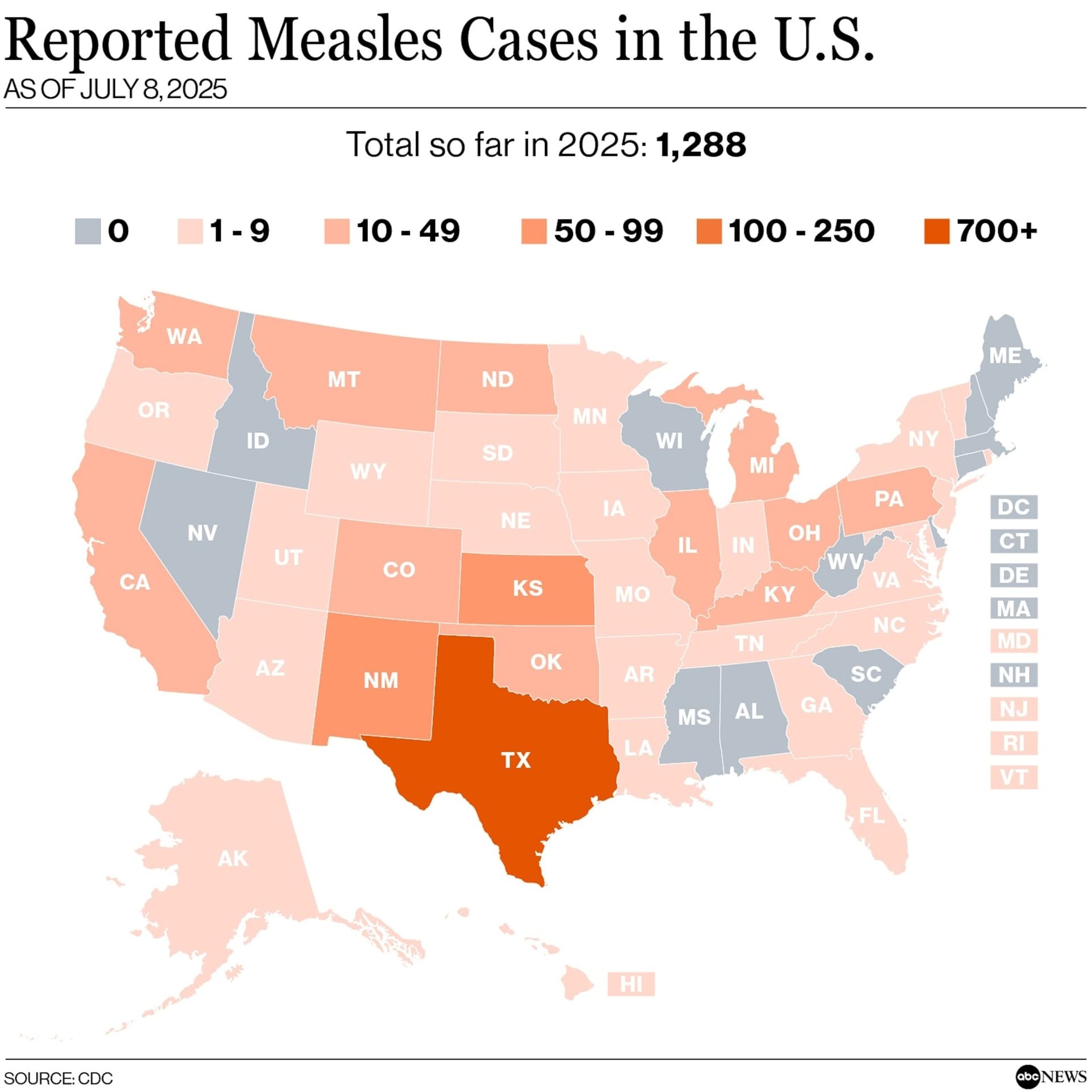
Confirmed measles cases in the United States climbed to 1,671 as of April 2, a 96-case jump in a single week that extended the 2026 surge across 33 states and New York City. Ninety-four percent of those cases are associated with active outbreaks, and the CDC counts 16 distinct outbreak clusters driving transmission nationwide.
The CDC's publicly posted data reflects confirmed cases reported to the agency as of April 2, 2026, with 1,661 of those cases reported by 33 jurisdictions spanning states including Alaska, Arizona, California, Colorado, Florida, Georgia, Idaho, and Illinois, among others. The week-over-week increase of 96 cases represents a 6.1% rise from the prior week's 1,575 confirmed cases. Probable cases reported by individual states are tracked separately and are not captured in the CDC's cumulative confirmed total, meaning the actual scope of transmission may run higher.
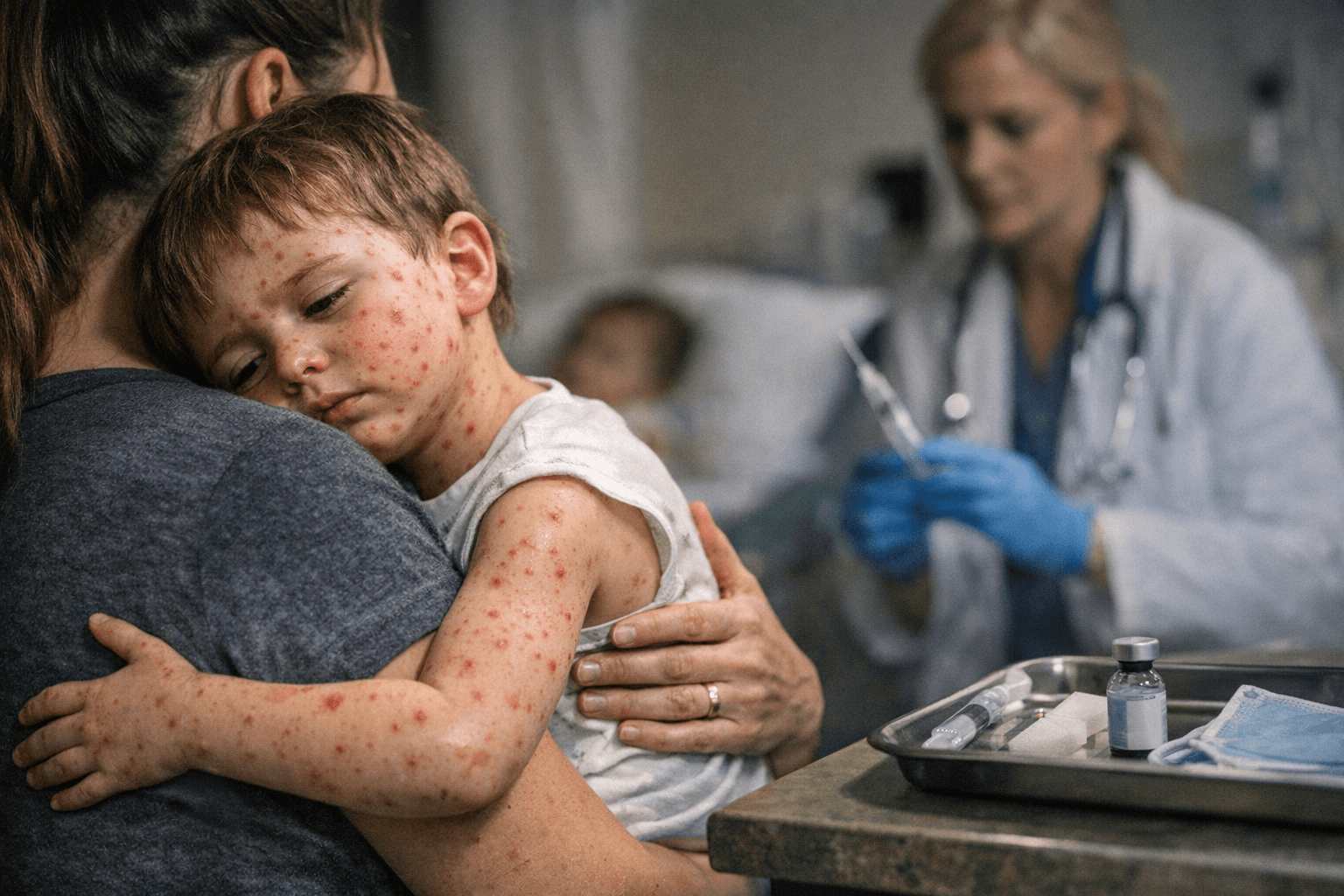
Twenty-three percent of cases are in children younger than 5, and 77% involve children and young adults up to age 19. The hospitalization rate for 2026 stands at roughly 5%, compared to 11% last year, though no deaths have yet been attributed to measles in 2026. Children under 5 carry a disproportionately higher share of hospitalizations relative to their case count. Vaccination status defines the outbreak's profile: 92% of confirmed case-patients are unvaccinated or have an unknown vaccine history, with only 4% fully immunized with two MMR doses.
Ten of the 1,671 confirmed cases involved international visitors, a figure that underscores how travel-linked introductions continue to seed domestic transmission chains. Public health experts have long identified vaccination coverage gaps and imported cases as the two primary engines behind multi-state surges, and 2026 is following that pattern.
The United States confirmed 2,258 measles infections across all of 2025, a 33-year high, and the sustained week-over-week increases recorded through early April signal the country could be on pace to exceed that number. Seasonality typically suppresses measles transmission as temperatures climb, but last year demonstrated that communities with persistent immunity gaps can sustain elevated case counts well past the usual transmission window.
Health agencies reiterated that clinicians should consider measles in any patient presenting with febrile rash illness and a relevant travel or exposure history. Standard guidance calls for two MMR doses for children on the recommended schedule, rapid investigation of suspected clusters, and targeted vaccination campaigns in outbreak zones to protect immunocompromised individuals and infants too young to be vaccinated. The pace of new cases each week makes clear that closing coverage gaps, not waiting for seasonal relief, is the only lever available to contain the spread.
This article was produced by Prism’s automated news system from verified source data, official records, and press releases, then run through automated quality and moderation checks before publishing. The system is built and supervised by the people who set the standards it runs under. Read our full AI policy.
Did this article answer your question?