U.S. National Gas Prices Top $4 Per Gallon for First Time Since 2022
Gas hit $4 per gallon nationally Tuesday for the first time since 2022, with GasBuddy logging the largest single-month price gain on record as the Iran war enters its fifth week.
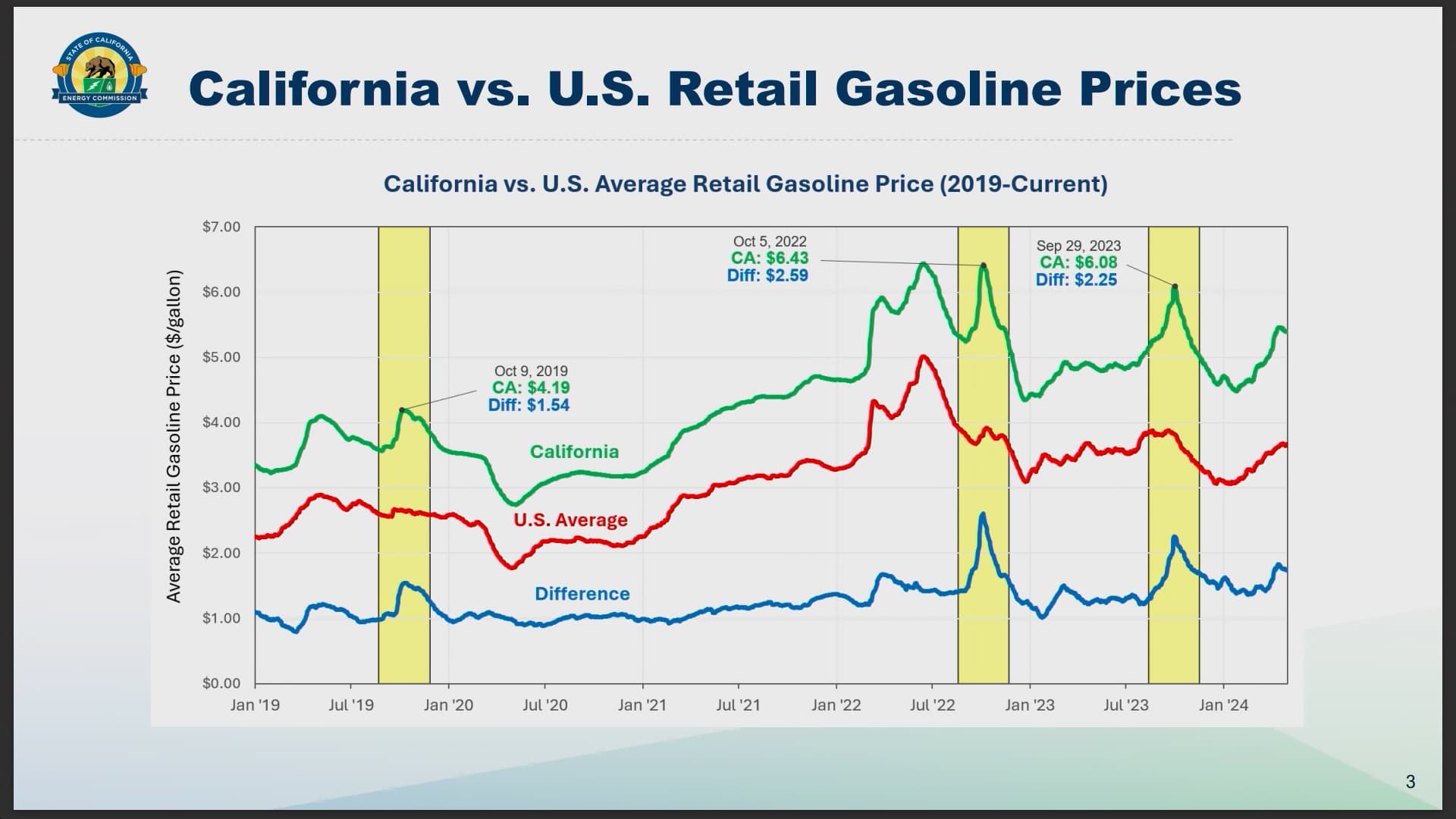
Gasoline prices crossed $4 per gallon nationally on Tuesday for the first time since August 2022, with AAA recording a national average of $4.02 at the pump and the data firm GasBuddy measuring $4.018, a level GasBuddy described as the highest in nearly four years and the largest monthly gain on record.
The crossing came as the U.S.-Iran war entered its fifth week. Prices are now up roughly $1 from a month ago, with most of those gains concentrated since the conflict erupted. "It's not the shock of $5, but motorists are really going to start to see those digits go up on the dollar price on the pump relatively quickly," Patrick De Haan, a petroleum analyst at GasBuddy, told CBS News. The rarity of the milestone underscores the severity: since 2009, gasoline has only spent 157 days above $4 a gallon, all of them in 2022.
The price gap between states is stark. California posted the nation's highest state average at $5.84 per gallon, followed by Hawaii at $5.33, Washington at $5.30, Nevada and Oregon at $4.86, and Arizona at $4.63, according to AAA Fuel Prices. Oklahoma averaged the lowest at $3.25, trailed by Kansas at $3.27 and Iowa at $3.31. In Southern California's Santa Clarita Valley, many stations were already posting $5.70 to $6 per gallon; a documented fill-up at a Saugus station on March 27 recorded $5.74 per gallon for a midsize truck. The divide reflects the national-average reality: drivers in some states have been paying well over $4 for some time, with prices varying due to local supply, refinery proximity, and differing tax rates.

Commercial operators are absorbing an even sharper hit. The national average for diesel reached $5.45 on Tuesday, also marking a record monthly gain according to GasBuddy. The fuel is commonly used in farming, construction, and the trucks, trains, and boats that move American goods.
Part of what makes pump prices so sensitive to geopolitical shocks is a structural mismatch in U.S. refining. Most domestic production is light, sweet crude, but refineries on the East and West coasts are designed to process heavier, sour crude, keeping the country dependent on imports. Refineries also buy crude in advance, meaning that even new supply entering the market takes time to reach consumers. Gasoline demand has been climbing through the spring break season, compounding the pressure from the supply side.
Sultan Al Jaber, CEO of Abu Dhabi's state-run energy company ADNOC, addressed the global toll via videolink from the United Arab Emirates: "This is raising the cost of living for those who can least afford it and slowing economic growth everywhere. From factories to farms to families around the world, the human cost is mounting by the day."

Policymakers have moved to respond. The International Energy Agency pledged to release 400 million barrels from the emergency stockpiles of member nations, including the United States. The Trump administration eased sanctions to free up oil from Venezuela and, temporarily, Russia. The White House also announced a 60-day waiver of maritime shipping requirements under the Jones Act, a more than century-old law. Whether those steps will translate into pump relief remains uncertain, given the built-in lag between crude purchases and retail prices.
A CBS News poll of 3,335 U.S. adults conducted from March 17 to 20 found that 90% of respondents expect the Iran war to drive up oil and gas prices in the short term, while 58% said fuel costs were likely to increase over the long term. Goldman Sachs analysts raised their Brent crude forecast for April from $85 to $115, citing a longer disruption risk premium, while senior Saudi officials have modeled Brent at $180 if the conflict extends through April.
Know something we missed? Have a correction or additional information?
Submit a Tip

