U.S. officials explore government stakes in leading AI companies
Washington is weighing stock in AI firms, a move that could send future gains to households while blurring regulator and investor roles.
Senior U.S. officials have held preliminary talks with major artificial intelligence companies about a rare bargain: the federal government could take shares in private AI firms, then use any returns for public purposes, including dividends to American households. The idea would push Washington far deeper into the AI economy, turning the government from rule-setter and customer into a part-owner with a direct financial stake in the industry it is supposed to oversee.
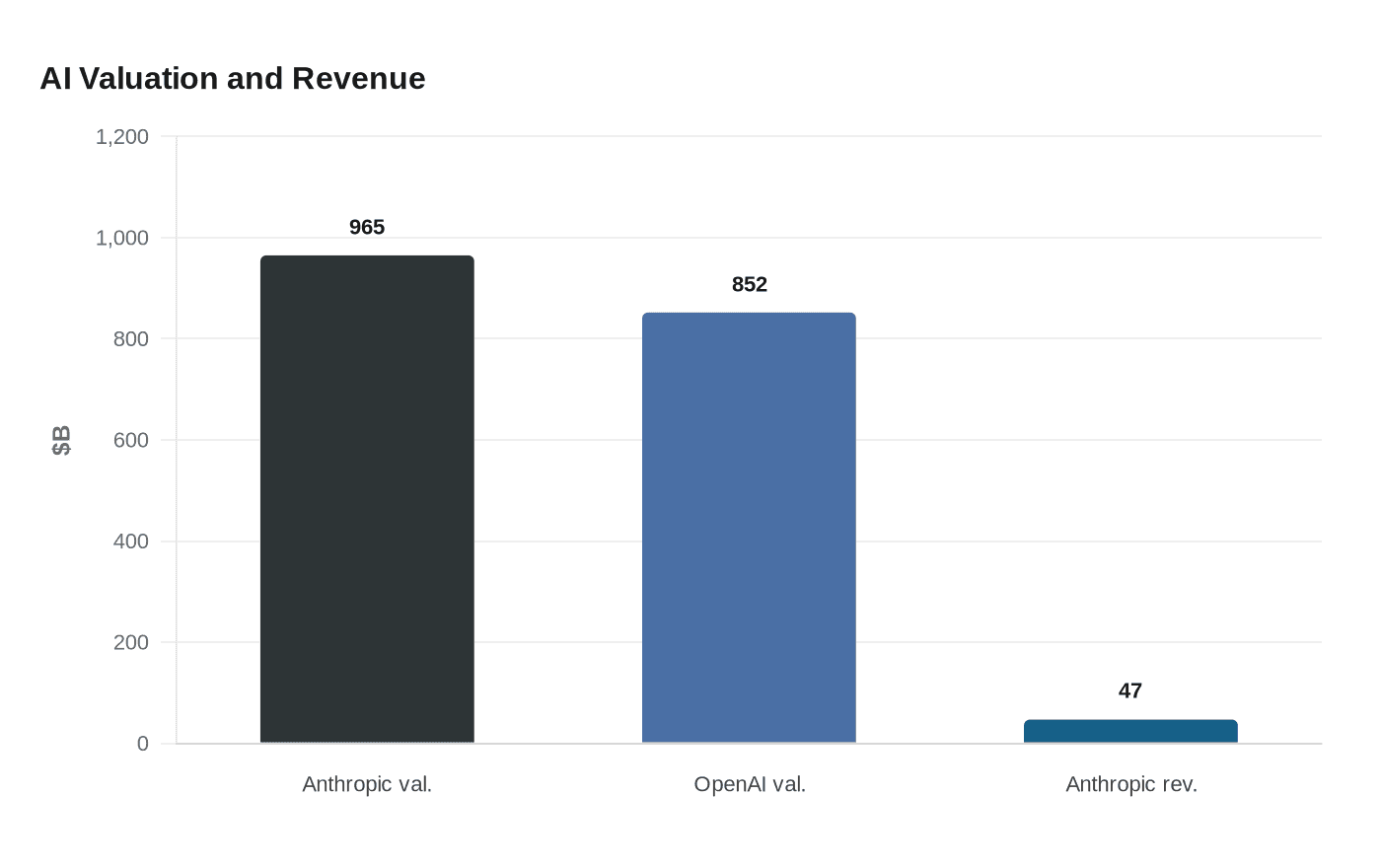
The attraction is clear. AI companies are becoming more valuable, more central to national security, and more dependent on government policy. OpenAI and Anthropic are both moving toward major public-market steps, with Anthropic confidentially filing its IPO prospectus with the SEC on June 1 and OpenAI preparing its own confidential filing. Anthropic’s last publicly reported valuation was $965 billion after a late-May funding round, while OpenAI’s was $852 billion in March 2026. Anthropic also said its revenue run rate reached $47 billion in May, up from $10 billion in annual revenue a year earlier.
But a government stake would come with immediate governance questions. If federal officials owned part of an AI company, they could be pulled between promoting competition, policing safety, and protecting taxpayer returns. That would blur the line between regulator, customer, and investor, especially as agencies such as CISA, the Department of Homeland Security, the Office of Management and Budget, and the Office of Personnel Management deepen their use of frontier models for government work.
The talks have also exposed a political split inside the AI sector. Sam Altman first pitched the concept directly to President Trump in early 2025, and he was meeting with lawmakers and Trump administration officials in Washington in early June 2026. Anthropic, by contrast, was not discussing equity transfers with the administration. The legal mechanism for any company to voluntarily hand over stock remains unclear, and a White House spokesman declined to comment.
The move would not be without precedent. The Trump administration has already agreed to take $2 billion in equity stakes across nine quantum-computing firms, with IBM receiving the largest share, about $1 billion. Earlier this year, Trump also signed a January 14 proclamation imposing a 25% tariff on certain advanced computing chips, including NVIDIA H200 and AMD MI325X. On June 2, he signed an AI executive order that created an AI cybersecurity clearinghouse and a voluntary framework for early access to covered frontier models, while explicitly stopping short of mandatory licensing or pre-clearance.
For officials, the appeal is to shape a strategic technology before it becomes even more powerful and profitable. For taxpayers, the question is whether equity participation would spread the gains from AI or simply invite new conflicts, with the federal government sitting on both sides of the table.
This article was produced by Prism’s automated news system from verified source data, official records, and press releases, then run through automated quality and moderation checks before publishing. The system is built and supervised by the people who set the standards it runs under. Read our full AI policy.
Did this article answer your question?