U.S. officials fly to Venezuela as direct service resumes after seven years
U.S. officials landed in Caracas on the first direct flight from Miami in seven years, a move that sharpened questions about whether Washington’s thaw with Nicolás Maduro is becoming policy.

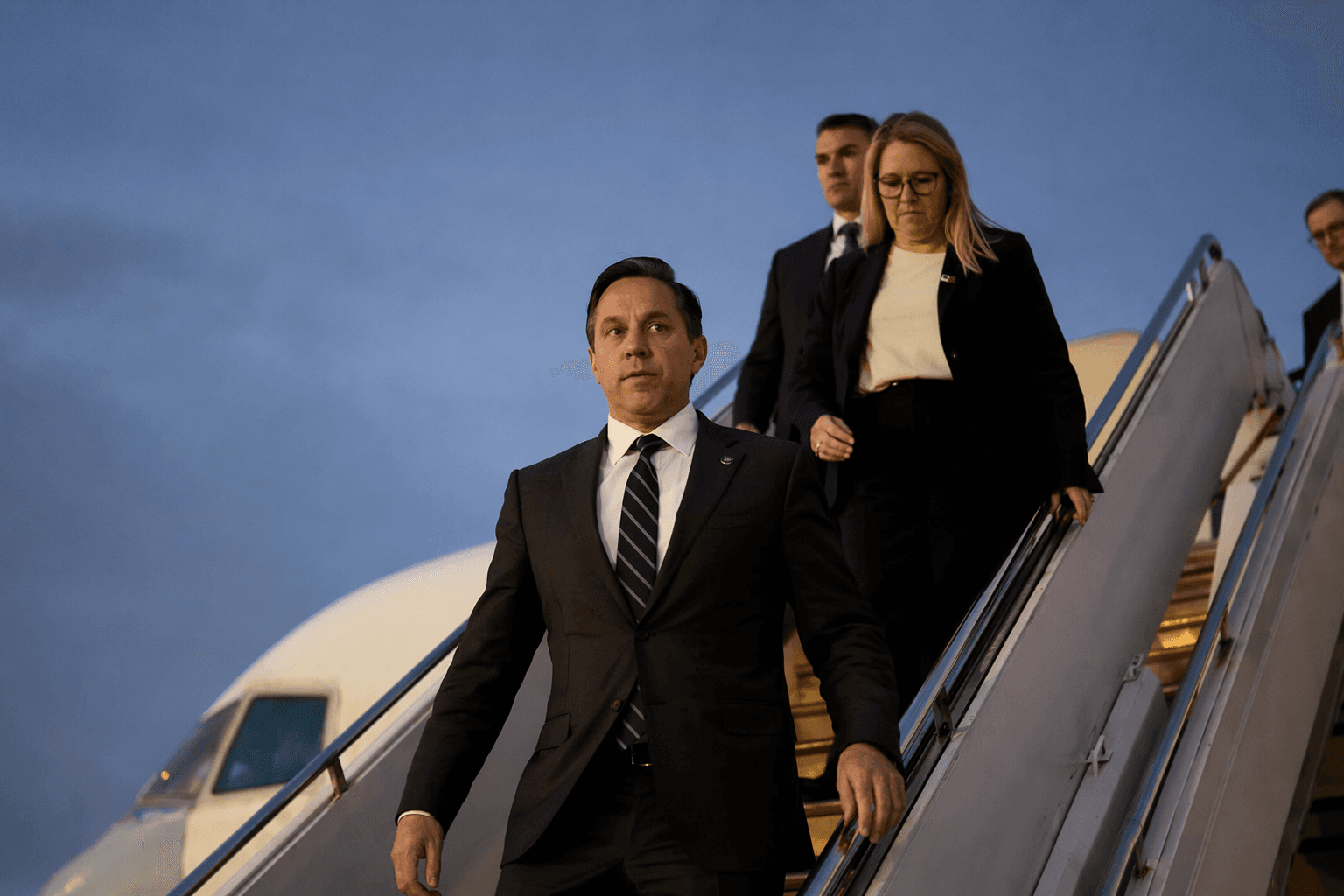
U.S. officials touched down in Caracas on the first direct commercial flight between the United States and Venezuela in seven years, a route that had been cut off since 2019 over security concerns. The Envoy Air flight, a subsidiary of American Airlines, left Miami on April 30, 2026, and arrived the same day at Simón Bolívar International Airport near Maiquetía with Trump administration officials and Venezuelan diplomats on board.
The trip did more than reconnect two airports. It landed as a signal check on whether a limited U.S.-Venezuela reengagement is hardening into policy after years of rupture. A White House adviser framed the message in energy terms, saying, “drill, baby, drill,” underscoring how closely the diplomatic opening is tied to Venezuela’s oil wealth and to Washington’s calculation that Caracas cannot be separated from the energy market.
That calculation has already reshaped the relationship this year. The U.S. reopened its embassy in Caracas in March 2026, restoring full diplomatic relations after seven years. The direct flight now gives that reset a practical channel, making travel, official contact and commercial links easier even as sanctions remain in place.
Venezuela’s oil reserves sit at the center of the picture. Officials widely describe the country as holding the world’s largest proven reserves, about 303 billion barrels, a prize that has long made Caracas relevant far beyond the region. At the same time, U.S. sanctions policy has continued to narrow and widen access in ways that track Washington’s larger strategy. On March 24, 2025, the Treasury Department’s Office of Foreign Assets Control issued Venezuela General License 41B, authorizing the wind-down of certain Chevron-related transactions in Venezuela.
The resumed service carries diplomatic weight precisely because it is both symbolic and operational. The flight’s passenger list and the ceremony in Caracas, where John Barrett spoke alongside Venezuelan Ambassador to the United States Félix Palencia, suggested a carefully staged effort to show that direct contact is back, even if the politics remain fraught. With Nicolás Maduro still in power and sanctions still shaping every major economic decision, the flight marked a rare moment when Washington and Caracas moved in the same direction.
This article was produced by Prism’s automated news system from verified source data, official records, and press releases, then run through automated quality and moderation checks before publishing. The system is built and supervised by the people who set the standards it runs under. Read our full AI policy.
Did this article answer your question?


