U.S. oil hub Cushing drains fast as exports surge amid war-driven demand
Cushing inventories fell to 22.4 million barrels as May exports hit a record 5.6 million barrels a day, leaving a key U.S. oil hub perilously thin.

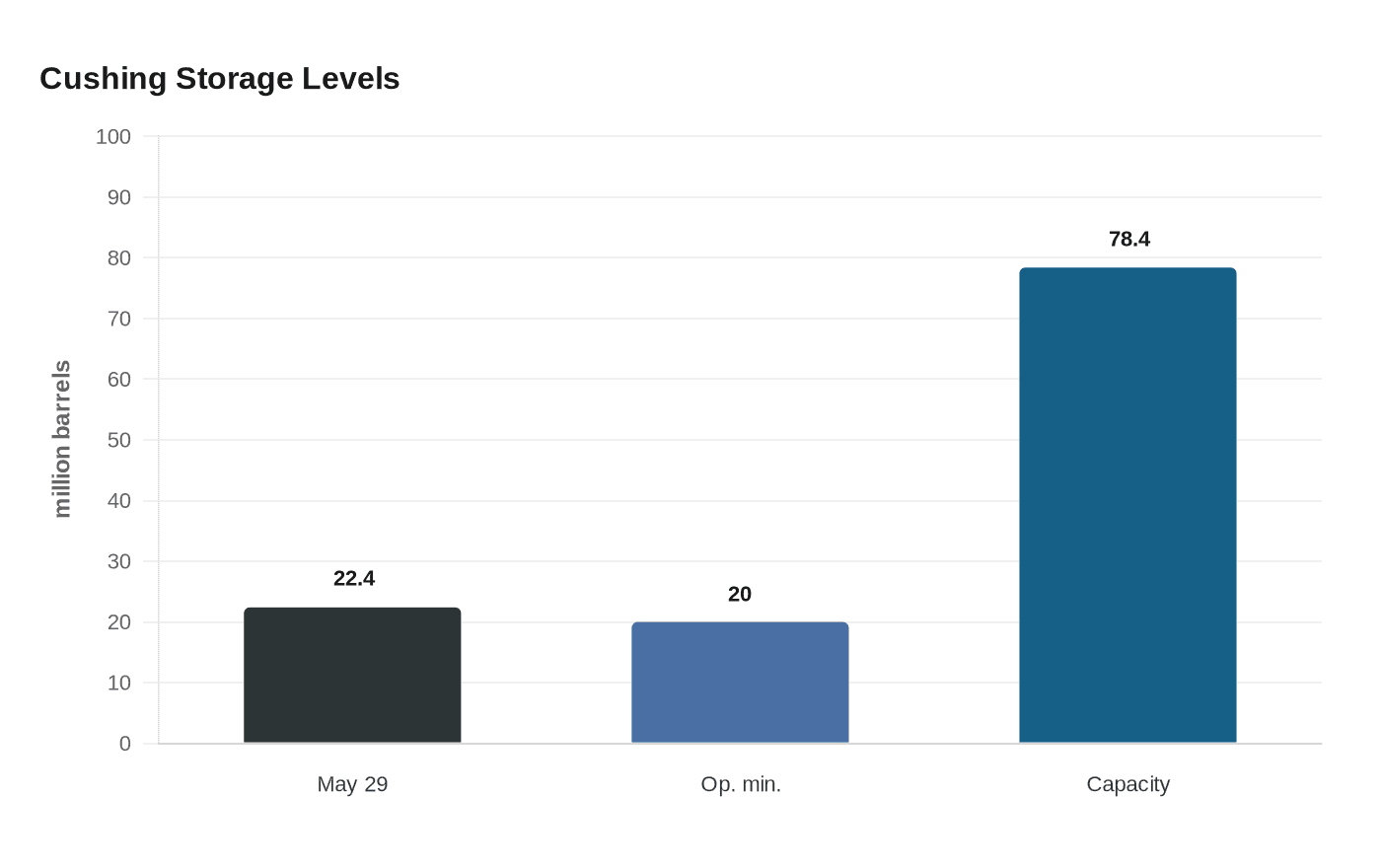
Cushing, Oklahoma, is being drained fast enough to raise a national vulnerability warning. Inventories at the pipeline crossroads of the world stood at 22.4 million barrels on May 29, down about 4 million barrels from Feb. 27, and close enough to the market’s danger line that traders are watching for operational trouble, not just higher prices.
The squeeze is being driven by war. Disruption in the Middle East has pushed refiners in Asia and Europe to buy more U.S. crude, with May exports reaching a record 5.6 million barrels a day, up from 5.2 million in April. As tanker traffic through the Strait of Hormuz was effectively restricted, buyers turned to American barrels to replace the roughly 20 million barrels a day that had moved through that route before the conflict. The result has been a global scramble for supply that has pulled U.S. stockpiles lower even as producers have benefited.

That matters because Cushing is not just another storage yard. It is the delivery point for West Texas Intermediate, the benchmark underlying a major U.S. oil futures contract, and its levels can influence tens of billions of dollars in daily trading. The U.S. Energy Information Administration says Cushing’s working storage capacity is about 78.4 million barrels, leaving current stocks far below the site’s full ability to absorb crude. Reuters reported that AlphaBBL estimated another 500,000-barrel draw between May 29 and June 2, underscoring how quickly inventories are moving lower.

The risk is that the market can run into logistics before it runs out of price relief. Energy Aspects’ Jeremy Irwin said levels below roughly 20 million barrels could create operational challenges because there may not be enough oil in a tank to pump out and transfer between tanks, while blending also becomes more difficult. Reuters also reported that Phillips 66 believes Cushing could reach its operational minimum, according to two sources. Some tanks have bottom outlets that can be drained completely, but others do not, making very low levels harder to manage.
That is why this is more than a producer windfall. The United States is acting as a pressure valve for a global system under strain, and that valve is now running thin. If another shock hits the Middle East supply chain, the cushion for U.S. consumers, refiners and traders will be smaller, and the next price spike could arrive with less warning and less inventory to absorb it.
This article was produced by Prism’s automated news system from verified source data, official records, and press releases, then run through automated quality and moderation checks before publishing. The system is built and supervised by the people who set the standards it runs under. Read our full AI policy.
Did this article answer your question?

