U.S. oil output seen rising only modestly as companies hold back
U.S. crude output is still rising, but only marginally. EIA sees 2026 production at 13.5 million barrels a day, even as Gulf projects and exports keep the U.S. on top.
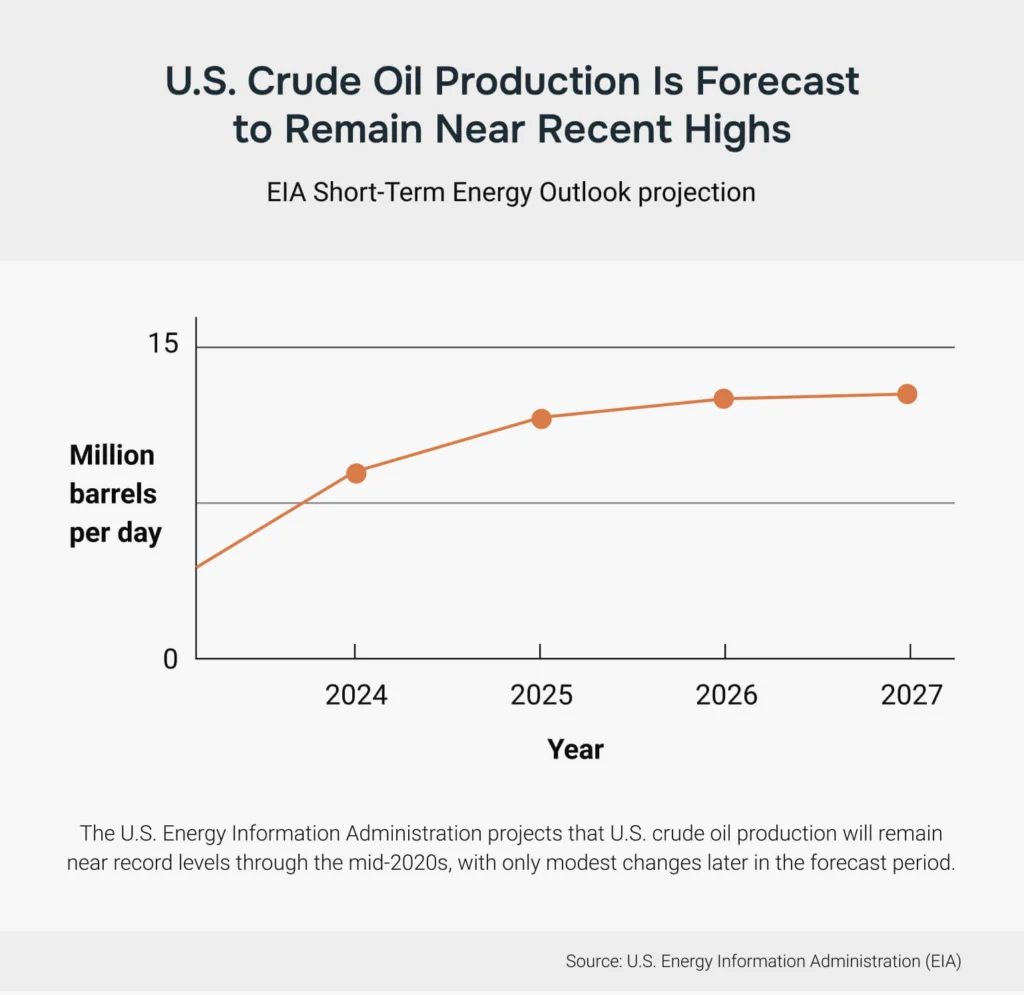
American oil producers are not rushing back to the old drill-more playbook, even as the Gulf coast opens a fresh source of supply. The U.S. Energy Information Administration says crude output will average about 13.5 million barrels a day in 2026, only about 100,000 barrels a day below 2025, a sign that growth is continuing but at a far slower pace than in the shale boom years.
The slowdown follows two strong years in which U.S. production rose by 0.3 million barrels a day in 2024 and 0.4 million barrels a day in 2025, driven largely by the Permian Basin in Texas and New Mexico. The agency now expects modest gains in Alaska, the Federal Offshore Gulf of America and the Permian in 2026 to be offset by declines elsewhere in the country, underscoring how much of the industry’s future expansion is coming from a smaller set of mature, capital-intensive regions.

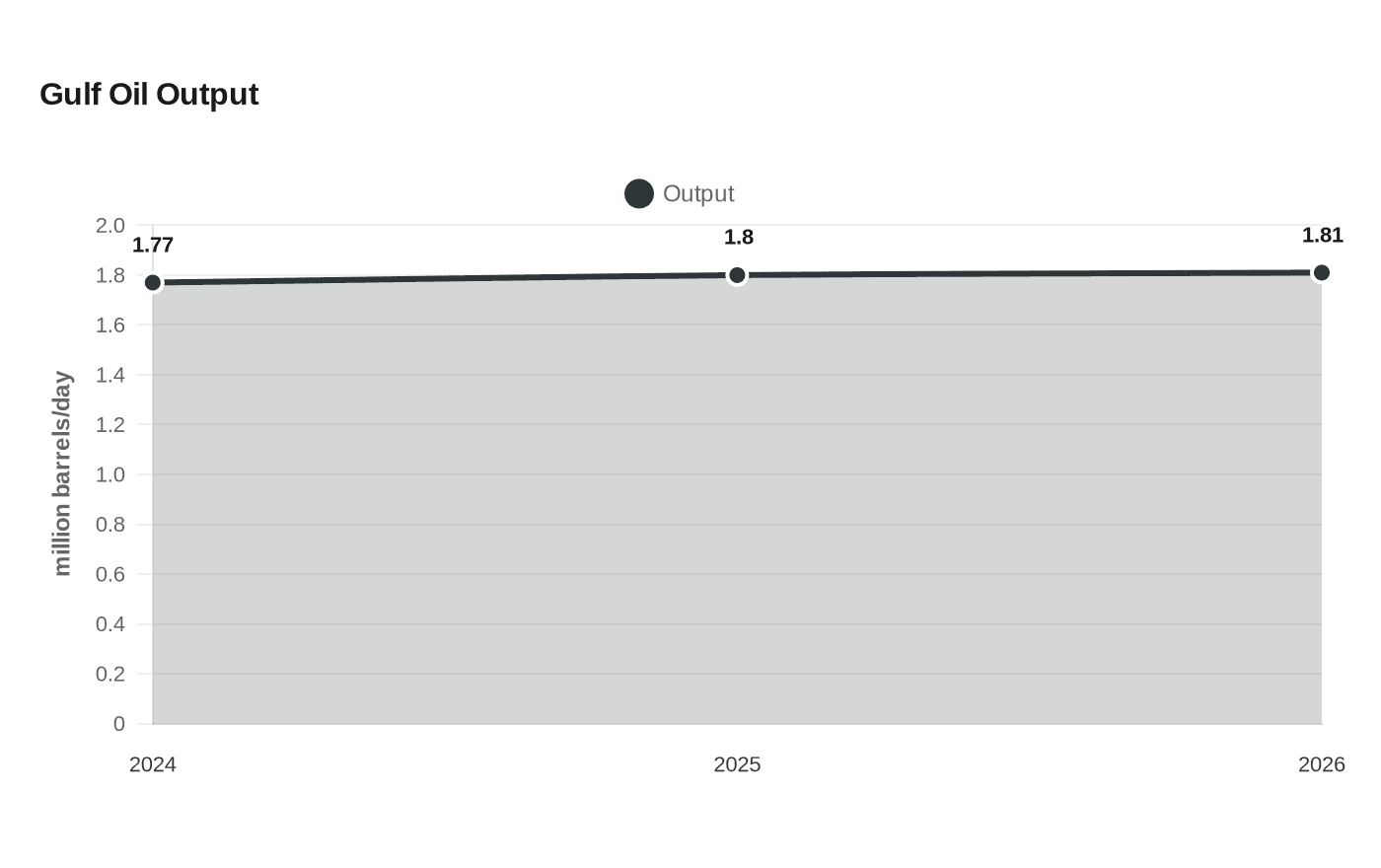
The Gulf’s rise marks a shift from the past two decades, when shale dominated U.S. growth. The EIA projects crude output from the Federal Offshore Gulf of America will average 1.80 million barrels a day in 2025 and 1.81 million in 2026, up from 1.77 million in 2024. Wood Mackenzie says Gulf producers are expected to add 300,000 barrels a day of new output in 2025 and another 250,000 barrels a day in 2026, lifting regional production above 2 million barrels a day and about 40% above 2020 levels.
That restraint comes at a time of intense market volatility. In its June 2026 outlook, the EIA said global oil markets remain highly unstable because limited shipping through the Strait of Hormuz has cut Middle East crude production by more than 11 million barrels a day compared with pre-conflict levels, while global inventories are expected to fall sharply in 2026. Even so, U.S. companies are showing little appetite for a new spending surge, as low crude prices, declining rig counts and broader uncertainty continue to weigh on investment decisions.
The United States remains set to deepen its role as a trading power in energy. The EIA expects net crude oil imports to average 1.4 million barrels a day in 2026, while net exports of petroleum products are forecast at 5.6 million barrels a day, a record. Earlier this year, the agency said U.S. crude production would average 13.6 million barrels a day in 2026 and 13.8 million in 2027, after previously saying output could peak around 14 million barrels a day in 2027 before easing later in the decade. The message is clear: American oil is still growing, but the industry is choosing discipline over volume.
This article was produced by Prism’s automated news system from verified source data, official records, and press releases, then run through automated quality and moderation checks before publishing. The system is built and supervised by the people who set the standards it runs under. Read our full AI policy.
Did this article answer your question?

