U.S. Partially Suspends Visa Issuance to Nigerians and 18 Countries
The U.S. Embassy in Abuja posted a notice that, from 12:01 a.m. Eastern Standard Time on January 1, 2026, the Department of State will partially suspend issuance of specified visa categories to nationals of 19 countries, including Nigeria. The move, grounded in Presidential Proclamation 10998 and framed as a national security measure, has immediate implications for students, visitors, and immigrant applicants who are outside the United States without valid visas.
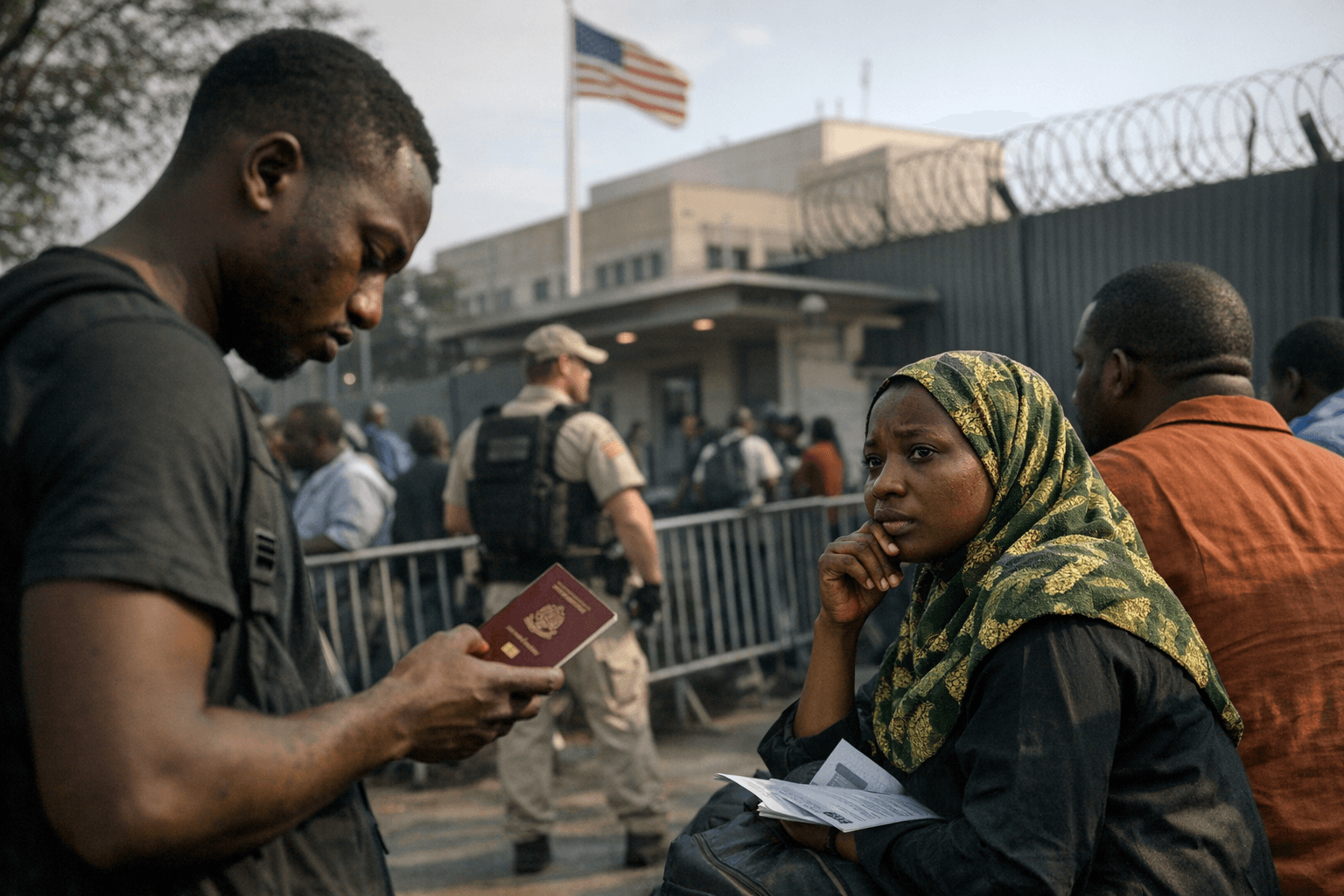
The U.S. Embassy in Abuja is informing the public that, effective 12:01 a.m. Eastern Standard Time on January 1, 2026 (6:00 a.m. Nigerian time), the Department of State will partially suspend issuance of certain visas to nationals of 19 countries under Presidential Proclamation 10998, titled "Restricting and Limiting the Entry of Foreign Nationals to Protect the Security of the United States." The embassy posted the notice on its official website and on its verified X account and said further guidance will follow through its channels.
The measure names Angola, Antigua and Barbuda, Benin, Burundi, Côte d’Ivoire, Cuba, Dominica, Gabon, The Gambia, Malawi, Mauritania, Nigeria, Senegal, Tanzania, Togo, Tonga, Venezuela, Zambia, and Zimbabwe. The suspension is described as partial and targeted to specified visa categories. Affected nonimmigrant categories include visitor visas B-1 and B-2 and combined B-1/B-2, as well as student and exchange visitor visas F, M, and J. Officials also indicate that immigrant visas issued outside the United States, including those that lead to lawful permanent resident status, will be affected for nationals of the listed countries who are outside the United States on the effective date and who do not hold valid visas at that time.
The embassy’s notice frames the action as a tightening of immigration controls in the interest of U.S. national security. It does not, at present, publish an exhaustive list of subcategory exceptions or procedural details such as case processing changes, timelines for resumption, or mechanisms for requesting waivers. The mission has indicated that additional instructions and clarifications will be posted to its official channels.
For Nigerians and others impacted, the immediate effect is practical and wide ranging. Prospective visitors and business travelers with planned departures to the United States may find appointments canceled or delayed. Students with upcoming terms or pending exchange placements face uncertainty about travel and enrollment timing. Family members seeking immigrant visas or permanent residency through consular processing outside the United States may experience a pause in routine adjudication. Those already present in the United States and holding valid visas are not affected by the new restriction as framed in the embassy’s statement.
The proclamation and its partial suspension raise diplomatic and legal questions for affected countries. Executive proclamations that restrict entry have long been used as instruments of border and security policy, but they also intersect with bilateral relations, educational exchanges, and economic ties. Governments and institutions in Nigeria and the other named countries will need to assess immediate impacts on students, professionals, and families, and to press for clarifications on exemptions and timelines.
The embassy urges applicants and the public to monitor its website and verified X account for official updates and instructions. In the absence of full procedural guidance, consular services and visa assistance providers are likely to be focal points for affected individuals seeking next steps.
This article was produced by Prism’s automated news system from verified source data, official records, and press releases, then run through automated quality and moderation checks before publishing. The system is built and supervised by the people who set the standards it runs under. Read our full AI policy.
Did this article answer your question?

