US Prosecutors Accuse Maduro of Plundering Venezuela to Fund Legal Defense
A federal judge said the right to self-defense is "paramount" as prosecutors argued letting Maduro use Venezuelan funds would "undermine" the very sanctions meant to punish his alleged plundering.
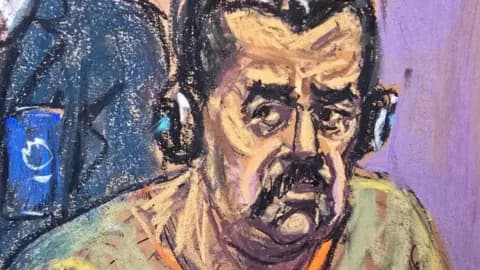
Nicolás Maduro sat at a New York federal defense table in a jail uniform, headphones on for translation, as prosecutors argued Thursday that the former Venezuelan president should not be allowed to use the same national wealth he allegedly looted to pay his lawyers.
The hearing before U.S. District Judge Alvin Hellerstein centered on a legal paradox with no clean resolution: Maduro and his wife, Cilia Flores, face narco-terrorism charges, but U.S. sanctions on Venezuela have blocked the government in Caracas from covering their legal fees, leaving their defense counsel threatening to walk.
Prosecutor Kyle Wirshba put the government's position bluntly: "If the purpose of the sanctions is because the defendants are plundering the wealth of Venezuela, it would undermine the sanctions to allow them access the same funds now to pay for their defense."
Maduro's attorney, Barry Pollack, countered that Washington was violating his client's Sixth Amendment rights by cutting off the only viable source of legal funding. Pollack told Judge Hellerstein he would need to withdraw from the case entirely if the U.S. does not permit the Venezuelan government to pay. He argued defendants are entitled to "not just competent counsel, but counsel of his choice" and to access "untainted funds" for that purpose.
The dispute traces to a brief and contested window in January. On January 9, the U.S. Office of Foreign Assets Control issued a license permitting the Venezuelan government to cover the defendants' legal fees, then revoked it hours later. Prosecutors characterized the original grant as an administrative error. The defense called the reversal a constitutional violation.
Hellerstein appeared unmoved by the national security rationale underpinning the government's position. He said Maduro and Flores' right to defend themselves "is paramount" over the government's national security and foreign policy interests, adding: "I see no abiding interest of national security on the right to defend themselves." The judge also questioned why the prosecution's foreign policy argument remained unchanged given that U.S.-Venezuela relations had shifted since the couple's capture.

Prosecutors maintained that Maduro and Flores have access to personal funds in Venezuela to cover legal expenses. Maduro has stated he does not. Pollack noted a further complication: multiple immediate relatives of both defendants are also under OFAC sanctions, making financial transactions with them illegal for U.S. persons and entities, effectively narrowing any path to private payment.
Hellerstein appeared to accept the practical reality Pollack described: that a public defender would be overwhelmed by the complexity of defending a former head of state on narco-terrorism charges in a foreign country. Under U.S. law, Maduro would be entitled to appointed counsel if he cannot afford his own, but the judge signaled that standard remedy would fall short here.
The mood inside the courtroom was a studied contrast to the January arraignment, when Maduro delivered a several-minute speech claiming he had been kidnapped by U.S. military forces and declared, "I am not guilty. I am a decent man, the constitutional president of my country." That hearing ended with a man shouting at Maduro from the back of the room. On Thursday, supporters and opponents rallied outside while the defendants sat quietly at the defense table.
The judge did not rule from the bench and set no timeline for a decision. Pollack has separately announced plans to invoke Maduro's immunity as a sitting president as part of the broader legal strategy, a claim that will add another layer to an already unprecedented case.
This article was produced by Prism’s automated news system from verified source data, official records, and press releases, then run through automated quality and moderation checks before publishing. The system is built and supervised by the people who set the standards it runs under. Read our full AI policy.
Did this article answer your question?


