US rare-earth companies race to build China-free supply chain
Two U.S. rare-earth firms are racing to replace China in magnets, mining and processing as Washington pours defense money into the buildout.
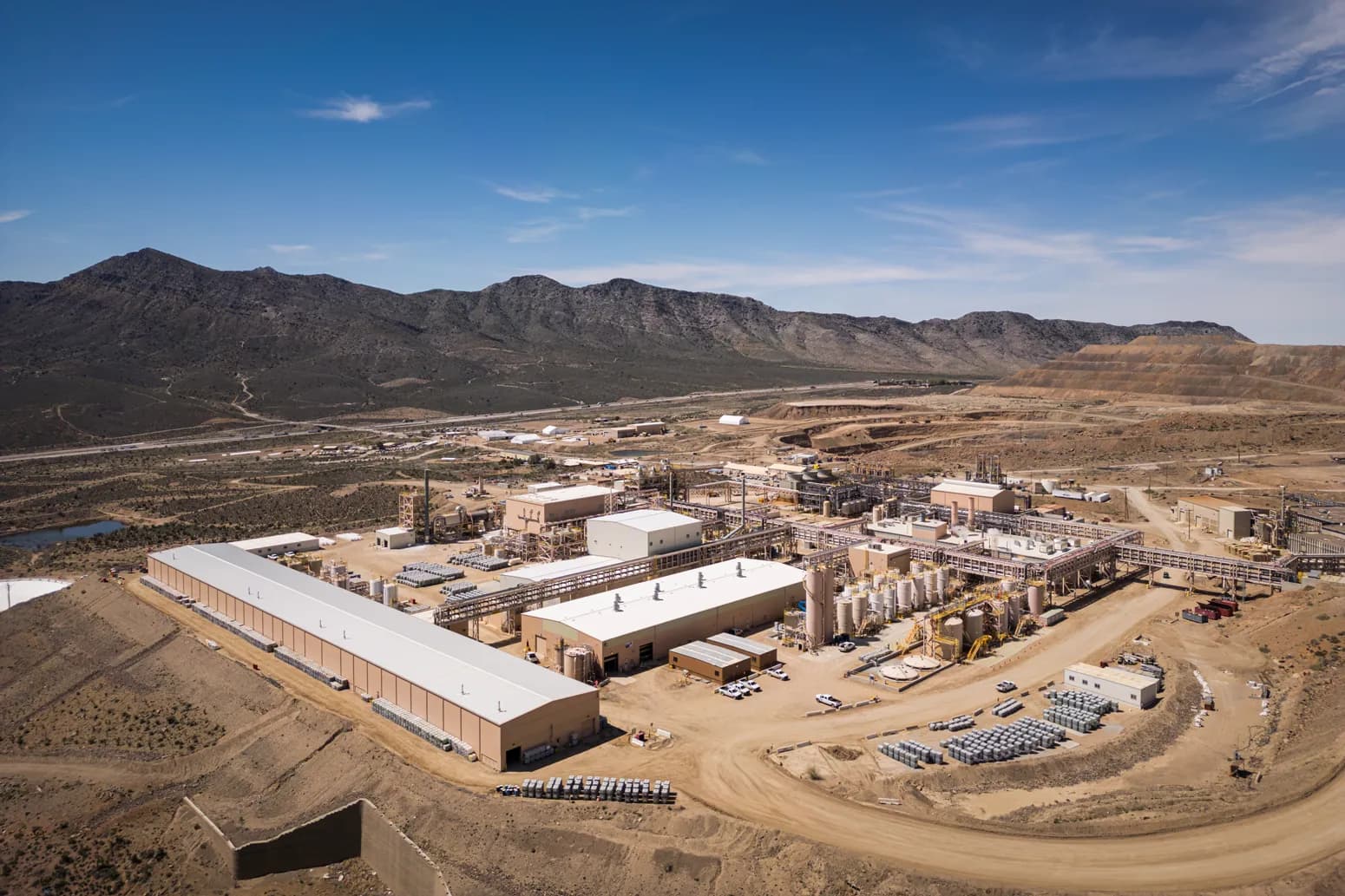
MP Materials controls Mountain Pass in California, the only active rare-earth mine in the United States. USA Rare Earth is trying to push processing capacity outside Asia with a new plant in Wheat Ridge, Colorado. The supply chain underpins EV motors, fighter jets, semiconductors and other strategic technologies.
Why rare earths have become an industrial policy fight
The rare-earth bottleneck is no longer just about digging ore out of the ground. The real strategic gap is in separation, refining and magnet production, the steps that turn mineral feedstock into components for defense systems and electric vehicles. Washington’s push is aimed at building a mine-to-magnet chain that can work without China, which still exerts enormous influence over the sector.
MP Materials is anchored in mining and upstream separation, while USA Rare Earth is focused on downstream processing outside Asia. The U.S. government is treating rare earths as a supply-security issue rather than an ordinary commodity market.
MP Materials has turned Mountain Pass into a strategic asset
MP Materials stopped shipping rare-earth concentrate to China in April 2025 after retaliatory tariffs and export controls made the trade commercially unworkable, a break that forced its business away from the old China-centered model.
The company’s role expanded sharply in July 2025, when it announced a public-private partnership with the U.S. Department of Defense to accelerate an end-to-end American rare-earth magnet supply chain. The Pentagon said the Office of Strategic Capital extended a $150 million loan tied to adding heavy rare-earth separation capabilities at Mountain Pass, connecting the California mine directly to the next stage of the industrial chain.
Heavy rare-earth separation is one of the hardest parts of the supply chain to localize. The capability can feed defense programs and advanced manufacturing without relying on Chinese processors.
USA Rare Earth is betting on processing power outside Asia
USA Rare Earth is attacking the same problem from another angle. The company commissioned its hydrometallurgical demonstration facility in Wheat Ridge, Colorado, and is targeting first production of separated heavy rare-earth oxides in the third quarter of 2026. The facility is designed to produce separated rare-earth oxides at commercial quality outside Asia.
The Colorado plant is expected to process ore from the Round Top project and international suppliers such as Serra Verde, while also supporting recycling activities. A resilient supply chain requires multiple feedstocks, more than one processing route and a way to handle recycled material. USA Rare Earth’s model is built around that broader industrial footprint rather than a single-source mine-to-factory line.
USA Rare Earth has secured a $1.6 billion CHIPS Act funding package, including $277 million in grants and $1.3 billion in loan capacity. Taken together with the Colorado demonstration facility, that financing gives the company a path from pilot-scale processing toward a larger domestic platform.
China’s counterpressure is reshaping the market
Beijing has not stood still while the U.S. tries to rebuild the sector. China added both MP Materials and USA Rare Earth to an export-control list after the Pentagon moved against some of China’s biggest companies, saying they support the Chinese military. The move turned the rare-earth contest into a two-way geopolitical conflict rather than a one-sided industrial policy campaign.
The market response was immediate. Shares of MP Materials and USA Rare Earth rose after the export-control move.
The rivalry has already spilled into court
The competition has also become a legal fight. MP Materials sued USA Rare Earth, accusing it of a coordinated effort to poach employees and misappropriate proprietary information, while USA Rare Earth rejected the claims. That lawsuit adds a talent and technology dimension to a contest that is already about mines, processing equipment and government backing.
The domestic bench is still thin. When both companies are trying to build a capability the U.S. has not fully owned in years, engineers, separation know-how and plant operators become strategic assets.
This article was produced by Prism’s automated news system from verified source data, official records, and press releases, then run through automated quality and moderation checks before publishing. The system is built and supervised by the people who set the standards it runs under. Read our full AI policy.
Did this article answer your question?

