US Rescues Downed Airman After Iran Shoots Down Two Military Jets
Iran shot down a US F-15E and an A-10 on April 3; the wounded weapons officer was rescued from Iranian mountains by special forces after more than 24 hours on the run.
A wounded U.S. Air Force weapons systems officer, evading capture in the mountains of Iran for more than 24 hours, was pulled to safety by American special forces early Sunday morning in what President Donald Trump called "one of the most daring Search and Rescue Operations in U.S. History." The mission closed out a 48-hour crisis that began when Iranian forces shot down two U.S. military aircraft on Friday, April 3, and set off a race between U.S. rescue teams and hundreds of IRGC soldiers hunting the same men.
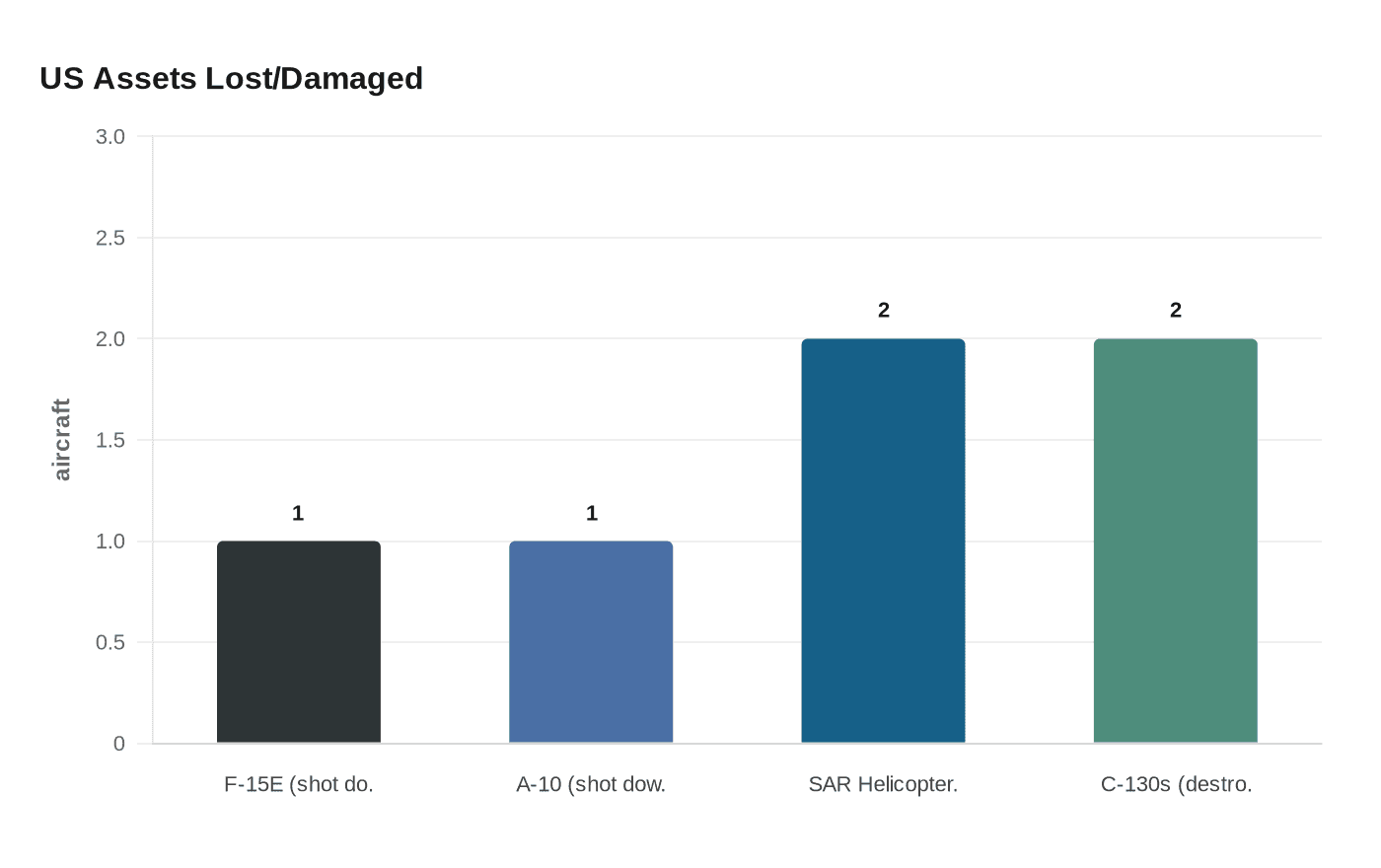
The chain of events began when an F-15E Strike Eagle conducting combat operations over Iran was struck by Iranian fire. Both crew members ejected successfully and landed in hostile territory miles apart. Shortly after, a separate A-10 Thunderbolt II was also hit; that pilot ejected safely over Kuwaiti airspace as the aircraft crashed. Two search-and-rescue helicopters dispatched in the immediate aftermath were also struck by Iranian fire, injuring their crews before both aircraft returned to base.
U.S. special forces recovered the F-15E pilot first, executing what a defense official described as "a bold and quick snatch" in daylight under active Iranian fire. The weapons systems officer, however, remained missing. A regional governor offered a public bounty for the crew's capture, and Iran's armed forces called on civilians in the area to join the search. The defense official said the two crew members "were spread apart by a couple miles" and that "hundreds of IRGC soldiers were everywhere."
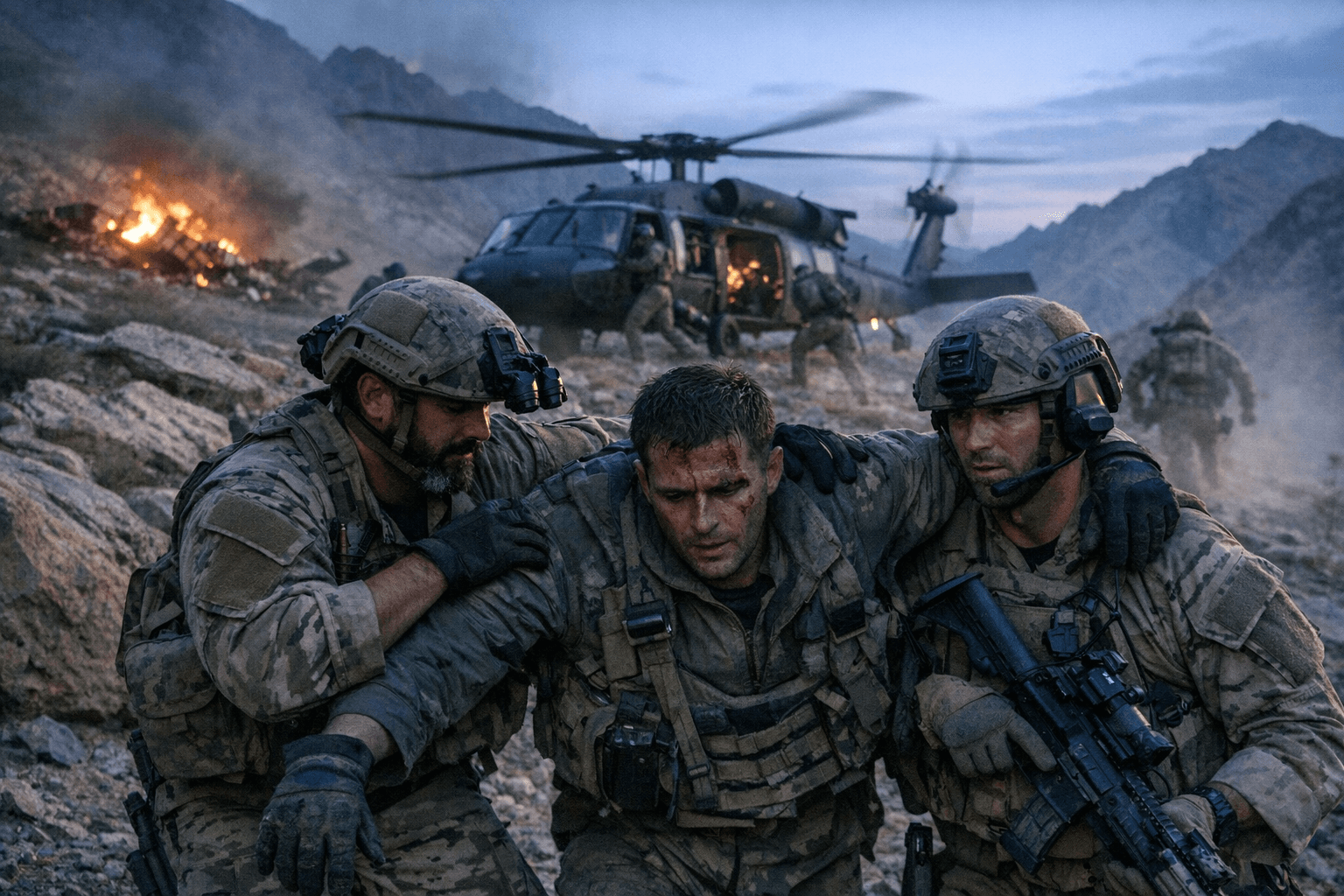
The search for the second airman nearly stalled over a critical intelligence question: whether his emergency beacon signal was genuine or an Iranian trap designed to lure U.S. forces into an ambush. The CIA worked to resolve that doubt, and once analysts confirmed the beacon was not a trap, the military located the wounded officer using advanced technical capabilities. A temporary base was established inside Iran to support the night phase of the operation, and U.S. attack aircraft dropped bombs on approaching Iranian convoys to keep them away.
The mission was not without cost on the ground. Two C-130 transport aircraft involved in the rescue developed mechanical problems and could not depart the forward position. U.S. forces intentionally destroyed both planes to prevent them from falling into Iranian hands. Iranian state media released images of burning wreckage it attributed to the operation, and the IRGC claimed to have destroyed two C-130s and two Black Hawk helicopters during the engagement.
Trump announced the rescue in the early hours of Sunday in a post on Truth Social: "WE GOT HIM!" He described the airman, who was wounded, as someone who "will be just fine," and added that the Iranians "thought they had him, but it wasn't even close." He characterized the outcome as "an Easter miracle."
Israel played a supporting role throughout both rescues. Trump said the IDF helped the U.S. military "a little bit," and a defense official confirmed that Israel shared intelligence about "the general situation on the ground" without providing precise location data for the weapons systems officer. The Israeli Air Force conducted one strike to halt Iranian forces from closing in on the rescue zone. Israeli Prime Minister Benjamin Netanyahu, who spoke with Trump on Sunday, congratulated him on what he called a "perfectly executed American mission" and said he was "deeply proud that our cooperation on and off the battlefield is unprecedented." Trump, in turn, said of Israel: "They have been great and brave people. We are like a big brother and little brother."
The shootdowns and subsequent rescue sharply illustrate the operational risks now facing U.S. pilots flying missions over Iranian territory, where surface-to-air threats downed two aircraft in a single day and forced American planners to establish a covert forward base inside enemy lines just to retrieve their own personnel. With the war entering its sixth week and diplomatic off-ramps narrowing, the episode also demonstrated that any misstep, whether a downed jet or a misread beacon signal, carries the potential to escalate into a direct confrontation with Iranian ground forces at close range.
This article was produced by Prism’s automated news system from verified source data, official records, and press releases, then run through automated quality and moderation checks before publishing. The system is built and supervised by the people who set the standards it runs under. Read our full AI policy.
Did this article answer your question?