U.S. Seizes Aframax Tanker Olina in Caribbean Crackdown
U.S. forces boarded and took custody of the Aframax tanker Olina in a pre-dawn operation on Jan. 9–10, 2026, marking at least the fifth interdiction tied to a U.S. campaign against sanctioned Venezuelan oil shipments. The action signals Washington’s intensified effort to disrupt a so‑called shadow fleet, with implications for global shipping routes, insurers and diplomatic tensions with Russia and Venezuela.
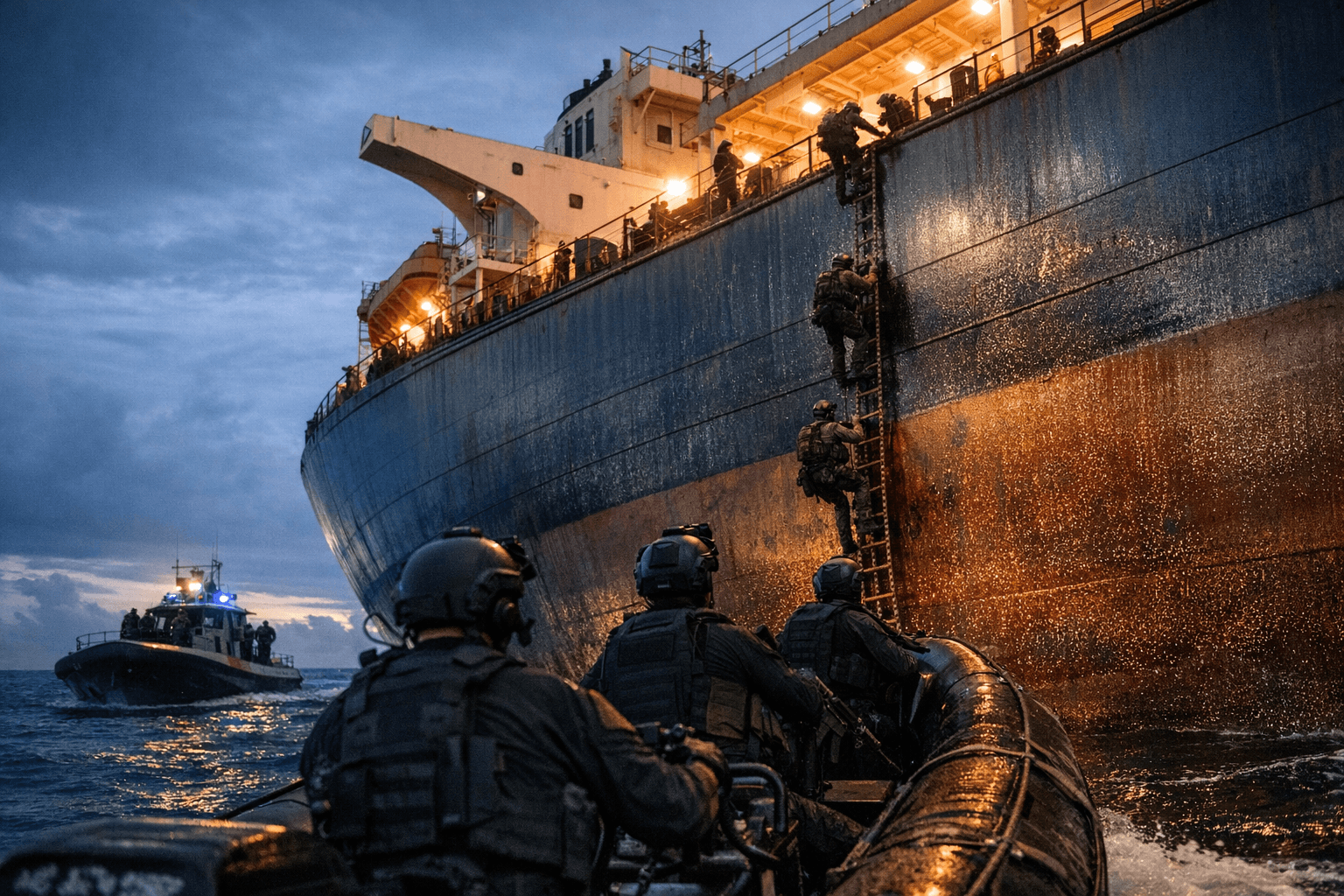
U.S. military and law-enforcement forces boarded the Aframax tanker Olina in a pre-dawn operation on Jan. 9–10, 2026, and took the vessel into U.S. custody, officials said. Southern Command and Joint Task Force Southern Spear said marines and sailors carried out the boarding “without incident,” and described the action as part of an “unwavering” campaign to end illicit activity and “restore security in the Western Hemisphere.” Southern Command added that “there is no safe haven for criminals.”
U.S. officials said the operation was launched from the aircraft carrier USS Gerald R. Ford. The seizure is at least the fifth interdiction in recent weeks as Washington enforces a global blockade on oil shipments tied to sanctioned Venezuelan exports. Earlier actions in the campaign include the December 11, 2025, capture of MT Skipper and recent seizures of vessels identified as M Sophia and MV Bella I, also known by registries Marinera or Bella 1. Pentagon spokesman Sean Parnell posted that “in the past 24 hours alone, at least seven ‘dark fleet’ oil vessels have turned around to avoid interdiction, because they know we mean business.”
The tanker now identified as Olina was previously registered as Minerva M and was sanctioned in January 2025 while carrying that name; U.S. authorities have linked the ship to a broader shadow fleet accused of evading sanctions. Public shipping registries and industry sources say the vessel flew the flag of Timor-Leste after a flagged change reported on June 16, a tactic that industry analysts say is commonly used to obscure ownership and registration. Industry sources told investigators that the oil aboard vessels in the recent flotilla is owned by Venezuela’s state producer PDVSA.
U.S. officials and industry sources described a flotilla of roughly a dozen tankers that departed Venezuelan waters earlier in January. Some vessels in the group were fully loaded and returned to Venezuela, while others turned back to avoid interdiction, according to U.S. military statements and shipping-data accounts. The campaign has prompted alarm among shipping companies and insurers over the risks of operating near contested shipments and amid shifting registries.
Legal and diplomatic questions surround the seizures. U.S. authorities maintain that many ships in the ghost fleet are effectively stateless under fraudulent flags and therefore vulnerable to interdiction under international maritime law, while domestic authority for seizures rests with the law-enforcement functions of the U.S. Coast Guard under Title 14 of U.S. law. The legal picture is murky, industry observers note, with one former U.S. Military Sealift Command mariner describing the bounds of authority as ambiguous.
The operations have prompted protest from Caracas and criticism from allies of Venezuela. One earlier seizure in the North Atlantic saw a vessel change registration to Russia and reportedly receive a Russian naval escort; the incident heightened tensions after the U.S. action and led to public statements welcoming the release of some crew members. U.S. officials did not say whether more interdictions are planned, but the pace of recent operations and vessels turning away underscore the growing operational and diplomatic stakes as Washington seeks to choke off sanctioned oil flows.
This article was produced by Prism’s automated news system from verified source data, official records, and press releases, then run through automated quality and moderation checks before publishing. The system is built and supervised by the people who set the standards it runs under. Read our full AI policy.
Did this article answer your question?

